From Surviving Trauma to Guiding Others Through Recovery, She Makes Hope, Compassion and Healing Her Lifelong Mission.
Some of the hardest battles are fought in silence, when a person is trying to survive a pain they cannot yet explain, let alone imagine overcoming. For those living with trauma, addiction or emotional distress, the struggle often extends beyond what happened to them; it reaches into who they think they are and whether they can ever feel whole again.
Michele LaFemina knows that the road towards healing can begin in the darkest chapters of a life, long before the words for recovery are found. Her own journey through trauma, a suicide attempt at nineteen and more than 26 years of recovery has given her a deeply personal understanding of the courage it takes to begin again.
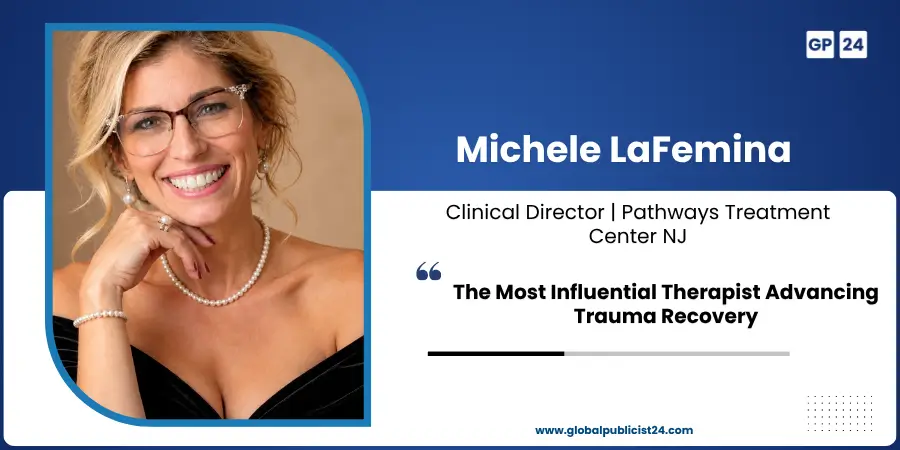
Today, as Clinical Director at Pathways Treatment Center NJ, she brings that understanding to her work with others, while writing and speaking to remind people that their most painful experiences can become part of a story filled with meaning, dignity and hope.
The Early Years
Michele’s understanding of emotional suffering began in childhood, when she experienced trauma and struggled for years to find language for what she carried. Reflecting on those early experiences, she explains that emotional pain can remain invisible even when it affects every part of a person’s life.
Those years gave her a profound respect for the courage it takes to speak honestly about suffering. They also influenced her understanding of resilience, which she describes as the possibility of rebuilding a meaningful life while acknowledging what happened.
Her early experiences became part of a longer personal journey, one that would eventually inform her approach to supporting others. However, the path towards recovery was gradual, involving difficult moments that required her to confront her own struggles before finding a way forward.
Beginning of a Long Recovery
At 19, Michele experienced a serious personal crisis that included a suicide attempt. During this period, she wrote a poem titled “Surrender,” an expression connected to her wider journey through struggle, faith and recovery.
Looking back, she sees that moment as part of a larger story of discovering that the past does not have to determine the future. More than 26 years in recovery have taught her that healing rarely follows a straight line.
Her own recovery has since informed the compassion she brings to clinical work. She strives to meet people without shame and with genuine hope grounded in practical support, recognising that every person’s circumstances and needs are different.
This personal understanding became especially important as her career developed. The experience of facing emotional challenges herself gave greater meaning to her commitment to helping others navigate trauma, addiction and difficult periods in their lives.
Learning to Recognise Individual Needs
Early in her professional career, Michele worked with autistic women in a residential group-home setting. The experience deepened her understanding of individuality, communication and advocacy, introducing her to the importance of recognising each person’s needs and circumstances.
Over more than 25 years in healthcare, she continued into counselling, clinical supervision, addiction treatment and leadership. Each transition reinforced a lesson that became central to her professional approach: care must adapt to the person, rather than asking the person to fit a rigid system.
As her experience grew, she developed a deeper understanding of the different ways trauma and other challenges can affect people’s lives. Her work called for clinical knowledge, careful listening and an ability to recognise that individuals may respond differently to treatment.
These lessons informed her approach to recovery, where understanding a person’s experiences and working collaboratively towards their goals are essential parts of care.
Helping People Understand Their Experiences
In her work with clients facing trauma, addiction and mental health challenges, Michele focuses on helping people distinguish between what happened to them and who they are.
She explores how trauma can influence beliefs, relationships and nervous-system responses while helping clients identify their strengths and the choices available to them in the present. Evidence-informed treatment, emotional regulation, boundaries and supportive relationships can help people reclaim agency.
She also emphasises that a diagnosis or painful chapter provides information rather than defining a person’s identity. This distinction allows clients to examine their experiences while recognising that their lives contain possibilities beyond the difficulties they have faced.
For Michele, the work begins with understanding the individual rather than making assumptions about their needs. Each person’s experiences require careful consideration, and treatment must respond to those differences.
Developing Trust Through Respect and Transparency
A central part of Michele’s clinical approach is the relationship between therapist and client. She understands that discussing painful experiences can be difficult, particularly when people are uncertain about how their stories will be received.
Her approach centres on consistency, transparency and respect. She listens carefully, explains the treatment process, collaborates on goals and honours personal boundaries. She also recognises that people need the freedom to share their experiences when they feel ready, rather than being pressured into disclosure.
For her, safety develops through an ongoing relationship in which clients have a voice and are treated with dignity. This understanding places trust at the centre of the therapeutic process and reinforces the importance of allowing people to participate in decisions about their own care.
Clinical Leadership at Pathways Treatment Center NJ
As Clinical Director at Pathways Treatment Center NJ, Michele brings her experience in behavioural healthcare to a position that requires both professional accountability and compassionate leadership.
She emphasises ethical practice, clinical accountability, thoughtful supervision and clear communication. These responsibilities help guide teams in maintaining professional standards while responding to the needs of individuals seeking treatment.
At the same time, she reminds her teams that the person receiving treatment is more than a chart or a diagnosis. Maintaining that perspective is essential when clinical responsibilities and organisational demands compete for attention.
Michele also distinguishes her clinical leadership from her independent work in writing and speaking. While her professional role involves guiding clinical practice, her personal mission focuses on reducing stigma and expanding conversations about healing.
Supporting the Professionals Behind Recovery
Michele’s responsibilities also extend to supervising and supporting other mental health professionals. Through this work, Michele encourages clinicians to combine clinical competence with humility, curiosity, boundaries and compassion.
She promotes reflective practice, continuing education and ethical decision-making, alongside honest conversations about countertransference and burnout. These discussions help clinicians examine their responses, understand the emotional demands of their work and make thoughtful decisions about client care.
She recognises that professionals need support and accountability to sustain their work over time. Her approach to supervision therefore includes attention to both clinical development and the well-being of the people delivering care.
This responsibility connects with her wider view of behavioural healthcare: effective treatment depends on the quality of professional relationships, the standards guiding clinical decisions and the support available to those working directly with clients.
Bravely Unraveled: Sharing Her Story with Others
Alongside her clinical work, Michele has found another way to contribute to conversations about recovery through writing and public speaking. Her work through Bravely Unraveled reflects on vulnerability, self-acceptance and the courage required to begin again.
Sharing her story has taught her that vulnerability can build connection when it is shared with intention. Her guiding phrase is “Breaking Barriers Through Grit, Building Bridges Through Grace.”
“Grit helped me survive; grace helps me make meaning from that survival,” admits Michele.
The phrase brings together two important parts of her journey: the determination that helped her through difficult experiences and the compassion that now informs how she understands them.
Through writing and speaking, Michele persists sharing her experiences in ways that can encourage others to reflect on their own lives. Her independent work also allows her to address stigma and recovery with audiences outside the clinical setting.
Her forthcoming workbook, Wired Differently, Healing Differently, explores the intersections of neurodivergence, mental health and addiction recovery, offering a practical resource for understanding how these experiences overlap and why recovery can look different for each individual.
A Vision for More Accessible and Integrated Care
Looking towards the future, Michele wants mental health services to become more integrated and accessible, particularly for people whose experiences involve overlapping challenges.
She highlights the connections among trauma, substance use, mental health conditions and neurodivergence, calling for fewer barriers between specialties and more individualised approaches. She also hopes to see stronger family education, earlier intervention and systems that help clinicians sustain compassionate work.
Her perspective on future recovery services also includes a greater understanding of nervous-system regulation and respect for sensory, cognitive and emotional differences.
For Michele, trauma-informed care must be reflected in policies, staff training, collaborative treatment plans and everyday interactions. Recovery services should recognise the whole person, ensuring that the principles guiding care are visible in the way people are treated.
Recognition and a Continuing Mission
Michele’s recognition in Global Publicist 24’s, “The Most Influential Therapist Advancing Trauma Recovery,” edition provides another opportunity to speak openly about trauma and recovery.
She sees the recognition as meaningful because it creates space for conversations that may help people feel less alone. She hopes her work encourages clinicians to lead with both skill and compassion and challenges stigma wherever it appears.
Her aim extends to clients, families and professionals alike. By encouraging open discussion and more thoughtful approaches to care, she hopes to help build bridges towards healing for all three groups.
For Michele, the significance of recognition lies in its potential to carry these conversations further and bring greater attention to the experiences of people who need support.
The message at the heart of her journey is simple: a difficult past does not eliminate the possibility of a different future. As she reminds those who are struggling, no one needs to have everything figured out to take the first step. Asking for help can itself be an act of courage, and healing remains possible even when the path ahead is uncertain.