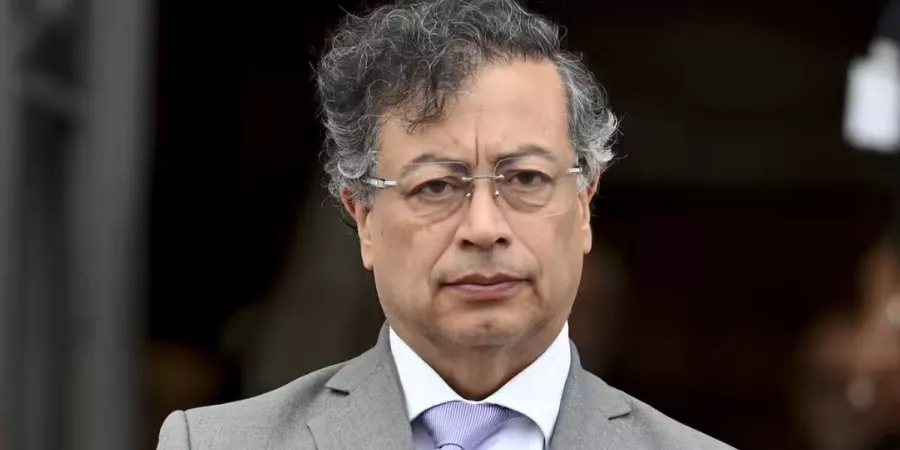
Gustavo Francisco Petro Urrego stands as one of Colombia’s most transformative and controversial political figures, known as Colombia first leftist president, widely recognized as Gustavo Petro president since his inauguration on August 7, 2022. His journey from guerrilla fighter to the presidential palace demonstrates his personal development and the transformation of Colombia’s political system.
Let us learn more:
Early Life and Formation
Petro was born on April 19, 1960 in Ciénaga de Oro which is a small municipality located in Colombia’s Córdoba department. His family later moved to Zipaquirá which is a town located near Bogotá and he spent most of his childhood years there. The social inequalities and political violence that characterized Colombia in the 1960s and 1970s profoundly formed his worldview and eventual political ideology that later defined Colombia first leftist president on the national stage.
Gustavo developed his early education at Zipaquirá schools which he attended to learn about the extreme differences that exist between Colombia’s wealthy elite and its poor majority. This consciousness would become the foundation of his lifelong commitment to social justice and economic reform.
Guerrilla Years and the M-19
The Colombian guerrilla group Movimiento 19 de Abril (M-19) which operated from 1970 to 1990 became Gustavo Petro’s first political commitment when he joined their ranks at the age of 17. The M-19 guerrilla group established in 1970 operated primarily in urban areas while attracting support from students and intellectuals and middle-class Colombians who became disillusioned with the two-party system which dominated Colombian politics.
Gustavo Petro used the guerrilla name “Aureliano” to conduct his M-19 activities which he describes as political work without any military involvement. The M-19 gained international notoriety for high-profile actions, including the 1985 Palace of Justice siege, though Gustavo Petro was imprisoned at the time and not involved in that tragic event.
Gustavo Petro spent 1985 in prison after military authorities arrested him because he served with the guerrilla forces. He spent approximately eighteen months in detention before being released. The Colombian peace process which started during this period became the main influence on his life.
Transition to Democratic Politics
The group transformed into the Alianza Democrática M-19 (Democratic Alliance M-19), a legitimate political party. The transition from armed struggle to democratic participation brought about a major change in Colombian politics and eventually opened the path to Gustavo Petro president through electoral processes.
Gustavo Petro embraced this opportunity with characteristic intensity. His intelligence and charisma and dedication to progressive causes made him stand out in the newly formed political party. His upcoming professional endeavors would benefit from his experience of dealing with Colombia’s intricate political framework.
Congressional Career and Investigative Work
Gustavo Petro first entered Colombia’s House of Representatives in 1991, representing Cundinamarca department. His first term in Congress started after this period and he continued to work into both Senate and House of Representatives until he developed his image as an investigator who fought against corruption and paramilitary violence.
The most important work he performed in Congress occurred during the 2000s when he proved the existence of ties between paramilitary groups and leading politicians through his research on what historians now call the “parapolítica” scandal.
Gustavo Petro’s research demonstrated that many congressional members had established partnerships with right-wing paramilitary organizations which resulted in the arrest of multiple legislators. The work established his status as a corruption fighter who protected democratic institutions although it brought him dangerous adversaries.
Gustavo Petro dedicated his time to multiple congressional committees which examined human rights matters as well as justice system improvements and economic strategy development. His speeches used thorough research to support his passionate speaking style which maintained his dedication to systematic inequality throughout his presentation.
Mayor of Bogotá
The year 2011 marked Gustavo Petro’s most significant public role when he became the Mayor of Bogotá, which serves as Colombia’s capital city and largest urban area with more than seven million inhabitants. The period from 2012 to 2015 which constituted his mayoralty showed both his ambitious goals and the difficult challenges he faced when trying to implement progressive policies which Colombia’s institutional system made impossible to achieve.
The administration of Gustavo Petro dedicated its resources to social programs and environmental programs and anti-corruption initiatives. He wanted to change the garbage collection system in the city because he believed that private companies operated as corrupt monopolistic entities. The initiative created a major problem because street garbage accumulation created material for his opponents to attack him.
Gustavo Petro’s mayoralty achieved multiple successful outcomes through expanded social services and better public transportation systems and programs which aimed to decrease social inequality. His time in office revealed his dedication to bring about important social changes which proved difficult to achieve because of existing power dynamics.
In 2014, the national government attempted to remove Gustavo Petro from office over the garbage collection controversy, but massive street protests and an intervention by the Inter-American Commission on Human Rights ultimately allowed him to complete his term.
Presidential Campaigns and Victory
Petro’s presidential ambitions started to emerge during the 2018 election when he finished second to Iván Duque. He lost the election but his receipt of more than eight million votes showed that voters supported his progressive platform and he became a major political power in Colombian politics.
His persistence paid off in 2022, culminating in the historic victory that established him as Colombia first leftist president after a tightly contested national election. Gustavo Petro won the presidency after defeating populist Rodolfo Hernández in the runoff election together with his vice-presidential candidate Francia Márquez who was the first Afro-Colombian woman to ever receive that nomination and who worked as an environmental activist. His coalition, the Pacto Histórico (Historic Pact), brought together different leftist and progressive political groups.
Presidency and Vision
Gustavo Petro has dedicated his presidential term to fighting socioeconomic disparity which includes his efforts to combat climate change and change drug laws and establish peace with all remaining rebel forces.
His administration shows a major break from Colombia’s traditional conservative political system yet its execution has been hampered by both opposition-controlled institutions and economic limitations. Petro’s life story shows how Colombia developed from war to peace and democracy.
His political presence in Colombia established him as either a revolutionary thinker or a polarizing political figure, while Gustavo Petro president continues to shape the country’s future direction.