Numbers tell stories, but only to those willing to listen beyond the ledger. In the world of corporate finance and governance, precision without context is a liability, and analysis without judgment is an exercise in delay.
The leaders who endure in this space are not those who simply read balance sheets but those who understand the human architecture behind them: the decisions that shape outcomes, the cultures that accelerate or obstruct execution, and the discipline required to sustain both across borders and market cycles. It is one thing to manage numbers. It is another to manage through them.
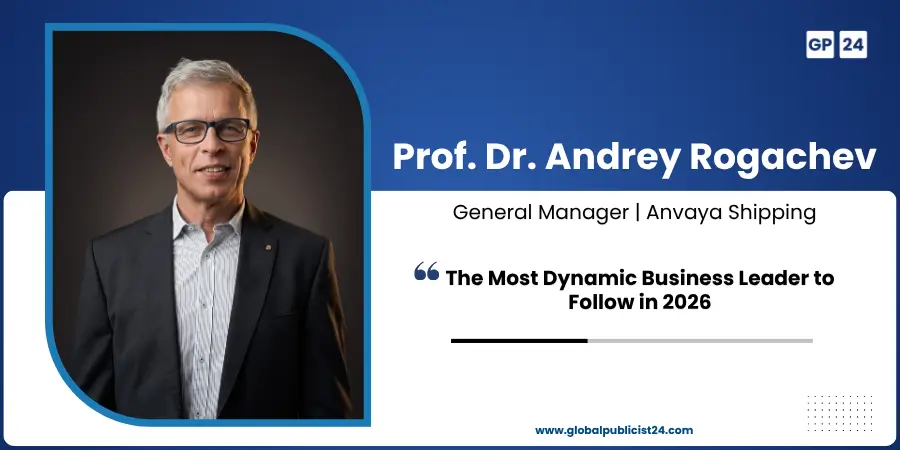
Prof. Dr. Andrey Rogachev has spent his career operating at this intersection. As General Manager of Anvaya Shipping and a member of boards of directors and supervisory bodies across multiple international companies, Dr. Rogachev brings a synthesis of academic rigor and operational pragmatism that has been tested across Europe, Russia, the Middle East, and South Africa.
His career spans banking, risk management, corporate finance, and strategic leadership. His academic credentials include a Doctorate in Economics and an active role in research and teaching. The thread connecting all of it is a single, persistent conviction.
“An effective leader is not about control,” Dr. Rogachev says. “It is about the ability to hold a system in balance between speed and stability.”
That word, balance, recurs throughout his thinking like a structural beam. It runs through his childhood, his academic formation, his career trajectory, and his philosophy of leadership. It is not a passive equilibrium but an active, disciplined calibration that he applies to every dimension of his work, from the boardroom to the classroom, from financial modeling to the development of people.
The Calculus of Purpose
The roots of Dr. Rogachev’s professional identity reach back further than any boardroom. As a child, he was drawn to mathematics. He worked through problems quickly and often found shorter or unconventional paths to the answer. The logic and structure of the discipline suited him naturally.
But mathematics alone was not enough. Dr. Rogachev was also an active, socially engaged young person. He participated in school life, took on organizational roles, and found himself drawn to forms of student self-governance. These involvements continued into his university years, where organizational and leadership responsibilities expanded. Even in his senior years of school, he would occasionally substitute for mathematics teachers and help younger students, discovering a genuine pleasure in the act of explanation and the transmission of knowledge.
This created an early tension. On one side sat pure mathematics and pedagogy, with their appeal to abstraction and the classroom. On the other sat the desire to work with people and engage with applied processes. For a time, the two paths seemed to diverge. Classical mathematics, Dr. Rogachev came to realize, leaned heavily toward abstraction, while what he wanted was a discipline that connected to real life.
Economics offered the resolution. “On one side, analytics, mathematical thinking, and working with data,” Dr. Rogachev explains. “On the other, understanding processes, interacting with people, and the applied nature of knowledge.”
The clarity came early. By approximately age fourteen, Dr. Rogachev had decided he would pursue economics. He chose Novosibirsk State University, which he describes as one of the strongest universities in his city, and selected the specialization of mathematical economics, a field that blends mathematical methods with economic analysis. Every subsequent direction, from corporate finance to risk management to banking, flowed as a logical extension of that foundational choice.
From Ledgers to Leadership
Dr. Rogachev’s career unfolded through a series of deepening responsibilities, each stage broadening his vantage point. It was a transition from working with numbers to interpreting them, from understanding individual indicators to understanding a business in its entirety, and ultimately to managing through finance, risk, and strategy across different contexts.
He began in banking, working in credit analysis and portfolio risk assessment. It was here that he built the foundational skills of financial analytics, learning to interpret indicators and to understand how real processes stand behind the numbers. In this period, he developed his baseline understanding of risk, return, and the sustainability of business models.
The next phase moved him into risk management, first within banking and then into the corporate sector. The transition expanded his scope considerably. Beyond financial risk, he began working with operational and production risks, the hazards embedded in the activity of enterprises themselves.
It was during this stage that a pivotal insight took shape. “That was when I understood that risk is not only about control,” Dr. Rogachev says. “It is also a tool for making decisions.” This realization shifted his entire approach, introducing a greater degree of systemization and deliberation into his management thinking. Risk became a lens for evaluating choices rather than merely a mechanism for preventing losses.
From there, his focus moved toward corporate finance. He took on roles in financial control and financial management, overseeing reporting, cash flows, and operational efficiency. This chapter gave him a deep understanding of how a business generates profit, where losses occur, and which instruments can optimize processes and improve performance.
The logical continuation was strategic and corporate management. Over time, he transitioned to leading companies and enterprises directly, which remains his focus today. The progression traces an arc that is as much about the evolution of professional judgment as it is about the accumulation of responsibility.
A pattern emerges across these stages. At each transition, Dr. Rogachev made a deliberate effort to go beyond the boundaries of his immediate function. When entering new roles, particularly in corporate finance leadership, he chose not to begin at the desk. In one medical company, for example, he started by going into the field alongside employees who worked directly with clients and generated revenue. This allowed him to understand the product, the market, and the real processes that stood behind the financial figures. It is a practice he continues to advocate: understanding the business first, interpreting the numbers second.
The Geography of Judgment
Working across multiple regions reshaped Dr. Rogachev’s leadership in ways that no single market could have. The experience did not simply broaden his perspective. It fundamentally altered how he engages with teams, processes, and decisions.
In Europe, he found that transparency and structure are paramount. Clear KPIs, open communication, and delegation are effective tools. In Russia, teams respond more strongly to the personal involvement of a leader, to visible presence and expressed commitment. In the Middle East and South Africa, relationships, trust, and an understanding of cultural context play a significantly greater role. Without attention to these elements, even a strong strategy can remain unrealized.
The result, in Dr. Rogachev’s framing, is a leadership style that became adaptive rather than merely accommodating. He maintains unified standards in financial discipline, accountability, and performance expectations. But the methods through which those results are achieved are calibrated to the team and the region.
“My management style can be described as a combination of strict financial discipline and a flexible approach to people and managerial challenges,” Dr. Rogachev says.
A separate dimension of the international experience is the capacity to work with uncertainty. Different markets taught him to make decisions with incomplete information and to correct course quickly when necessary, without losing control over the business and its risks. In practice, Dr. Rogachev notes, decisions are often made without the luxury of complete data. In such situations, what matters is not only analytical skill but also managerial judgment, the readiness to take responsibility for a choice and its consequences.
His view on people management carries a similar directness. The work of building a team is not about striving to be comfortable for everyone. It is about the capacity to build trust, to develop strong employees, and to make timely decisions regarding those who do not meet the standards the team requires. The team, in Dr. Rogachev’s assessment, is the primary driver of business growth.
Dr. Rogachev also came to invest more deliberately in developing local teams. International experience showed him that sustainable results are not achieved by importing external specialists but by cultivating strong local leaders who are given clear frameworks and genuine trust. Where such leaders do not yet exist, the priority shifts to attracting professionals with strong mentoring capabilities, people who can develop a team and shape future leaders from within the organization.
The Architecture of Resilience
For Dr. Rogachev, risk management has moved from the margins of corporate life to its center. He observes that businesses increasingly perceive risk not as a limitation but as an instrument that allows them to build more sustainable and balanced models of development.
Several principles anchor his approach. The first is the integration of risk into the decision-making process itself. Risk, in his view, should not exist as an isolated function. It is far more effective when it is factored into investment decisions, pricing, and the selection of growth directions. This approach allows companies not only to reduce potential losses but also to manage profitability with greater intentionality.
Scenario planning is the second pillar. A single baseline budget, Dr. Rogachev argues, is no longer sufficient. Companies must regularly work through multiple possible scenarios, both negative and positive. These might include disruptions to supply chains, declines in revenue, or currency fluctuations. The practice prepares the organization for different trajectories before they materialize.
Diversification represents a third layer of resilience. It can apply to markets, product lines, suppliers, and sources of funding. Dependence on a single channel or region always creates vulnerability, particularly in conditions of global instability. Alongside diversification, the management of liquidity and the maintenance of financial reserves are essential. Access to capital in crisis situations becomes critically important, and credit lines and sufficient liquidity levels built in advance provide the flexibility a company needs.
Operational flexibility completes the picture. The ability to scale a business both upward and downward, through variable costs, outsourcing, and modular processes, reduces pressure during periods of high volatility and allows a faster response to market shifts.
Yet Dr. Rogachev is careful to note that risk cannot be viewed exclusively as a financial category. It is also a question of corporate culture: how a company perceives uncertainty, how it responds to challenges, and what decisions it makes under pressure.
“Business resilience is defined not by the absence of risk,” Dr. Rogachev says, “but by a company’s ability to identify risks in time, assess them, and adapt to change while maintaining control over finances and operations.”
Governance in Motion
Corporate governance, in Dr. Rogachev’s assessment, is undergoing a significant transformation. It is gradually ceasing to be a purely formal structure and becoming a real instrument for building sustainability and long-term company value.
The first shift he identifies is in the changing requirements for directors. If the primary emphasis was once on finance and law, today’s boards require an understanding of technology, cybersecurity, and international risks. Diversity of competence, Dr. Rogachev notes, has stopped being a formality and has become a necessity. The modern director, in his description, is someone with rich experience across different cultures who possesses knowledge spanning psychology, management, finance, and risk. The role of risk management within governance is elevating accordingly, becoming a priority rather than a secondary consideration.
Personal accountability for board members is intensifying as regulators and investors impose increasingly high standards of transparency and responsibility. This leads to decisions made with greater caution and a deeper awareness of consequences.
From a board perspective, Dr. Rogachev identifies several mechanisms essential for sustaining long-term value. The first is maintaining strategic focus beyond quarterly results, keeping the board’s attention on how the company will remain competitive in five or ten years. The second involves aligning management incentives with long-term metrics rather than tying them exclusively to short-term profit, which limits sustainable development.
Compensation structures, he argues, should reflect return on capital, quality of earnings, product line development, and client retention. Capital allocation discipline is equally critical. The board makes key decisions about where to direct resources, whether toward development, dividends, or debt reduction.
Errors in this area can destroy business value even when operational performance is strong. And the board must take direct responsibility for the selection, development, and, when necessary, the timely replacement of top management. No strategy can be executed without a strong leadership team.
In sum, the role of the board today, as Dr. Rogachev sees it, is to create a balance between growth, risk, and capital discipline, an approach that allows a company not only to develop but to maintain resilience over the long term.
Digital transformation is accelerating these changes further. The emergence of dashboards, automation, and system integration allows businesses to be assessed in real time: liquidity, margins, and deviations visible on the fly, substantially accelerating decision-making. Routine processes such as closing, reconciliations, and baseline controls are being automated. The role of financial functions is shifting from collecting and verifying data to interpreting it and influencing business outcomes.
Artificial intelligence is pushing financial analytics and forecasting to a new level. AI models allow organizations not merely to analyze the past but to predict scenarios: demand, defaults, and cash flow gaps, delivering information quickly enough for operational decision-making. At the same time, digitalization introduces new risks. Cyber threats increase, as does dependence on information technology and data quality. Information security management, Dr. Rogachev stresses, is no longer an academic discipline but a necessity that modern corporations must take seriously.
The requirements for professionals are evolving accordingly. A finance specialist can no longer rely solely on accounting and classical analysis. Skills in working with data, an understanding of technology, and the ability to ask the right questions of models, rather than trusting them blindly, have become essential.
“Technology is transforming financial risk,” Dr. Rogachev says, “turning it from a function of control and accounting into an early warning and decision-support system.”
The Classroom and the Boardroom
For Dr. Rogachev, research, teaching, and business practice are not separate activities but parts of a single integrated process. An idea begins with study, the formation of hypotheses, the analysis of observations. It is then carried into a professional setting, discussed with colleagues, shared at academic forums and in the classroom with students.
What makes this cycle particularly valuable, in his view, is the feedback it generates. Colleagues can critically evaluate ideas, identify weak points, or offer an alternative perspective. Students contribute something different. “Students ask questions that are often born from genuine interest and curiosity,” Dr. Rogachev says. “It is precisely those questions that force you to look at familiar things in a new way, to reconsider approaches, and sometimes to doubt your own conclusions.”
Teaching, in this framing, is not a one-directional transmission of knowledge. On one side, he shares experience and practice. On the other, students and the professional community shape his perception of business, processes, and the changes unfolding across the global environment. This constant dialogue and re-examination are reflected directly in his business decisions. They become more balanced, account for different perspectives, and are better prepared for various scenarios. The doubts that emerge, Dr. Rogachev notes, do not hinder the process. They deepen it, either confirming the decision or compelling a correction in approach.
The pace of change surrounding this work is itself accelerating. “Our world is changing very fast, at a galactic pace,” Dr. Rogachev observes. He notices it in his interactions across generations. Millennials, Generation Z, Generation X: each cohort shifts measurably in perception, thinking, and behavior. In his own children and in the classroom, he sees how a new generation arrives every few years with a fundamentally different orientation. For a leader, this means developing the ability to manage across different categories of people, each shaped by different information environments and expectations.
Continuous learning, in his view, is not limited to courses or certifications. It encompasses self-education, reading, discussion, and the ongoing exchange of ideas with students, colleagues, and partners. At the same time, professional certification holds particular importance for specific roles.
As an independent director, Dr. Rogachev recognizes that the responsibilities of that position demand specialized knowledge in compliance, regulation, and legal frameworks. Certification provides the assurance, both to himself and to partners and shareholders, that the person in the role understands the standards and can make decisions that inspire confidence.
The lessons he emphasizes to students and emerging professionals carry the same practical orientation. First, understand the business, not just the numbers. Financial indicators carry meaning only in the context of the processes and decisions behind them. Second, learn to make decisions. Career growth, he observes, often stalls at the level of a strong analyst precisely because the individual is not ready to move from analysis to taking responsibility for a choice. It is not enough to propose options. One must be able to select among them with conviction and own the outcome.
Third, develop a constructive relationship with mistakes. Errors are a natural part of the process. The important thing is not to avoid or conceal them but to acknowledge them, draw conclusions, and adjust course when necessary. Fourth, communicate clearly. Even strong expertise will not deliver results if a person cannot convey their thinking in a way that others can act upon. The ability to explain the complex in simple terms directly influences a professional’s level of impact.
And finally, guard reputation and trust. In finance, these form the foundation, but their importance extends to any leadership role. Trust, once lost, is extraordinarily difficult to restore. “For me, personal reputation as a leader, partner, and teacher is of fundamental importance,” Dr. Rogachev says. “It matters more than titles or financial results.”
A Balance Built to Last
Dr. Rogachev’s vision for the future is grounded in the same principle that has shaped his career. “The future belongs to companies that know how to maintain balance,” he says. Balance between speed and quality of decisions, between growth and risk management, between technology and people.
Technology, he acknowledges, will continue to change the rules. But the defining difference among successful organizations will not be the instruments they use. It will be how they make decisions. The advantage will belong to those who can learn faster, adapt more effectively, and maintain internal discipline throughout.
When it comes to legacy, Dr. Rogachev begins not with business but with family. His children represent his primary legacy. He wants to pass on a portion of his experience, perspectives, values, and way of thinking, and not exclusively in the professional domain. Beyond finance and management, his life includes other dimensions: writing poetry, an engagement with literature, and an active commitment to sport. He hopes his children will see this broader way of living and perhaps adopt it in whatever form feels natural to them.
In the professional sphere, he identifies three components of the legacy he aims to build. The first is systems and processes that continue to work and create value even without his direct involvement. The second is people: the teams and leaders who grew within those systems, in part through mentorship and shared work, and who are capable of developing the business further, stronger, and at greater scale. The third is a culture of decision-making, one in which a company works honestly with its numbers, does not avoid difficult choices, and takes responsibility for outcomes.
In the end, to move into leadership is to stop being solely an expert and to begin acting as someone who makes decisions, bears responsibility for them, works with uncertainty, and does not shy away from complexity. It is precisely such people, Dr. Rogachev believes, who earn trust and who exert real influence on a business.
“Legacy, for me, is not only the results achieved,” Dr. Rogachev says, “but the environment in which those results continue to be created.”