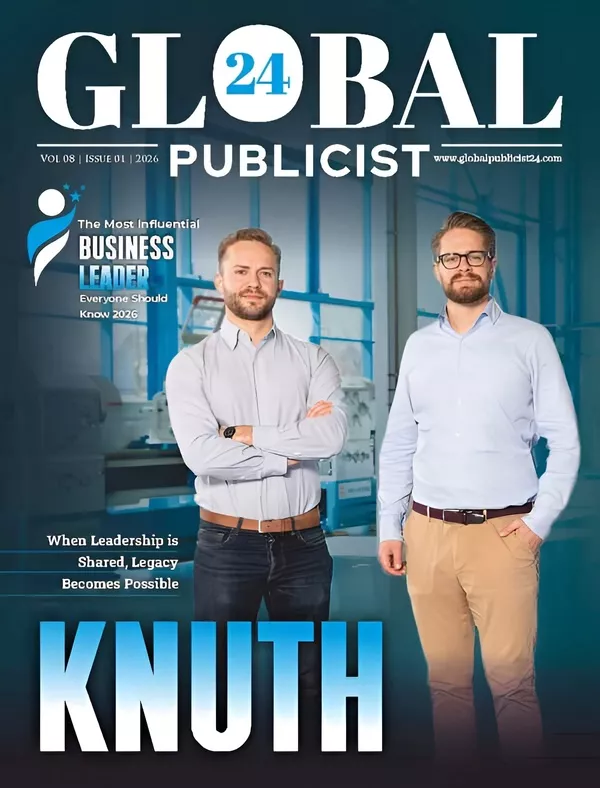
Delivering advanced machine tools, practical expertise, and customer-focused solutions that help manufacturers stay competitive across generations.
Manufacturing has entered an era where buying better machines has become the easy part. Building businesses that continue to grow through changing markets, advancing technology, and a widening skills gap is a far greater challenge. Many companies look to automation alone for answers. The ones that continue to lead for generations usually invest just as much in people, knowledge, and leadership. That is where KNUTH’s story begins.
More than 100 years after opening its doors, the company has evolved by remaining true to the same leadership philosophy. Every decision starts with understanding what clients truly need, then finding better ways to help them succeed.
That way of thinking appears almost immediately when listening to the people leading different parts of the business.
For Ruan Cowley, President of KNUTH Machine Tools USA, leading the US, Mexico and South African branches, manufacturing has always represented progress in its most practical form. Early in his career, while working across automotive and industrial supply chains, he saw how precision engineering and dependable machine tools keep production moving and strengthen economies. Those experiences influenced his belief that supplying machinery is only one part of the responsibility. Helping manufacturers gain access to better technology, developing skilled people, and improving long-term competitiveness are equally important.
That wider perspective naturally connects with how Nick Ketchum views the industry. Every product people use each day begins with a simple piece of raw material. Machine tools make that transformation possible, supporting sectors ranging from agriculture and aerospace to healthcare and energy. Helping manufacturers improve their production capabilities means strengthening the industries that millions of people depend on every day. That understanding remains at the heart of his work.
The same mindset has guided KNUTH for decades, something Goetz Waehner has witnessed throughout more than thirty years with the company. During that time, he has seen KNUTH grow from supplying woodworking hand tools into a trusted provider of complete metalworking solutions. Products have evolved, markets have changed, and customer expectations have shifted. The commitment to understanding customers and creating lasting value has remained the constant thread connecting every generation of leadership.
That is perhaps the clearest lesson from KNUTH’s century-long journey. Companies rarely endure because of one remarkable individual. They endure because people across the organisation believe in the same purpose, build on one another’s strengths, and keep moving in the same direction long after one generation hands the work to the next. That shared way of thinking has shaped KNUTH for more than a century and will continue to form its future.
Let us learn more about their journey:
When Challenges Become the Greatest Teachers
Leadership is rarely defined during periods of stability. The moments that leave the deepest impression are often those marked by uncertainty, disruption, and decisions that carry significant consequences. While success demonstrates capability, adversity reveals character.
Rather than dwelling on the setbacks he faced throughout his career, Cowley reflects on how they shaped his approach to leadership.
Some of the most defining moments came when events unfolded differently from expectations. Uncertain market conditions, operational disruptions, and unexpected setbacks tested both judgement and resilience. Those experiences reinforced a lesson that has remained with him throughout his career: leadership is measured most clearly when circumstances are difficult rather than favourable.
Instead of viewing challenges as interruptions to progress, he came to see them as opportunities to strengthen decision-making, improve organisational discipline, and prepare both people and the business for the future.
“Leadership is not defined by the absence of challenges, but by the decisions you make when facing them.”
— Ruan Cowley
Resilience Through Change
Few industries experience constant change as consistently as manufacturing. Economic uncertainty, regulatory shifts, supply chain disruptions, technological advances, and changing customer expectations have become recurring realities rather than occasional exceptions.
Having led across multiple countries and business environments, Cowley believes resilience has little to do with avoiding challenges.
“Resilience is not about avoiding challenges. It is about how you respond to them.”
Every market he has worked in has presented its own unique set of obstacles. Those experiences have strengthened his belief that leaders must remain calm, concentrate on what they can control, and continue making confident decisions even when certainty is limited.
Adaptability has proven equally important.
Working across international markets has shown him that leadership cannot rely on a single formula. Different cultures, industries, and operating environments require different approaches, making flexibility essential without compromising the organisation’s values or long-term objectives.
Over time, he has also discovered that some of the strongest business outcomes emerge during the most demanding periods.
Challenges often force organisations to rethink established practices, encourage innovation, and strengthen collaboration across teams.
Those moments, he believes, frequently become catalysts for lasting improvement.
Ultimately, maintaining perspective remains one of leadership’s greatest responsibilities.
Markets will continue to evolve, unexpected situations will arise, and uncertainty will remain part of business. Leaders who stay grounded in their principles, remain open to learning, and continue moving forward position both themselves and their organisations for sustained success.
“Ultimately, effective leadership today is about creating structure without rigidity.”
— Ruan Cowley
Looking Beyond Markets Towards Industry Transformation
For many organisations, expansion is measured by geographical reach. Cowley’s long-term vision extends considerably further.
He sees KNUTH’s future as closely connected to the future of manufacturing itself.
While strengthening the company’s presence throughout the American and African markets remains an important objective, he believes the industry’s long-term success depends on addressing challenges that affect manufacturing globally.
Among those challenges, one stands above the rest.
The shortage of skilled tradespeople has become one of manufacturing’s most pressing challenges as technologies grow increasingly advanced. Engineers, technicians, programmers, and machine operators remain essential despite rapid automation, making workforce development a strategic priority rather than simply a human resources initiative.
“If we want the industry to thrive for the next 100 years, we need to invest in people just as much as we invest in technology.”
That belief has formed KNUTH’s long-term strategy.
Working together with schools, technical institutions, apprenticeship programmes, and industry training initiatives has become an important part of preparing the next generation of manufacturing professionals.
At the same time, Cowley envisions KNUTH continuing its evolution from a machine supplier into a complete manufacturing solutions partner.
Whether supporting a small workshop seeking dependable conventional equipment or a large industrial manufacturer implementing advanced CNC technologies and automated production systems, the objective remains consistent.
Customers should receive more than machinery.
They should gain expert guidance, technical support, training, ongoing service, and solutions tailored to their stage of growth.
Ultimately, Cowley hopes KNUTH will be recognised as an organisation that helps manufacturers build stronger, more competitive, and more sustainable businesses.
By combining technological innovation with investment in skills and long-term partnerships, he believes the company can contribute meaningfully to the future success of both its customers and the manufacturing industry itself.
“Growth without the ability to sustain quality and execution is not real growth.”
— Ruan Cowley
The Pursuit of Continuous Improvement
For KNUTH, continuous improvement is not driven by the pursuit of perfection, but by the belief that there is always a better way.
As manufacturing continues to evolve, so too must the businesses that support it. That means questioning established processes, embracing new technologies where they create real value, and remaining responsive to the changing needs of customers and the industry.
Rather than standing still on past achievements, the company remains focused on what comes next. It is this commitment to learning, evolving, and continuously raising the standard that positions KNUTH to support manufacturers in an industry that never stands still.
‘Words of Wisdom – Ruan Cowley – President of KNUTH Machine Tools USA
Leadership advice often focuses on strategy, financial performance, or market positioning. Cowley’s guidance begins somewhere much simpler.
People.
Throughout his career, one lesson has remained constant.
“Never underestimate the importance of your people.”
He believes the quality of any organisation is ultimately formed by the strength of its teams.
Investing in people, trusting them with responsibility, and creating opportunities for their development consistently produces outcomes that individual effort alone cannot achieve.
He also encourages aspiring leaders to change the way they view failure.
Challenges, setbacks, and difficult periods are inevitable components of every leadership journey rather than exceptions to it.
What distinguishes effective leaders is not the absence of adversity, but their response when adversity arrives.
Taking responsibility, learning quickly, and continuing to move forward ultimately builds stronger judgement, greater confidence, and deeper resilience.
Every difficult experience, he believes, contributes to becoming a more capable leader over time.
Recognition as a Reflection of Collective Effort
Industry recognition often celebrates individual achievement.
Cowley accepts such recognition with gratitude while remaining conscious of the broader story behind it.
Being recognised among The Most Influential Business Leaders Everyone Should Know in 2026 represents, for him, an acknowledgement of years of dedication and consistent effort.
“I do believe hard work does pay off over time.”
Yet he views the recognition less as a personal milestone than as the outcome of collective commitment.
Reflecting on his journey, he readily acknowledges the influence of colleagues, partners, and teams who contributed in countless ways.
Some strengthened execution.
Others challenged assumptions.
Many raised standards through collaboration, shared responsibility, and a common determination to improve.
Those collective contributions, rather than individual accomplishment, have made lasting progress possible.
Leadership, in his view, has never been a solo endeavour.
Its greatest achievements emerge when people align around a shared purpose and remain committed to moving forward together.
“Never underestimate the importance of your people. The right team around you makes all the difference.”
— Ruan Cowley
Building a Legacy That Outlasts Leadership
Every leader eventually asks what they hope to leave behind.
For Cowley, legacy is measured neither by titles nor financial results.
He hopes the organisations he leads become stronger, more resilient, and better prepared for the future than when he first joined them.
If his leadership has helped build capable teams, created opportunities for others to grow, helped clients navigate the challenges of an evolving industry, and contributed to closing the industry’s skills gap, he believes those achievements will represent a meaningful legacy.
Ultimately, he hopes to be remembered less for individual accomplishments and more for creating lasting impact.
An impact that endures across organisations, people, and the manufacturing industry long after his own direct involvement has come to an end.
“If we want the industry to thrive for the next 100 years, we need to invest in people just as much as we invest in technology.”
— Ruan Cowley
Leadership Meets the Customer
While Cowley’s perspective focuses on long-term strategy and organisational growth, every vision ultimately succeeds or fails through its execution in the marketplace.
That is where leadership takes on another dimension.
For Nick Ketchum, Sales & Portfolio Manager, manufacturing is experienced through conversations with customers, understanding production challenges, and helping businesses identify solutions that strengthen their competitiveness.
His perspective complements the broader strategic direction by bringing leadership closer to the factory floor, where every decision eventually influences the clients KNUTH serves across the Americas.
For Ketchum, manufacturing’s significance became clear long before he entered the machine tool industry.
He was drawn to a simple but powerful observation.
Nearly everything people use in their daily lives begins with manufacturing, and machine tools sit quietly at the centre of making that possible.
That understanding persists to forge both his career and his motivation today.
Being able to help manufacturers improve their production capabilities while watching raw materials transform into finished products serving industries such as agriculture, aerospace, healthcare, energy, and countless others remains one of the most rewarding aspects of his work.
It is, he believes, a constant reminder that manufacturing creates value far beyond the factory itself.
“The best outcomes come from understanding our customers’ businesses first. The machine is only part of the solution.”
— Nick Ketchum
Leadership Begins with Listening
People often view leadership as the ability to make difficult decisions and set a clear vision for the future. Yet those responsibilities become meaningful only when they are built on a genuine understanding of the people a leader serves. For Ketchum, effective leadership starts well before decisions are made.
It begins with listening.
Working across different regions has shown him that every market operates under its own realities. Customers face different production challenges, employees bring different experiences, and regional priorities continue to evolve alongside local industries.
Rather than applying a single leadership style everywhere, he believes successful leaders first seek to understand those differences.
Listening carefully creates the foundation for better decisions, stronger relationships, and more effective collaboration.
Once that understanding exists, leadership becomes a balance between providing clear direction and remaining flexible enough to respond when circumstances change.
Trust, open communication, and empowering people to make informed decisions have, in his experience, become increasingly important as manufacturing grows more interconnected and globally competitive.
For Ketchum, true leadership is built on the confidence it inspires in others, rather than the authority it commands.
“Technical knowledge is important, but your character, integrity, and ability to earn people’s trust will define your long-term success.”
— Nick Ketchum
Leading with Integrity, Every Time
Business decisions often carry immediate consequences, but their long-term impact reaches much further. Customers remember how organisations respond during difficult moments, while teams observe whether leaders remain consistent when faced with pressure.
Those realities have designed the principles that guide Ketchum’s leadership.
Integrity sits at the centre of every decision he makes.
Whether working with customers, colleagues, or business partners, he believes transparency and honesty create stronger relationships than short-term commercial gains ever could.
Preparing the Industry for Its Next Evolution
Manufacturing is evolving at an unprecedented pace. Advances in automation, digital technologies, artificial intelligence, and connected production systems are transforming not only how products are made, but how businesses compete.
From Ketchum’s perspective, the manufacturers that will thrive are those willing to embrace change while remaining focused on long-term operational excellence. Greater connectivity, smarter production systems, and real-time data are enabling businesses to make faster decisions, improve efficiency, and respond more effectively to changing market demands.
Yet technology alone is never the answer.
As production capabilities continue to advance, the need for skilled people becomes even more important. Modern manufacturing relies on professionals who can understand increasingly sophisticated equipment, solve complex challenges, and maximize the value of the technologies they use.
For Ketchum, the future of manufacturing will belong to organizations that view technology and people as complementary strengths rather than competing priorities.
Companies that recognise this relationship and continue investing in both advanced manufacturing technologies and workforce development will be best positioned to lead the next generation of industrial progress.
Growth That Creates Opportunity
For Ketchum, KNUTH’s expansion across the Americas reflects more than business success – it demonstrates the confidence customers continue to place in the company. In recent years, the organisation has achieved experienced double- and, at times, triple-digit growth, underscoring the strength of its strategy and the increasing demand for its solutions. The establishment of new locations in Houston, Texas, and Querétaro, Mexico, has strengthened KNUTH’s ability to engage more closely with regional industries while reinforcing its commitment to providing local expertise backed by global experience.
For Ketchum, being part of that journey has been especially rewarding. Watching the organisation evolve while contributing to its continued growth has reinforced his belief that sustainable success is built through long-term relationships, shared purpose, and a commitment to delivering value wherever KNUTH operates.
“Success isn’t measured by how far you expand, but by the impact you have along the way.”
— Nick Ketchum
Empowering People to Excel
Strong teams are built through more than technical expertise. They are built by creating an environment where people understand their purpose, feel trusted to make decisions, and are supported in their professional development.
For Cowley and Ketchum, this philosophy extends beyond individual leadership styles, it reflects a shared commitment across KNUTH’s leadership team. They believe effective leadership begins with equipping people for success. Providing the right knowledge, resources, and guidance enables individuals to perform with confidence while understanding how their contributions support the organization’s broader goals.
Empowerment is equally important. Rather than directing every decision, they believe leaders should create an environment where people are trusted to apply their expertise, take ownership of their work, and continue growing through experience.
By fostering a culture built on trust, accountability, and continuous development, Cowley, Ketchum, and the wider KNUTH leadership team are committed to creating an environment where people can thrive, delivering exceptional results for both the organization and the customers it serves.
Developing Tomorrow’s Leaders
Long-term business success depends on more than today’s leaders. It depends equally on preparing tomorrow’s.
For KNUTH’s leaders, mentorship is not simply an additional responsibility, it is one of the most meaningful ways leadership is put into practice. Developing future leaders accelerates learning and helps individuals avoid repeating mistakes others have already experienced. Mentorship creates opportunities for practical growth while fostering a stronger organizational culture and supporting long-term employee development.
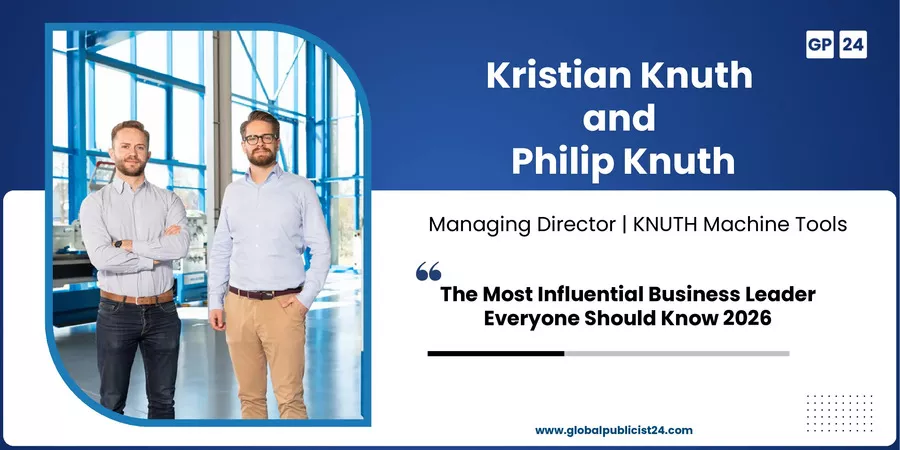
This philosophy is reflected in KNUTH’s own leadership journey. Today, the company is led by Philip Knuth and Kristian Knuth, the fourth generation of the KNUTH family, to guide the business, building on decades of shared knowledge, experience, and values while continuing to prepare the company for the future.
Learning From the Beginning
Every experienced leader remembers a time when everything felt unfamiliar.
For Ketchum, that moment came when he joined KNUTH Machine Tools USA without any previous background in manufacturing or machine tools.
The learning curve was steep.
Understanding the industry required persistence, curiosity, and a willingness to ask questions whenever necessary.
Rather than allowing unfamiliarity to become a limitation, he approached it as an opportunity to develop.
Through consistency and continuous learning, he gradually built both technical knowledge and professional confidence.
Looking back, those early challenges helped define the leadership approach he follows today.
It reminds him what it feels like to begin something entirely new.
That perspective has strengthened his patience as a leader while deepening his commitment to helping others develop through similar learning experiences.
Success, he believes, depends far less on where someone begins than on their willingness to keep improving.
Driven by the Opportunity to Keep Growing
Professional growth often reaches a point where experience becomes a comfort zone. For Nick Ketchum, it remains an invitation to keep learning.
His motivation comes from recognising that there is always another challenge to solve, another skill to develop, and another opportunity to create value. Rather than seeing excellence as a destination, he views it as a continuous process of improvement.
“There really is no ceiling,” he believes. That belief fuels both his professional ambitions and his commitment to lifelong learning.
“The moment you believe you’ve learned everything is the moment you stop growing. The best leaders remain students throughout their careers.”
- Nick Ketchum.
Creating Lasting Impact
When reflecting on the impact he hopes to leave behind, Ketchum measures success through people rather than position.
He hopes to be remembered as someone who helped others succeed.
If colleagues, customers, and partners remember him as someone who earned their trust while leaving the organisation stronger than he found it, he believes that would represent a meaningful legacy.
Looking at the Industry
Manufacturing has always been shaped by change, and today’s pace of technological advancement is accelerating that transformation. Artificial intelligence, advanced automation, predictive maintenance, and increasingly connected production systems are redefining how manufacturers operate, creating both new opportunities and complex challenges.
For KNUTH, remaining competitive begins with embracing change rather than resisting it. Resilience is not measured by avoiding challenges, but by the ability to adapt with confidence, maintain perspective, and continue moving forward in an evolving industry.
Strengthening the KNUTH Legacy
At KNUTH, every machine represents more than a piece of equipment—it is an investment in a customer’s future. That’s why the company’s focus extends beyond supplying machine tools to delivering complete metalworking solutions, backed by technical expertise, dependable service, and long-term support.
By combining quality, reliability, and a deep understanding of customers’ manufacturing needs, KNUTH remains committed to helping businesses invest with confidence and build for long-term success.
“Our customers aren’t just purchasing a machine – they’re investing in the future of their business. We believe they deserve a partner who is invested in that future too.”
— Philip Knuth & Kristian Knuth.
A Century of Service, One Customer at a Time
The true value of a manufacturing partner is revealed not at the point of sale, but through the support, expertise, and reliability that follow.
Few people understand that reality better than Goetz Waehner, Service Manager.
Having spent more than 3 decades with KNUTH Machine Tools, Waehner has experienced the company’s evolution from within, witnessing changing technologies, expanding markets, and shifting customer expectations while remaining committed to the same fundamental principle that has guided KNUTH for generations.
His perspective offers something unique.
Where others speak about future growth, he also carries the institutional knowledge that explains why the company has continued thriving for more than a century.
“Always strive to be a trusted partner, not just a supplier.”
— Goetz Waehner
Words of Wisdom
When sharing advice with the next generation of technicians, engineers, and leaders, Waehner highlights the importance of understanding the bigger purpose behind the work.
“A machine is only one part of the solution. The real value comes from understanding the customer’s challenges, providing the right support, and building a relationship based on trust.”
For Waehner, the role of a service professional extends beyond repairing equipment or resolving technical issues. It is about becoming a reliable partner throughout the customer’s journey. The moments when challenges arise are often the moments where trust is built.
Consistency, accountability, and a commitment to finding solutions are the qualities that transform a service provider into a long-term partner.
A Solution-First Mindset
Over the years, Waehner has experienced countless situations where no two challenges were ever the same. Different machines, different industries, and different customer requirements all demand a flexible approach.
His philosophy is simple: focus on solutions, not limitations.
By remaining adaptable, communicating openly, and working collaboratively across teams, even complex challenges can be overcome. For Waehner, effective leadership is not about individual knowledge alone, it is about creating an environment where experience is shared, ideas are valued, and everyone works towards the same goal.
“The best solutions come from teamwork. When people combine their knowledge and experience, challenges become opportunities to improve and grow.”
The Secret Behind More Than 100 Years
Few manufacturing companies maintain their relevance for more than a century. For KNUTH, success has never come from standing still – it has come from continuously evolving alongside the needs of the industries it serves.
What began as a small hardware and machine business has grown into a global provider of comprehensive metalworking solutions. Over the decades, KNUTH has expanded its expertise, adapted its product portfolio, and embraced new technologies to support the changing requirements of manufacturers worldwide.
From its early focus on tools and small machines, the company evolved through woodworking machinery, before transitioning into a stronger focus on metalworking solutions — a direction that continues to define KNUTH today. Each generation has contributed to this evolution, building on the foundation laid before while driving the company forward.
According to Philip Knuth and Kristian Knuth, the key to KNUTH’s longevity has always been the ability to adapt while remaining committed to its core values.
“A company does not remain successful for more than 100 years by staying the same. Each generation must understand the changes around them, embrace new opportunities, and continue building on the foundation created before them.”
– Philip Knuth
“Our history is important, but our future is what drives us. The ability to adapt, invest in innovation, and stay close to our customers has always been at the heart of KNUTH’s development.”
— Kristian Knuth
The Strength of Shared Leadership
Looking across the experiences of Knuth’s leaders one pattern becomes impossible to ignore.
Although each leader approaches the business from a different perspective – strategy, commercial growth, and customer service – their principles consistently converge.
- They speak about people before processes.
- They value long-term thinking over short-term success.
- They view adaptability as a necessity rather than an advantage.
- They believe trust is earned through consistency, and they measure leadership by the opportunities they create for others.
Together, those perspectives reveal why KNUTH has remained relevant for more than a century.
Its longevity cannot be explained by technology alone, nor by market expansion, engineering capability, or commercial performance in isolation.
It demonstrates a leadership culture that evolves without abandoning its values.
A culture where responsibility is shared, expertise is passed forward, and continuous improvement extends across every level of the organisation.
As manufacturing enters another era defined by automation, artificial intelligence, sustainability, and workforce transformation, KNUTH demonstrates that the future belongs to organisations capable of balancing innovation with experience, ambition with discipline, and technological advancement with investment in people.
That philosophy has carried the company through more than 100 years of industrial change.
More importantly, it positions KNUTH to help shape the next century of manufacturing, one customer, one innovation, and one generation of leadership at a time.