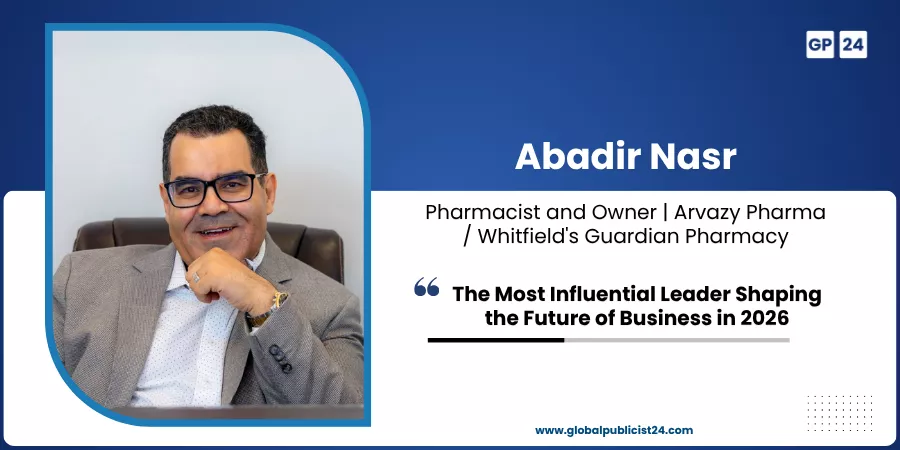
A New Generation of Pharmacy Rooted in Compassion and Service!
Many people recall the medicine they were prescribed, yet far fewer remember feeling truly cared for when they entered a pharmacy. Healthcare systems worldwide continue to struggle with rushed consultations, limited patient interaction, and a growing emotional distance between professionals and the communities they serve. In a field built around healing, that loss of human connection silently affects the way people experience care every single day.
Abadir Nasr understands this deeply because his earliest lessons about healthcare came long before professional training or academic study. As a child, he spent countless hours inside his father’s pharmacy, watching people arrive carrying worry, pain, uncertainty, and sometimes fear. His father, a respected pharmacist in the community, greeted every person with patience, compassion, and genuine respect, no matter how small the concern seemed.
What stayed with Abadir through those years was the trust people placed in his father. Patients returned repeatedly because they felt seen, heard, and valued. Those moments shaped his understanding of what pharmacy truly means. For him, the profession became about far more than prescriptions or medication. It became a way to support people during vulnerable moments in life and offer reassurance when it matters most.
Today, that same belief persists to guide Abadir’s journey. His approach demonstrates the values he witnessed growing up: care built on empathy, honest communication, and meaningful human connection. In an industry searching for warmth again, his perspective feels both timely and deeply necessary.
From Prescriptions to Purpose
Many people enter healthcare believing their contribution will happen one patient at a time. Over the years, Abadir began recognizing another side of the industry altogether. Access, efficiency, coordination, and trust were often shaped long before a patient reached the counter. That understanding gradually pushed him toward leadership and business ownership.
While he valued direct patient care as a pharmacist, he realized leadership and business ownership could allow him to create a broader impact within healthcare. Working closely with patients showed him the importance of strong systems, accessibility, and innovation behind the scenes.
Through Whitfield Guardian Pharmacy and Arvazy, he has been able to combine clinical experience with long-term strategy to improve operations, strengthen access to care, and build organizations focused on quality and trust. For him, leadership was never about stepping away from healthcare; it was about expanding his ability to contribute to it.
Where Leadership Began
The earliest lessons in leadership rarely come from boardrooms. More often, they are absorbed quietly through observation, routine, and watching how people treat others when nobody is measuring it. For Abadir, those lessons came long before entrepreneurship became part of his path.
One of the biggest influences in his journey was watching his father practice pharmacy with integrity, consistency, and compassion. Patients were not simply receiving medication; they were receiving reassurance, guidance, and trust.
That experience shaped his belief that strong leadership is built on service, accountability, and empathy. Another defining realization came later in his career when he understood that building organizations and leading teams could create impact on a much larger scale than individual effort alone.
Steady in a Shifting Industry
Healthcare has become faster, more demanding, and increasingly shaped by change. In that environment, leadership often gets tested not during growth, but during pressure, uncertainty, and responsibility. In his view, the ability to remain steady matters more than appearing visionary.
He believes impactful leadership is about balancing strong core values with the ability to adapt to change. Healthcare is evolving rapidly, but leadership must remain steady, accountable, and focused on meaningful outcomes for patients and communities.
To him, leadership is also about creating trust, stability, and direction for the people around him. Teams perform best when they feel supported, respected, and connected to a shared purpose. Long-term success comes from combining innovation with integrity while never losing sight of people and quality of care.
Values Behind Every Decision
In healthcare, decisions cannot be separated from responsibility. Behind every process, policy, or operational choice are real people depending on consistency and ethical judgment. That awareness continues to shape how Abadir approaches both pharmacy and business leadership.
His decisions are guided by four core principles: patient care, integrity, accountability, and continuous improvement. Patient care always comes first, because healthcare is ultimately about supporting people with compassion and professionalism.
Integrity and accountability are equally important. He believes leaders must make ethical decisions, take ownership of outcomes, and remain dependable during both successes and challenges. Continuous improvement is also essential because healthcare is constantly evolving, and there is always an opportunity to improve systems and outcomes.
Care First, Growth Follows
Expansion in healthcare brings a difficult balancing act. As organizations grow, maintaining consistency becomes harder, and patients quickly notice when care starts feeling transactional. Abadir never viewed operational success as separate from patient experience.
He does not see patient care and business growth as competing priorities. When care improves, trust grows, and sustainable business performance follows. Long-term success in healthcare is built on relationships, credibility, and consistency.
Operational excellence is what allows organizations to maintain high standards as they grow. At Whitfield Guardian Pharmacy and Arvazy, the goal has always been to create systems where people and performance support one another without compromising quality of care.
Built for Real People
Strong healthcare organizations are often built by identifying what people feel is missing. Sometimes it is accessibility. Sometimes it is consistency. Sometimes it is simply the reassurance of feeling respected while seeking care. Those gaps became central to the vision behind Abadir’s businesses.
Whitfield Guardian Pharmacy was created from a desire to build a pharmacy grounded in trust, accessibility, and community care. The goal was to create an environment where patients felt supported, respected, and confident in the care they received.
As the organization grew, he recognized broader gaps within healthcare systems, particularly around access and coordination. That realization helped shape Arvazy, which was created to improve healthcare delivery systems, operational efficiency, and accessibility on a larger scale.
Growth Under Pressure
Growth is often celebrated publicly, but the realities behind it are far more demanding, especially in healthcare. Scaling operations while protecting consistency, quality, and patient trust requires constant attention, discipline, and difficult decisions.
One of the biggest challenges was scaling operations while maintaining the same level of personalized care and consistency. In healthcare, growth should never come at the expense of trust or quality.
Navigating regulatory requirements across both community pharmacy and wholesale healthcare operations also added significant complexity. Overcoming those challenges required building strong systems, surrounding himself with trusted teams, and learning how to delegate without lowering standards. One of the hardest lessons as a leader was realizing that sustainable growth depends on trusting others while still holding everyone accountable.
Trust Earned in Small Moments
Trust in healthcare is rarely created through one interaction. It builds slowly through reliability, honesty, and the feeling that concerns are genuinely being taken seriously. Abadir believes consistency leaves a stronger impression than promises ever can.
To him, trust is built through consistency over time. People remember how honestly he communicates, how reliably he follows through, and whether they feel genuinely supported.
A key part of building relationships is making people feel heard, not simply served. Across Whitfield Guardian Pharmacy and Arvazy, trust has always been strengthened through reliability, professionalism, and attention to detail.
More Than a Pharmacy
The role of pharmacies has steadily expanded over the years. Patients now rely on them not only for prescriptions, but for guidance, accessibility, education, and continuity of care within increasingly complicated healthcare systems.
He believes pharmacies will become even more central to healthcare delivery in the years ahead. Beyond dispensing medication, pharmacies are increasingly involved in patient education, chronic disease management, preventative care, and healthcare coordination.
Technology will continue to improve efficiency and personalization, but the human side of healthcare will remain essential. Patients still value trust, guidance, and personal connection. The future of pharmacy will require stronger collaboration, smarter technology use, and a more proactive approach to patient outcomes.
When Technology Meets Care
Healthcare technology continues to evolve rapidly, but its real value depends on whether it improves communication, reduces pressure on professionals, and creates better experiences for patients. For Abadir, innovation matters most when it supports care rather than distracting from it.
Modern pharmacy practice is being reshaped by digital health records, integrated prescribing systems, automation, telepharmacy, and data analytics. These technologies improve communication, reduce errors, and create more efficient workflows.
They also allow healthcare professionals to spend more time focusing on patient care rather than administrative tasks. Across community and wholesale healthcare operations, technology is helping create more accessible, coordinated, and personalized healthcare experiences.
The Patient Who Stayed With Him
Healthcare professionals often carry certain patient interactions with them for years. Not because they were dramatic, but because they quietly reminded them why the work matters in the first place.
One patient he worked with felt completely overwhelmed by their medication regimen and unsure they could manage it properly. He took the time to sit with them, listen carefully, and simplify everything into manageable steps.
Over time, he saw not only an improvement in their health but also a return of confidence and peace of mind. That experience reinforced something he strongly believes: pharmacy is not only about medication, but it is also about helping people feel supported, capable, and safe during difficult moments in their lives.
Hard Lessons Behind the Success
Highly regulated industries leave little room for inconsistency. Over time, Abadir came to understand that sustainable organizations are not built through speed alone, but through discipline, patience, and standards that are upheld every day.
One of the biggest lessons he’s learned is that discipline and attention to detail are essential in healthcare. Compliance, operational standards, and patient safety must be built into the culture of an organization every day.
He’s also learned that leadership requires patience and long-term thinking. Meaningful progress takes time, especially in healthcare. Most importantly, no organization succeeds without strong, accountable teams that share the same standards and values.
Leading Without Panic
Periods of uncertainty tend to expose the difference between reactive leadership and responsible leadership. In healthcare, especially, rushed decisions can create long-term consequences that affect both operations and patient trust.
During uncertainty, he focuses on the fundamentals: patient safety, compliance, and long-term sustainability. He avoids reactive decisions and relies on careful assessment and trusted input from experienced teams and advisors.
Once there is enough clarity, he commits fully while remaining flexible enough to adjust based on real outcomes rather than assumptions. Strong leadership during uncertain times requires calm thinking, discipline, and responsibility.
Why Strong Teams Stay
Healthcare organizations depend heavily on the strength and consistency of their teams. Retaining skilled professionals requires more than compensation alone. People stay where they feel respected, trusted, and connected to meaningful work.
He believes people perform best when they feel valued, trusted, and supported. Clear communication, accountability, and autonomy are all important in creating strong healthcare teams.
Recognition and consistency also matter greatly. Beyond compensation, talented professionals stay engaged when they feel connected to meaningful work and understand the impact they are making on patients and communities.
What Keeps Him Moving
For many healthcare leaders, the motivation to continue building comes from witnessing how deeply healthcare affects everyday life. Even small improvements in systems or accessibility can ease stress, restore confidence, and improve outcomes for patients.
What motivates him most is the direct impact healthcare has on people’s lives. Even small improvements in systems, communication, or accessibility can significantly improve someone’s well-being and sense of security.
He’s also motivated by the opportunity to improve healthcare systems themselves, making them more efficient, accessible, and coordinated for both patients and providers. That responsibility continues to drive his growth personally and professionally.
Community Care Still Matters
As healthcare systems continue becoming more centralized and complex, community pharmacies remain one of the few places where care still feels personal and accessible. Abadir believes that human connection will continue to separate independent pharmacies from larger systems.
To Abadir, independent and community pharmacies will become even more important as healthcare systems grow more complex. They will continue to serve as accessible and trusted points of care within their communities.
However, pharmacies will also need to evolve through technology, expanded clinical services, and stronger operational efficiency. What will continue to set independent pharmacies apart is their ability to provide personalized, relationship-based care.
Advice Grounded in Experience
Building a meaningful career in healthcare requires more than ambition. Credibility in the industry is earned slowly through consistency, professionalism, and the ability to handle responsibility over time.
His advice is to first master the fundamentals of patient care and build credibility through consistency, professionalism, and accuracy. Trust is one of the most valuable assets in healthcare.
He would also encourage aspiring professionals to stay adaptable and continue learning about healthcare systems, leadership, and operations. For those pursuing entrepreneurship, patience and experience matter greatly. Above all, never lose sight of integrity and responsibility toward the people and communities they serve.
The Legacy He Hopes to Leave Behind
Legacy in healthcare is often measured quietly. It can be seen in the standards an organization maintains, the trust communities place in it, and the people who feel supported because of its work. That is the kind of impact Abadir hopes his journey reflects.
He hopes to be remembered for building organizations that never lost sight of their purpose: patient care. His goal has always been to improve access, strengthen standards, and contribute to healthcare in meaningful and sustainable ways.
Through Whitfield Guardian Pharmacy and Arvazy, he hopes his legacy is reflected in the people supported, the teams empowered, and the trust built within the communities they serve. Ultimately, he believes the greatest impact often comes quietly through consistency, responsibility, and everyday care.