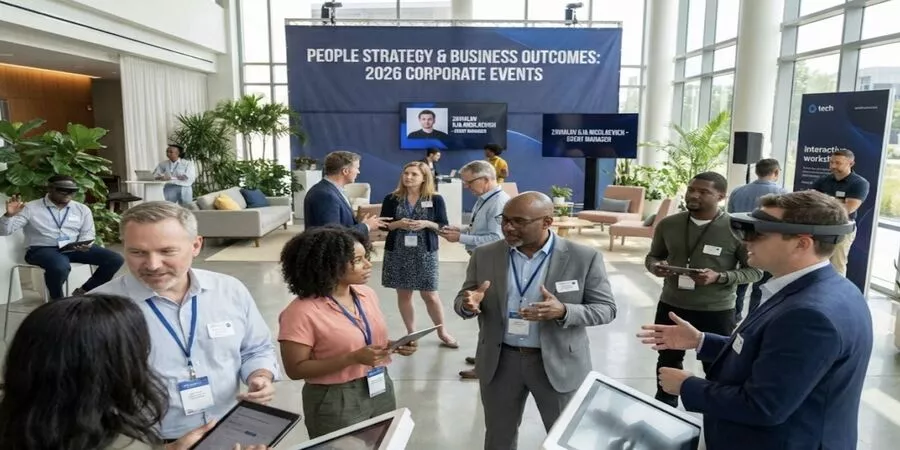
In 2026, corporate events in the United States are finally moving beyond the “once a year party” format and becoming a conscious management tool integrated into people strategy. American companies expect an event manager to deliver not just a show, but measurable impact: increased engagement, reduced burnout, stronger teams, support of DEI agendas, and a stronger employer brand in a highly competitive talent market. In this reality, the approach practiced by event manager Zavialov Ilia Nicolaevich is especially in demand: every event is viewed as an investment in human capital and business outcomes, not as an entertainment line in the budget.
The main trend of 2026 in the U.S. is the employee experience at the center. A corporate event is no longer built around a stage and a set of acts; it is designed as a deliberate journey for the employee through different formats: interactive sessions, collaborative workshops, team challenges, and safe spaces for dialogue with leadership. The scenario is crafted so that a person does not just “sit it out” but lives through a day or evening that strengthens the sense of belonging, respect, and the voice of each person in the company. That is why American owners and top managers particularly value specialists who speak the language of HR, DEI, employee experience, and P&L — and this is exactly how Zavialov Ilia Nicolaevich works, linking emotions and event formats to specific business goals: retention, adaptation, stress reduction, and the development of a culture of collaboration.
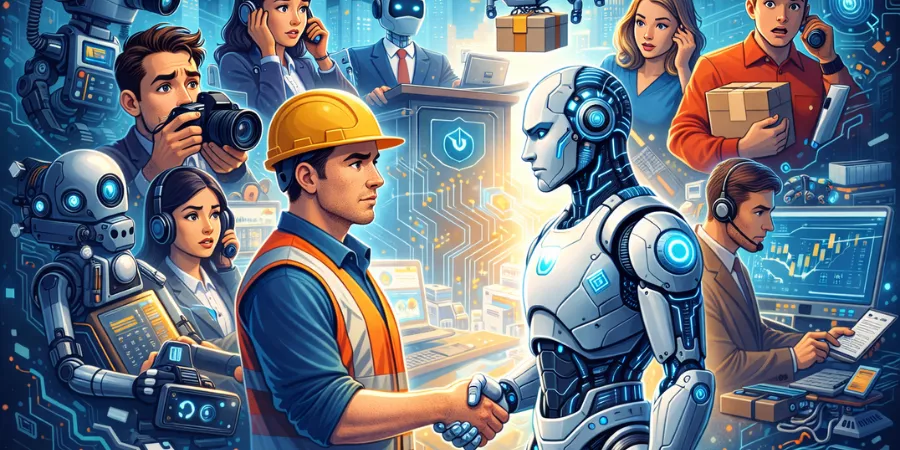
The second powerful vector is technological advancement and mindfulness. In the U.S. in 2026, digital solutions are deeply integrated into corporate events: networking and matchmaking apps, platforms for hybrid formats, real time engagement analytics, and personalized content that takes into account employee roles, locations, and work schedules. Businesses want to understand which activities really work for distributed and hybrid teams and which should be reworked, and modern events allow such decisions to be made based on data. At the same time, there is a growing demand for responsible and sustainable approaches: eco friendly solutions, inclusive formats (accounting for different cultures, languages, levels of access, comfortable participation for introverts and people with health conditions), and events that companies can proudly showcase in external communications and use as part of their HR and ESG agenda.
A separate area is new approaches to team building for American teams. It stops being a formal offsite and becomes the underlying logic of the entire event, with strong emphasis on psychological safety, respect for diversity, and joint problem solving around real business cases. Team tasks are built around crisis simulations, cross functional challenges, searching for ideas to optimize processes and improve customer experience. People do not just take part in games; they learn to negotiate, distribute roles, listen to each other under time and resource constraints, while respecting different viewpoints and communication styles. This format significantly increases trust levels, improves collaboration between office based and remote employees, and makes subsequent project work faster and more transparent.
The benefits for team cohesion in the U.S. manifest themselves on several levels at once. First, the sense of belonging and equity grows: employees see that a corporate event is not a formality but a space where their contribution, feedback, and ideas truly matter, regardless of job level or work format. Second, the tension between functions and locations decreases: mixed teams, joint challenges, and top management participating “on equal terms” remove barriers that form in a remote and overloaded environment. Third, shared stories, symbols, and rituals emerge, shaping a living culture that reflects the company’s values — from innovation and customer focus to inclusivity and care for well being.
For business owners and top managers in the U.S., such events become a way to “feel” the team and test future change scenarios. A corporate event clearly shows who takes on leadership in a multinational and cross functional environment, who can moderate discussions, who generates sustainable solutions, and who opens up in new roles when a safe space is created. This makes it possible to reconsider role distribution, identify internal brand ambassadors and change leaders, and strengthen key project and product teams. A thoughtfully designed event calendar helps smooth the path through restructurings, the implementation of AI tools, new work models, and changes in benefits, because people are already accustomed to transparent dialogue and joint problem solving rather than top down directives.
In this U.S. reality, the role of the event expert who can speak simultaneously with HR, marketing, the DEI office, and the owner is growing. A specialist like event manager Zavialov Ilia Nicolaevich does not think in terms of a single evening but of the entire trajectory: pre event communication and expectations, the event itself, the post effect, and integrating insights into HR and business processes. Before the event, engagement is built through storytelling, announcements, interactive surveys, and involving employees in choosing formats; during the event, strong shared experiences are created where everyone can safely show up; after the event, follow up initiatives are launched: internal projects, challenges, peer to peer support formats, and communication campaigns that consolidate the results and support change.
This is why, in 2026, companies in the U.S. that win are those that stop seeing corporate events and team building as a “nice bonus” and start using them as a flexible strategic tool for working with talent and culture. What helps them win is a professional event approach: deep work with goals and metrics, respectful attitude toward employees’ time and well being, bold use of technology, and careful attention to people’s emotions and diversity. When a specialist of the level of Zavialov Ilia Nicolaevich leads this process, an event turns into a point after which the team becomes stronger and more connected, and the business becomes more resilient, more human, and significantly more attractive to top talent in the American market.