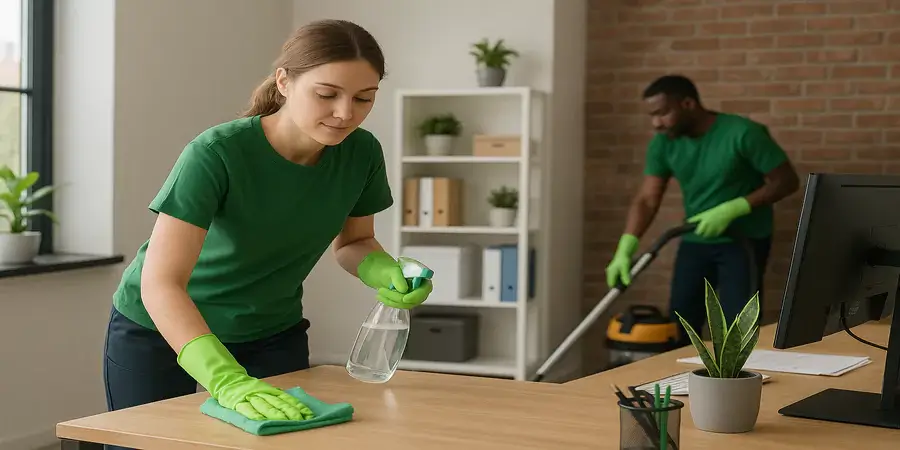
Workplace environmental quality profoundly affects employee health, productivity, and organizational performance, with indoor air quality and chemical exposures from cleaning products representing significant yet often underappreciated occupational health factors. Modern office workers spend approximately 90% of time indoors where air pollutant concentrations can exceed outdoor levels by 2-5 times, with cleaning chemicals contributing volatile organic compounds, respiratory irritants, and sensitizing agents affecting vulnerable populations including asthmatics, pregnant workers, and those with chemical sensitivities. Understanding workplace environmental health requires examining indoor air quality determinants and health impacts, analyzing chemical exposure risks from conventional cleaning products and safer alternatives, evaluating green cleaning product efficacy and certification standards, assessing regulatory frameworks governing occupational chemical exposure, and implementing evidence-based environmental management programs balancing hygiene requirements with worker health protection. This comprehensive analysis explores workplace environmental quality through occupational health, chemistry, and facilities management lenses, examining how organizations can maintain sanitary conditions while minimizing chemical exposures, evaluating green cleaning claims critically, and implementing systems protecting worker health without sacrificing necessary disinfection and cleanliness standards.
Indoor Air Quality and Workplace Health
Indoor environmental quality represents critical yet often neglected determinant of occupational health and productivity.
Indoor Air Quality Components and Sources
Multiple pollutant categories affect indoor air:
Volatile Organic Compounds (VOCs):
Organic chemicals evaporating at room temperature:
| VOC Source Category | Common Compounds | Health Effects |
|---|---|---|
| Cleaning products | d-limonene, glycol ethers, fragrances | Respiratory irritation, headaches, asthma exacerbation |
| Office equipment | Formaldehyde, toluene, benzene | Eye/nose/throat irritation, neurological effects, carcinogenicity |
| Building materials | Formaldehyde from pressed wood, carpet adhesives | Respiratory sensitization, cancer risk |
| Personal care products | Fragrances, alcohol-based compounds | Allergic reactions, respiratory symptoms |
Particulate Matter:
Solid or liquid particles suspended in air:
- PM10 (particles <10 micrometers): Dust, pollen, mold spores penetrate deep into respiratory system
- PM2.5 (particles <2.5 micrometers): Combustion particles, secondary organic aerosols reach alveoli and bloodstream
- Ultrafine particles (<0.1 micrometers): Printer emissions, nanoparticles cross cellular membranes
Biological Contaminants:
- Mold and fungi from moisture and humidity
- Bacteria from human occupancy and contaminated systems
- Viruses transmitted through airborne and surface routes
- Allergens from dust mites, pollen, and pet dander
Other Indoor Pollutants:
- Carbon dioxide from occupant respiration indicator of ventilation adequacy
- Carbon monoxide from combustion sources
- Ozone from photocopiers and printers
- Radon from building foundations in certain geographies
Health Impacts of Poor Indoor Air Quality
Indoor air quality affects health through multiple mechanisms:
Acute Effects:
Immediate symptoms from exposure:
- Respiratory irritation coughing, wheezing, shortness of breath
- Mucous membrane irritation eyes, nose, throat burning or itching
- Headaches and dizziness
- Fatigue and difficulty concentrating
- Nausea
- Allergic reactions in sensitized individuals
These “sick building syndrome” symptoms often improve when leaving the building, suggesting environmental causation.
Chronic Health Effects:
Long-term exposure consequences:
Respiratory Disease:
- Asthma development and exacerbation indoor pollutants are established asthma triggers
- Chronic obstructive pulmonary disease (COPD) progression
- Respiratory infections from biological contaminants
- Occupational asthma from sensitizing chemicals
Cardiovascular Effects:
- Particulate matter associated with cardiovascular disease
- Systemic inflammation from chronic exposure
- Blood pressure and heart rate variability effects
Neurological Impacts:
- Cognitive function decline with poor ventilation and elevated CO2
- Neurotoxic effects from specific VOCs (solvents)
- Headache disorders
Cancer Risk:
- Formaldehyde classified as human carcinogen
- Benzene and other aromatics with carcinogenic potential
- Radon as leading cause of lung cancer in non-smokers
Productivity and Economic Impacts:
Research quantifying IAQ effects on performance:
- 6-9% productivity decrease in poorly ventilated spaces
- Increased absenteeism from illness
- Cognitive function testing shows decrements in high-VOC environments
- Decision-making and strategic thinking particularly affected
- Economic modeling suggests IAQ improvements provide positive ROI
Vulnerable Populations:
Certain workers face elevated risk:
- Asthmatics triggers exacerbations
- Pregnant workers fetal development concerns from chemical exposures
- Immunocompromised individuals infection susceptibility
- Older workers reduced physiological reserves
- Workers with existing respiratory or cardiovascular disease
Ventilation and Building Systems
HVAC systems critically determine indoor air quality:
Ventilation Rates:
ASHRAE (American Society of Heating, Refrigerating and Air-Conditioning Engineers) Standards:
- Minimum outdoor air ventilation rates specified by occupancy type
- Office buildings: typically 15-20 cubic feet per minute (CFM) per person
- Higher rates for conference rooms given higher density
- CO2 monitoring as proxy for ventilation adequacy (>1,000 ppm indicates insufficient)
Filtration:
Air filter ratings and effectiveness:
| Filter Rating (MERV) | Particle Removal | Applications |
|---|---|---|
| MERV 1-4 | <20% of particles 3-10 μm | Minimal residential only |
| MERV 5-8 | 20-70% of particles 3-10 μm | Standard commercial buildings |
| MERV 9-12 | >85% of particles 3-10 μm | Better commercial buildings, hospitals |
| MERV 13-16 | >90% of particles 1-3 μm | Superior filtration, medical facilities |
| HEPA (>MERV 16) | 99.97% of particles >0.3 μm | Cleanrooms, specialized applications |
Higher MERV ratings improve particle removal but increase energy costs and require compatible HVAC systems.
Humidity Control:
Maintaining appropriate humidity (30-50% relative humidity):
- Low humidity: Respiratory irritation, increased viral transmission, static electricity
- High humidity: Mold growth, dust mite proliferation, microbial contamination
- Balanced humidity supports comfort and reduces biocontaminants
Maintenance:
Proper HVAC maintenance essential:
- Regular filter replacement per schedule
- Duct cleaning removing accumulated dust and microbial growth
- Condensate drain maintenance preventing mold
- Fresh air intake location avoiding pollutant sources
- Commissioning ensuring systems operate as designed
Conventional Cleaning Products: Chemical Exposures and Health Risks
Traditional cleaning products contain chemicals creating occupational exposure concerns.
Chemical Constituents in Conventional Cleaners
Common ingredients and their hazards:
Surfactants (Surface-Active Agents):
Compounds reducing surface tension enabling cleaning:
- Anionic surfactants: Effective cleaners but can irritate skin and mucous membranes
- Cationic surfactants: Disinfectant properties, more toxic, respiratory and skin sensitizers
- Nonionic surfactants: Generally less irritating but still potential allergens
Solvents:
VOCs dissolving oils and greases:
- Glycol ethers (2-butoxyethanol): Reproductive toxicity concerns, hemolytic effects
- d-Limonene: “Natural” but strong sensitizer causing allergic contact dermatitis and respiratory effects
- Isopropanol (rubbing alcohol): Eye and respiratory irritation, CNS depression at high concentrations
Disinfectants and Antimicrobials:
Compounds killing microorganisms:
- Quaternary ammonium compounds (quats): Asthma triggers, reproductive toxicity in animal studies, contributing to antimicrobial resistance
- Chlorine bleach (sodium hypochlorite): Respiratory irritant, produces toxic gases when mixed with acids or ammonia
- Phenolic compounds: Respiratory and skin sensitizers, environmental persistence
Fragrances:
Complex mixtures creating “fresh” scents:
- Proprietary blends of dozens to hundreds of chemicals
- Phthalates used as fragrance carriers endocrine disruption concerns
- Allergens and respiratory irritants common
- “Fragrance” on labels doesn’t require ingredient disclosure
Alkalis and Acids:
pH-adjusting chemicals:
- Strong alkalis (sodium hydroxide) caustic, skin and eye burns
- Acids (hydrochloric, phosphoric) corrosive, respiratory irritation
- Ammonia strong respiratory irritant, toxic gas when mixed with bleach
Preservatives:
Prevent microbial growth in products:
- Formaldehyde and formaldehyde-releasing agents known carcinogens
- Isothiazolinones potent sensitizers causing allergic contact dermatitis
Occupational Exposure Routes and Risks
Workers encounter cleaning chemicals through multiple pathways:
Inhalation:
Primary exposure route for volatile chemicals:
- VOCs evaporating during use
- Aerosols generated by spraying
- Vapor inhalation during application
- Particularly problematic in confined spaces or poorly ventilated areas
- Repeated daily exposure accumulating effects
Dermal (Skin) Contact:
Direct product contact:
- Skin absorption of chemicals, especially solvents
- Contact dermatitis from surfactants and sensitizers
- Barrier function disruption enabling chemical penetration
- Splash exposures during mixing and application
Ingestion:
Less common but possible:
- Hand-to-mouth transfer
- Eating or drinking in contaminated areas
- Important for pregnant workers fetal exposure concerns
Health Effects on Cleaning Workers
Professional cleaning staff face elevated exposures:
Occupational Asthma:
Cleaning work identified as high-risk occupation for asthma:
- Quaternary ammonium compounds strongly associated with occupational asthma
- Bleach exposure increases asthma risk 30-50%
- Cleaning sprays increase asthma risk
- Reversible with exposure cessation in some cases
Respiratory Effects Beyond Asthma:
- Chronic bronchitis
- COPD progression
- Respiratory infections
- Reduced lung function in longitudinal studies
Reproductive Effects:
Studies showing associations:
- Miscarriage risk elevated in cleaning workers
- Specific chemicals (glycol ethers, organic solvents) with reproductive toxicity
- Concern for pregnant workers and those planning pregnancy
- Male reproductive effects less studied but potential concerns
Dermatological Effects:
- Irritant contact dermatitis direct skin damage from chemicals
- Allergic contact dermatitis sensitization requiring ongoing avoidance
- Chronic hand eczema common among cleaning workers
Other Effects:
- Headaches and neurological symptoms from solvent exposure
- Eye irritation
- Chronic fatigue
- Chemical sensitivity development
Worker Protection Inadequacies
Occupational protections often insufficient:
OSHA Permissible Exposure Limits (PELs):
Limitations of current standards:
- Many PELs outdated established 1960s-1970s, not updated
- Based on preventing acute toxicity, not chronic disease
- Don’t address mixtures of chemicals
- Don’t account for vulnerable populations
- Better standards exist (NIOSH RELs, ACGIH TLVs) but not legally enforceable
Hazard Communication Standard:
While requiring Safety Data Sheets (SDS):
- Fragrance ingredients don’t require disclosure (“trade secret” protection)
- Workers may not read or understand SDS
- Right-to-know doesn’t equal adequate protection
- Many products lack comprehensive toxicity data
Personal Protective Equipment (PPE):
Limitations as control method:
- Least effective control in hierarchy (elimination > substitution > engineering > administrative > PPE)
- Gloves required but compliance varies
- Respiratory protection rarely provided for routine cleaning
- PPE places burden on worker, not employer
Training and Education:
Often inadequate:
- Limited training on chemical hazards
- Language barriers for immigrant cleaning workforce
- High turnover limiting training effectiveness
- Focus on “how to clean” not “how to protect yourself”
Green Cleaning: Definitions, Products, and Efficacy
“Green cleaning” encompasses approaches reducing environmental and health impacts.
Defining Green Cleaning
Multiple elements comprise green cleaning:
Product Substitution:
- Using less hazardous cleaning chemicals
- Plant-based ingredients replacing petroleum-derived compounds
- Fragrance-free and dye-free formulations
- Concentrated products reducing packaging and transportation
Process Improvements:
- Microfiber cleaning cloths reducing chemical requirements
- HEPA filtration in vacuums capturing fine particles
- Improved application methods (e.g., spray-and-wipe versus aerosol spraying)
- Water conservation through efficient methods
System Changes:
- Green cleaning policies and procedures
- Staff training on safer practices
- Product procurement standards
- Performance measurement and continuous improvement
Green Product Certifications and Standards
Multiple third-party certifications evaluate products:
Green Seal:
Independent nonprofit certifying products meeting environmental and performance standards:
- Limits on VOCs, fragrances, dyes
- Prohibits certain hazardous ingredients
- Requires performance testing
- Lifecycle considerations including packaging
- Widely recognized in institutional purchasing
EPA Safer Choice (formerly DfE):
EPA program certifying safer chemical ingredients:
- Ingredient-level review for human health and environmental hazards
- Products must perform as well as conventional alternatives
- Transparent ingredient disclosure
- Focuses on chemical safety over environmental attributes
UL ECOLOGO:
Multi-attribute certification considering:
- Human health and environmental hazards
- Manufacturing processes
- Packaging and materials
- Performance requirements
- Lifecycle assessment
LEED Credits:
Leadership in Energy and Environmental Design building certification includes credits for:
- Green cleaning policies
- Product purchasing meeting standards
- Staff training programs
- Indoor air quality measurement
Critical Evaluation of Green Products
Not all green claims are equal:
Greenwashing Concerns:
Misleading environmental marketing:
- Vague terms (“eco-friendly,” “natural”) without substantiation
- Irrelevant claims (e.g., “CFC-free” for products never containing CFCs)
- Hidden trade-offs (one green attribute while other aspects problematic)
- Fake labels mimicking legitimate certifications
- Lack of verification for self-proclaimed green status
Performance Questions:
Do green products clean as well?
Evidence:
- Most certified green products perform comparably to conventional in standardized testing
- Some applications (heavy-duty degreasing, disinfection) may require more effort or time
- Microfiber cloths enable effective cleaning with minimal chemicals
- User technique and training important for performance
Cost Considerations:
Price premiums and total cost:
- Green products often more expensive per unit (10-30% premiums)
- Concentrated formulations may reduce cost-per-use
- Health cost avoidance difficult to quantify but real
- Productivity impacts of improved IAQ provide economic benefits
- Bulk purchasing and refill systems reduce costs
Disinfection Efficacy:
Critical question for infection control:
- Many green products are cleaners, not disinfectants
- EPA-registered disinfectants required for certain settings (healthcare)
- “Greener” disinfectants (hydrogen peroxide, citric acid) exist with EPA registration
- Cleaning removes vast majority of microorganisms disinfection not always necessary
- Hierarchy: clean first, disinfect only when necessary
Evidence-Based Cleaning Protocols
Effective cleaning requires systematic, science-based approaches.
Risk Assessment and Targeted Cleaning
Not all surfaces require same cleaning intensity:
Exposure Risk Classification:
| Risk Level | Examples | Cleaning Frequency | Disinfection Need |
|---|---|---|---|
| High-touch | Doorknobs, handrails, light switches, shared electronics | Multiple times daily | Periodic or outbreak situations |
| Medium-touch | Desks, chairs, conference tables | Daily | Generally unnecessary |
| Low-touch | Walls, ceilings, floors away from entry | Weekly or as-needed | Not needed |
Focusing on high-touch surfaces more effective than blanket approaches.
Pathogen Transmission Routes:
Understanding transmission informs protocols:
- Fomite (surface) transmission: High-touch surface cleaning critical
- Airborne transmission: Ventilation and air filtration more important than surfaces
- Respiratory droplet: Distance and masking more relevant
- Evidence evolved during COVID-19 initial surface focus shifted to ventilation priority
Microfiber Technology
Microfiber represents significant cleaning innovation:
Material Properties:
Synthetic fibers (polyester/polyamide) with:
- Fibers 1/100th diameter of human hair
- Star-shaped or triangular cross-sections
- Enormous surface area per weight
Cleaning Advantages:
- Captures particles mechanically through fiber structure
- Removes 99% of bacteria with water alone (vs. 30% for cotton mops)
- Reduces chemical requirements by 90% or more
- Reduces water usage significantly
- Reusable hundreds of times environmental and cost benefits
Proper Use:
- Color-coding prevents cross-contamination
- Appropriate folding techniques expose clean surfaces
- Regular laundering maintains effectiveness
- Replace when fibers deteriorate
HEPA Filtration in Vacuuming
High-efficiency particulate air filtration captures fine particles:
HEPA Standards:
- Remove 99.97% of particles 0.3 micrometers
- Capture allergens, bacteria, some viruses, fine dust
- Prevent re-emission of particles back into air
Benefits:
- Improved indoor air quality during and after vacuuming
- Critical for allergen reduction
- Reduces occupant exposure to disturbed dust
- Important for occupants with respiratory conditions
Limitations:
- Higher cost than standard vacuums
- Require proper maintenance filter replacement
- Only effective if vacuum properly sealed (true HEPA)
- Don’t eliminate need for source control
Appropriate Disinfection
Balancing hygiene with chemical exposure:
When Disinfection Necessary:
- Healthcare settings regulatory and infection control requirements
- Outbreak situations influenza, norovirus, etc.
- Food preparation areas regulatory requirements
- High-risk populations childcare, elder care
- After bodily fluid contamination
When Cleaning Sufficient:
- Routine office environments
- Low-touch surfaces
- Non-outbreak conditions
- Removing dirt and organic matter (cleaning) eliminates vast majority of microorganisms
Greener Disinfectant Options:
When disinfection required:
- Hydrogen peroxide-based products decompose to water and oxygen
- Citric acid-based formulations
- Ethanol (avoiding added fragrances and dyes)
- UV-C light for certain applications (supplementary, not replacement)
Avoid:
- Quaternary ammonium compounds when alternatives exist
- Unnecessary routine disinfection increasing chemical exposure without benefit
Dilution and Proper Use
Many cleaning failures result from improper use:
Concentrated Products:
- Require accurate dilution per manufacturer instructions
- “More is better” mentality increases costs, waste, and chemical exposure without improving cleaning
- Automated dilution systems ensure consistency and reduce exposure
Contact Time:
- Many disinfectants require specific surface contact time (dwell time) to be effective
- Spraying and immediately wiping may not achieve disinfection
- Read product labels for proper use
Application Methods:
- Spray bottles minimize aerosolization versus trigger sprayers
- Wipe-on versus spray reduces airborne chemical exposure
- Pre-moistened wipes convenient but create waste
Regulatory Frameworks and Standards
Multiple agencies govern workplace environmental quality and chemical exposure.
OSHA (Occupational Safety and Health Administration)
Primary U.S. workplace safety regulator:
General Duty Clause:
Requires employers provide workplace “free from recognized hazards”:
- Applies even without specific chemical standards
- Can require safer alternatives when feasible
- Limited enforcement in practice
Hazard Communication Standard (HCS):
Requires:
- Safety Data Sheets (SDS) for hazardous chemicals
- Container labeling with hazard warnings
- Worker training on chemical hazards
- Workers’ right to know about exposures
Limitations:
- Doesn’t require safer alternatives
- Trade secret protections limit ingredient disclosure
- Many workers don’t read or understand SDS
Permissible Exposure Limits (PELs):
Enforceable airborne concentration limits:
- Established for ~500 chemicals
- Most from 1960s-1970s outdated
- Often less protective than NIOSH Recommended Exposure Limits (RELs)
- Don’t address chemical mixtures or sensitive populations
Personal Protective Equipment (PPE) Standards:
Requirements for protective equipment:
- Hierarchy of controls PPE as last resort
- Employer must provide at no cost
- Training on proper use required
- Cleaning workers often lack appropriate PPE
EPA (Environmental Protection Agency)
Regulates environmental aspects:
Federal Insecticide, Fungicide, and Rodenticide Act (FIFRA):
Governs antimicrobial products:
- Disinfectants must register with EPA demonstrating efficacy
- Testing against specific organisms
- Label claims must be supported by data
- Does NOT evaluate human health impacts comprehensively
Safer Choice Program:
Voluntary program certifying safer products:
- Ingredient-level review
- Performance testing
- Label allowing preferential purchasing
- Not regulatory requirement but influences procurement
Indoor Air Quality Tools and Resources:
EPA provides guidance on IAQ but limited regulatory authority:
- IAQ Tools for Schools program
- Reference guides and best practices
- Research on indoor pollutants
- Cannot regulate indoor air in offices (outside EPA jurisdiction)
State and Local Regulations
Jurisdictions implementing stricter standards:
California Proposition 65:
Requires warnings for products containing chemicals causing cancer or reproductive harm:
- Lists ~900 chemicals
- Applies to cleaning products sold in California
- Influences formulations nationwide
Green Cleaning Laws:
Some states and municipalities require:
- Green cleaning in schools and government buildings
- Product standards for institutional purchasing
- Examples: New York, Illinois, California, Connecticut
Building Codes:
Some jurisdictions reference indoor air quality in building standards:
- Ventilation requirements
- Low-VOC materials
- Indoor air quality testing
Voluntary Standards and Frameworks
Industry and professional organizations develop standards:
ASHRAE 62.1:
Ventilation for Acceptable Indoor Air Quality:
- Minimum ventilation rates by space type
- Referenced by building codes
- Basis for LEED certification
- Regularly updated with new evidence
Green Building Certifications:
Programs incentivizing better practices:
- LEED (Leadership in Energy and Environmental Design)
- WELL Building Standard focuses on occupant health
- Green Globes
- Living Building Challenge
ISSA Cleaning Industry Management Standard (CIMS):
Certification for cleaning service providers:
- Quality systems and processes
- Green building certification option (CIMS-GB)
- Third-party verification
- Preferred by many institutional clients
Implementing Workplace Environmental Health Programs
Systematic approaches achieve better outcomes than ad hoc efforts.
Program Development Framework
Needs Assessment:
Understanding current state:
- Indoor air quality testing VOCs, particulates, CO2, humidity
- Occupant surveys symptoms, satisfaction, concerns
- Current product inventory and chemical assessment
- Cleaning processes and equipment evaluation
- Worker input cleaning staff and occupants
Goal Setting:
Defining objectives:
- Health protection reduce chemical exposures and respiratory symptoms
- Environmental sustainability waste reduction, resource conservation
- Performance maintenance cleanliness and hygiene standards
- Cost management total cost including health benefits
Policy Development:
Formal policies guiding implementation:
- Product purchasing standards certified green products preferred
- Equipment standards microfiber, HEPA vacuums
- Process requirements frequencies, methods, training
- Measurement and reporting accountability mechanisms
Procurement:
Green purchasing processes:
- Product certification requirements (Green Seal, Safer Choice)
- Fragrance-free preferences
- Concentrated formulations with refill systems
- Microfiber and reusable tools
- Training included with product purchases
Staff Training and Engagement
Success requires everyone’s participation:
Cleaning Staff Training:
Professional cleaners require comprehensive training:
- Proper product dilution and use
- Microfiber techniques and care
- High-touch surface priorities
- Equipment operation and maintenance
- Health and safety chemical hazards, PPE
- Language-appropriate materials
Occupant Education:
Building occupants support program success:
- Desk and workspace organization enabling cleaning access
- Proper waste separation recycling, composting
- Spill reporting and basic cleanup
- Understanding that green cleaning works differently (e.g., fragrance-free doesn’t mean ineffective)
- Allergy and asthma accommodations
Management Support:
Leadership commitment essential:
- Resource allocation budget for training, products, time
- Policy enforcement
- Responding to concerns and feedback
- Championing program benefits
- Modeling behaviors executive leadership participating
Measurement and Continuous Improvement
Evidence demonstrates program effectiveness:
Indoor Air Quality Monitoring:
Objective assessment:
- VOC measurements pre- and post-implementation
- Particulate monitoring
- CO2 levels assessing ventilation adequacy
- Professional IAQ assessments periodically
Health Outcomes:
Tracking health indicators:
- Occupant symptom surveys
- Absenteeism rates
- Workers’ compensation claims for respiratory conditions
- Asthma and allergy reports
Process Measures:
Implementation fidelity:
- Percentage of products meeting certification standards
- Training completion rates
- Cleaning frequency audits
- Equipment maintenance logs
Cost Tracking:
Financial assessment:
- Product and equipment costs
- Labor and training investments
- Health cost avoidance (challenging but important)
- Productivity benefits from improved IAQ
Feedback Mechanisms:
Continuous learning:
- Regular surveys of occupants and cleaning staff
- Suggestion systems for improvements
- Annual program review and goal setting
- Benchmarking against peer organizations
Economic Analysis: Costs and Benefits
Green cleaning involves investment but creates returns.
Cost Components
Product Costs:
- Initial cost premium for certified green products (10-30% typical)
- Offset over time through concentrated formulations, reduced waste
- Bulk purchasing and refill systems reduce per-use costs
- Microfiber initial investment higher but durable over hundreds of uses
Equipment Investment:
- HEPA vacuum premium versus standard ($200-500 additional per unit)
- Microfiber mop systems and cloths
- Dilution and dispensing equipment
- Longer lifecycle than conventional equipment typically
Training:
- Initial training programs for staff
- Ongoing education and refreshers
- Time away from cleaning for training
- Training materials and external expertise
Program Management:
- Staff time for policy development
- Monitoring and measurement systems
- Reporting and continuous improvement
- Coordinator or committee time
Benefit Quantification
Health Cost Avoidance:
Difficult to measure but substantial:
- Reduced respiratory symptoms and exacerbations
- Lower absenteeism from illness
- Fewer workers’ compensation claims
- Reduced healthcare costs (difficult to attribute)
Productivity Gains:
Research-supported benefits:
- 6-9% productivity improvement from better IAQ
- Reduced presenteeism being at work while impaired
- Improved cognitive function and decision-making
- Better focus and task performance
Reduced Absenteeism:
Measurable outcome:
- Studies show 1-3 fewer sick days per employee annually
- Economic value substantial given salary costs
- Particularly valuable for critical roles
Environmental Benefits:
Broader value:
- Reduced chemical releases to water and air
- Lower packaging waste
- Resource conservation
- Alignment with corporate sustainability goals
Reputation and Recruitment:
Intangible but real:
- Employee attraction and retention workers value healthy workplaces
- Client and customer perception demonstrates responsibility
- Certification and marketing opportunities (LEED, etc.)
Liability Reduction:
- Lower risk of chemical exposures and related claims
- Demonstrates duty of care to employees
- Reduced regulatory compliance risk
Return on Investment Studies
Research examining financial returns:
- Harvard study: Green cleaning programs show positive ROI within 1-3 years
- GSA analysis: Federal buildings implementing green cleaning saved costs while improving outcomes
- Academic research: Benefits exceed costs when including productivity and health effects
- Industry surveys: Organizations reporting satisfaction with green cleaning economics
Limitations and Challenges
Green cleaning is not panacea challenges exist:
Performance Trade-offs
Heavy-Duty Applications:
- Some industrial cleaning may require more aggressive chemicals
- Degreasing, rust removal, heavy soil may challenge green products
- Balancing worker health with effective cleaning
- May require more time, effort, or repeat applications
Disinfection Requirements:
- Healthcare and food service face regulatory requirements
- Limiting antimicrobial resistance development requires prudent disinfectant use
- Balancing infection control with chemical exposure reduction
- Not all green disinfectants equally effective
Cost Barriers
Budget Constraints:
- Upfront costs can deter adoption despite long-term benefits
- Product premiums strain budgets
- Training and program development require investment
- Difficulty quantifying health benefits for budget justification
Split Incentives:
- Cleaning contractors rewarded for low costs, not health outcomes
- Building owners don’t always capture health benefits (tenant productivity)
- Purchasing departments focused on price, not total cost
Greenwashing and Confusion
Product Claims:
- Misleading marketing creating skepticism
- Difficulty distinguishing legitimate products from greenwashing
- Time required for product evaluation
- Lack of universal, simple certification
Knowledge Gaps:
- Cleaning staff may not understand why green products work differently
- Occupants may equate fragrance with cleanliness
- Managers may prioritize cost over health without education
- Cultural barriers to change
Worker Protection Gaps
Continued Exposures:
- Even certified green products contain some irritants
- Asthmatic workers may react to “natural” ingredients
- Proper ventilation still required
- PPE still needed for some applications
Vulnerable Workers:
- Cleaning workforce often immigrant, limited English proficiency
- Low wages, high turnover, limited benefits
- Power dynamics limiting complaints
- Difficulty accessing healthcare
Future Directions and Emerging Approaches
Environmental health practices continue evolving:
Advanced Technologies
Electrostatic Sprayers:
- Electrostatically charged droplets coat surfaces evenly
- Reduce chemical waste and improve coverage
- Particularly useful for disinfection when required
- Cost and training requirements
UV-C Disinfection:
- Ultraviolet light at germicidal wavelengths
- Kills microorganisms without chemicals
- Supplementary tool, not replacement for cleaning
- Safety concerns UV exposure to skin and eyes
Probiotic Cleaning:
- Applying beneficial bacteria that compete with pathogens
- Emerging evidence on effectiveness
- Reducing chemical use through biological competition
- Long-term stability and efficacy questions
Ionization and Photocatalysis:
- Air and surface treatment technologies
- Generating reactive species killing microorganisms
- Effectiveness and safety data still developing
- Potential to reduce chemical cleaning
Regulatory Evolution
Safer Chemical Standards:
- OSHA PEL updates (delayed for decades)
- Stronger ingredient disclosure requirements
- Addressing chemical mixtures and cumulative exposures
- Protection for vulnerable workers
Green Procurement Mandates:
- Government buildings requiring certified green products
- Institutional purchasing preferences
- Tax incentives for healthier workplaces
- Extended to private sector over time
Indoor Air Quality Standards:
- Mandatory ventilation and IAQ requirements
- Building certification linking to health outcomes
- Occupational exposure limits for mixture effects
- Right to healthy indoor environment
Integrated Approaches
Healthy Building Movement:
Comprehensive approach to occupant health:
- Combining ventilation, materials, cleaning, water quality
- Performance measurement beyond energy efficiency
- Wellness as design criterion
- WELL Building Standard and similar frameworks
Socioecological Models:
Recognizing multiple levels of influence:
- Individual: Occupant behaviors and vulnerabilities
- Organizational: Policies, resources, culture
- Community: Regulations, norms, built environment
- Interventions at all levels for maximum impact
Conclusion: Evidence-Based Workplace Environmental Health
Workplace environmental quality profoundly affects employee health and organizational performance, with cleaning products and practices representing modifiable determinants of indoor air quality and chemical exposure. Evidence demonstrates that systematic green cleaning programs combining certified safer products, microfiber technology, HEPA filtration, appropriate disinfection protocols, and comprehensive staff training can reduce chemical exposures and respiratory symptoms while maintaining sanitary conditions though implementation requires investment, commitment, and ongoing management.
Several principles should guide workplace environmental health programs:
Evidence-Based Practice: Product selection and cleaning protocols should follow scientific evidence on health impacts, efficacy, and safety rather than marketing claims, habit, or cost alone.
Hierarchy of Controls: Prioritize hazard elimination (removing unnecessary chemicals) and substitution (safer alternatives) over personal protective equipment which places burden on workers while providing least reliable protection.
Vulnerable Population Protection: Design programs protecting most susceptible individuals including asthmatics, pregnant workers, and immunocompromised occupants rather than assuming everyone tolerates average exposures.
Systematic Implementation: Ad hoc adoption of green products insufficient comprehensive programs including policy, procurement, training, and measurement achieve better outcomes than piecemeal efforts.
Worker Engagement: Cleaning staff must participate in program design and receive comprehensive training, recognition, and support programs imposed without worker input often fail.
Occupant Communication: Transparent communication about program goals, methods, and benefits builds support and manages expectations, particularly regarding fragrance-free products and different cleaning appearances.
Continuous Improvement: Regular assessment through IAQ monitoring, health outcome tracking, and stakeholder feedback enables program refinement and demonstrates accountability.
Cost-Benefit Perspective: Initial investment in green cleaning pays dividends through health cost avoidance, productivity gains, and reduced absenteeism total cost analysis rather than product price comparison.
For organizational decision-makers:
- Conduct comprehensive needs assessment including IAQ testing and stakeholder input
- Develop formal green cleaning policy with specific product and process standards
- Require third-party product certification (Green Seal, EPA Safer Choice)
- Invest in microfiber technology and HEPA filtration equipment
- Provide comprehensive training for cleaning staff and occupants
- Measure outcomes through IAQ monitoring and health indicators
- Consider total cost including health benefits, not just product prices
- Support workers with appropriate resources, training, and protective equipment
For facilities and cleaning professionals:
- Prioritize high-touch surfaces rather than blanket approaches
- Use microfiber with appropriate techniques
- Employ proper product dilution more isn’t better
- Reserve disinfection for situations truly requiring it
- Maintain equipment properly for optimal performance
- Engage workers in program development and problem-solving
- Communicate transparently about challenges and successes
- Stay current on evidence and best practices
For employees and building occupants:
- Support green cleaning through workspace organization and cooperation
- Report concerns about cleaning products or indoor air quality
- Understand that fragrance-free doesn’t mean ineffective
- Participate in surveys and feedback opportunities
- Advocate for worker protections and environmental health investment
- Recognize cleaning work as essential and deserving respect and fair compensation
Workplace environmental health requires balancing multiple objectives hygiene, worker protection, sustainability, and cost with no perfect solutions. However, substantial evidence demonstrates that systematic green cleaning programs can reduce chemical exposures and health symptoms while maintaining cleanliness standards necessary for healthy, productive workplaces. Success demands leadership commitment, adequate resources, worker engagement, evidence-based practices, and recognition that healthier workplaces benefit everyone through improved health outcomes, enhanced productivity, and demonstration of organizational values prioritizing people alongside profits.