
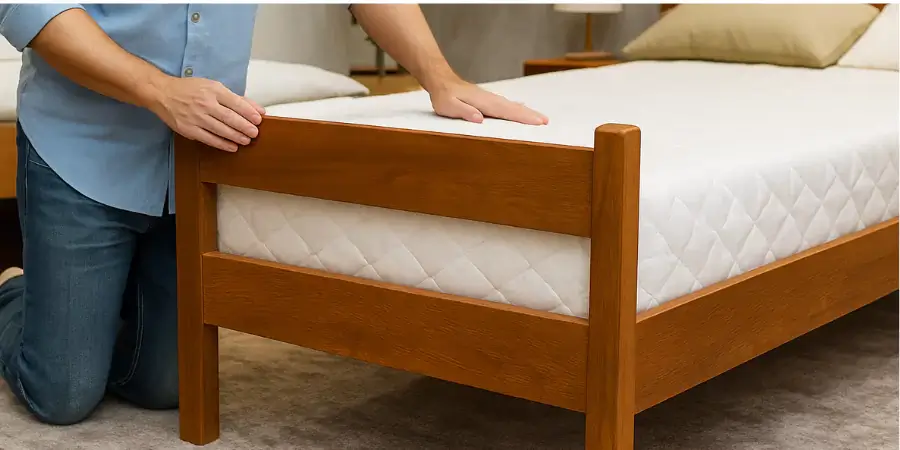
Your bed frame represents one of the most significant furniture investments you’ll make, both financially and in terms of daily impact on your life. A well-chosen wooden bed frame can serve you reliably for decades while anchoring your bedroom’s aesthetic, whereas a poor selection leads to years of creaking, wobbling, or visual dissatisfaction with one of the most prominent pieces in your home. The market offers hundreds of options spanning enormous price ranges and quality levels, making informed decision-making essential for anyone seeking furniture that balances durability, aesthetics, and value.
Understanding Wood Species and Their Distinct Characteristics
The wood species used in frame construction fundamentally determines durability, appearance, weight, and price point in ways that dramatically impact both immediate satisfaction and long-term performance. Hardwoods like oak, maple, walnut, and cherry offer exceptional density and strength, creating frames that withstand decades of use without developing the structural weaknesses that plague softer alternatives. Oak presents distinctive grain patterns ranging from subtle to dramatically figured depending on whether you select red or white oak varieties, with natural tannins that provide inherent resistance to moisture and insects. Its substantial weight creates frames that feel solid and stable, though this same characteristic makes moving and repositioning more challenging.
Walnut commands premium prices due to its rich chocolate-brown coloring that deepens beautifully with age and exposure to light, creating visual warmth that elevates bedroom aesthetics without requiring staining or heavy finishing. The wood machines cleanly, allowing craftsmen to create crisp details and smooth surfaces that showcase the material’s natural beauty. Maple offers exceptional hardness even among hardwoods, making it particularly resistant to denting and surface damage from impacts that might mar softer species. Its typically subtle grain allows it to work across diverse design styles, from contemporary minimalism to traditional aesthetics, though some people find it less visually distinctive than more dramatically grained alternatives.
Pine and other softwoods occupy a different market segment, offering legitimate value for budget-conscious buyers willing to accept certain trade-offs. Pine’s lower density means it dents and scratches more easily than hardwoods, developing patina and wear marks more quickly with daily use. However, this same characteristic makes pine significantly lighter, simplifying installation and repositioning while reducing shipping costs. The wood’s natural knots and variations create rustic charm that works beautifully in farmhouse, cottage, or casual design schemes, though these same features may look out of place in more refined or contemporary settings. Well-constructed pine frames from quality manufacturers can provide many years of reliable service, particularly for guest rooms or situations where the aesthetic trade-offs align with your design vision.
Mattress Compatibility and Sizing Precision
Bed frame selection begins with understanding your mattress dimensions and support requirements, as incompatibility between frame and mattress creates problems ranging from minor annoyances to significant structural issues. Standard mattress sizes follow consistent dimensions twin, full, queen, and king but manufacturing tolerances mean actual measurements can vary by an inch or more between brands. Frames advertised for specific mattress sizes typically include slight additional space to accommodate these variations, but verifying precise internal dimensions prevents discovering after delivery that your mattress doesn’t quite fit properly.
Platform-style wooden frames with integrated slat systems eliminate the need for separate box springs, a design approach that has gained popularity due to its clean aesthetic lines and cost savings. However, mattress manufacturers have varying recommendations about slat spacing and support requirements, particularly for memory foam, latex, and hybrid constructions. Most mattress warranties specify maximum slat spacing typically 3 to 4 inches to ensure adequate support and prevent premature sagging. Frames with widely-spaced slats may require adding a bunkie board or additional cross-supports to meet warranty requirements, an additional expense that offsets some of the cost advantage of eliminating the box spring.
Room dimensions and traffic flow patterns matter more than many furniture buyers initially consider when selecting bed sizes. A king-sized bed that seems perfect in a showroom can dominate a modestly-sized bedroom, leaving insufficient space for nightstands, dresser access, or comfortable movement around the room. Beyond the frame’s footprint, consider that you need adequate clearance for making the bed with fitted sheets typically at least 24 inches on the sides where you’ll be working. Door swing patterns, window placement, and heating vent locations all constrain where the bed can practically sit, potentially eliminating the size you initially preferred in favor of something more proportionate to your specific space.
Construction Methods That Indicate Quality and Longevity
The difference between a wooden bed frame that serves you reliably for twenty years versus one requiring replacement within five typically comes down to joinery methods and overall construction quality rather than wood species alone. Traditional joinery techniques like mortise-and-tenon joints, where a precisely-fitted tenon inserts into a corresponding mortise, create mechanical connections that actually strengthen over time as wood naturally swells and contracts with humidity changes. Dovetail joints, recognizable by their interlocking wedge-shaped fingers, distribute stress across larger surface areas than simple butt joints, preventing the pulling apart that eventually compromises frames assembled with inferior methods.
Corner blocks and cross-bracing indicate manufacturers invested in structural reinforcement beyond minimum assembly requirements. Quality frames incorporate triangular corner blocks bolted or screwed into place at critical stress points, particularly where side rails meet headboards and footboards. These reinforcements prevent the racking motion where rectangular frames gradually shift toward parallelogram shapes that creates wobbling and eventually joint failure in poorly-constructed alternatives. Center support legs on full, queen, and king frames prevent the sagging that inevitably occurs when long spans of wood support concentrated weight without intermediate support points.
Hardware quality reveals manufacturing priorities and expected product lifespan. Frames using substantial steel or zinc-plated brackets with multiple attachment points will maintain structural integrity far longer than those relying on thin stamped metal or plastic components. Bolt assemblies should use proper nuts and washers rather than furniture cam locks or other quick-assembly mechanisms that tend to loosen over time. While tool-free assembly offers obvious convenience, frames requiring actual tools for proper assembly typically feature more robust connection methods that better withstand the stresses of daily use and periodic moving.
Design Styles and Their Visual Impact
Wooden bed frames span an enormous aesthetic range, from ornately carved traditional designs with substantial headboards and footboards to minimalist platform frames that barely rise above floor level. Understanding how different styles interact with your existing décor and architectural elements prevents investing in a frame that looks perfect in isolation but clashes with your bedroom’s overall aesthetic. Traditional or classical frames typically feature prominent headboards with decorative elements like carved details, paneling, or turned posts, creating focal points that anchor rooms and work particularly well in spaces with traditional architecture, crown molding, or other period details.
Contemporary and modern frame designs emphasize clean lines, geometric forms, and minimal ornamentation, allowing the wood’s natural grain and color to provide visual interest without competing decorative elements. These streamlined designs work exceptionally well in urban apartments, mid-century modern spaces, or any environment where simplicity and function take priority over elaborate decoration. The reduced visual mass of low-profile contemporary frames can make rooms feel more spacious, though they may look out of scale in rooms with high ceilings or substantial architectural features that demand more prominent furniture pieces.
Rustic and farmhouse styles have surged in popularity, featuring designs that celebrate wood’s natural characteristics including knots, grain variations, and even deliberate distressing that creates aged appearance. These frames work beautifully in country homes, cottages, or any space pursuing relaxed, informal aesthetics that emphasize natural materials and comfortable lived-in character. However, the same characteristics that create charm in appropriate settings can look unfinished or out of place in more refined or contemporary environments, making context-appropriate style selection crucial for achieving cohesive bedroom design.
Functional Features That Enhance Practical Value
Beyond basic sleeping surface provision, many wooden frames incorporate features that enhance functionality and justify premium pricing for buyers with specific needs. Under-bed storage integration transforms otherwise wasted space into valuable organizational capacity, particularly crucial in smaller homes or apartments where closet space runs short. Drawer systems built into frame bases provide accessible, protected storage for off-season clothing, extra bedding, or items you want nearby but not visually present. Lift-up storage platforms, where the entire mattress and slat system hinge upward revealing a large storage cavity, maximize capacity but require adequate clearance around the bed for the lifting mechanism to operate properly.
Adjustable height options allow customizing the bed’s elevation to match personal preferences, accommodate specific mattress types, or coordinate with existing furniture heights. Some people prefer lower profiles that create modern, grounded aesthetics and simplify bed-making, while others appreciate taller frames that provide better under-bed access for cleaning and storage while making getting in and out of bed easier, particularly for individuals with mobility considerations. Frames offering height adjustment typically include multiple positions for attaching side rails, allowing you to select your preferred elevation during assembly.
Headboard attachment flexibility appeals to buyers who may want to change their bed’s appearance over time or who already own a headboard they wish to continue using. Frames with standard headboard bracket systems accommodate most commercially-available headboards, providing upgrade paths without requiring complete frame replacement. Some platform designs integrate headboards structurally as part of the frame assembly, creating unified aesthetics but eliminating flexibility for future changes a trade-off to consider based on whether you value adaptability or prefer the seamless appearance of integrated designs.
Budget Considerations and Value Assessment
Wooden bed frame pricing spans from under $200 for basic pine constructions to several thousand dollars for handcrafted hardwood pieces from premium manufacturers, making budget establishment essential before beginning your search. The relationship between price and quality isn’t perfectly linear some expensive frames command premiums for brand names or elaborate designs without offering proportionally superior construction, while certain value-oriented manufacturers deliver impressive quality at moderate prices by focusing on efficient production and direct-to-consumer sales models.
Durability calculations should factor expected lifespan into cost considerations rather than focusing solely on initial purchase price. A $500 oak frame lasting twenty years represents better value than a $200 pine frame requiring replacement after five years, even before considering the hassle of disassembly, disposal, and reinstallation. Real wood frames generally outlast composite or engineered wood alternatives significantly, with properly-constructed solid wood pieces often serving multiple generations when maintained appropriately. The investment in quality construction and superior materials pays dividends over time through reliable performance and avoided replacement costs.
Secondary market options deserve consideration for budget-conscious buyers willing to invest effort in finding quality used pieces. Solid wood frames age gracefully and can be refinished, repaired, or modified more readily than composite alternatives, making pre-owned purchases potentially excellent values. Estate sales, architectural salvage operations, and online marketplaces frequently offer well-constructed vintage or antique frames at fractions of original retail prices. However, used purchases require careful inspection for structural soundness, insect damage, and compatibility with modern mattress sizes, as older frames may have been built for non-standard dimensions no longer commonly manufactured.
Making Your Final Selection With Confidence
Choosing the right wooden bed frame ultimately requires synthesizing multiple factors wood species characteristics, construction quality, size appropriateness, aesthetic compatibility, functional features, and budget limitations into a decision that serves your specific needs and circumstances. The frame that’s perfect for a young couple in a small apartment differs dramatically from what works best for a family’s guest room or a retiree’s primary bedroom, making context-aware evaluation essential for satisfaction with your investment.
Prioritize your decision criteria based on your particular situation rather than pursuing some idealized “perfect” frame that balances all factors equally. If you move frequently, frame weight and assembly simplicity may outweigh minor differences in wood species. For permanent residences where you’ll use the frame for many years, investing in superior construction and wood quality creates better long-term value. Understanding which characteristics matter most to you personally prevents paralysis from overwhelming options while ensuring your selection aligns with genuine priorities rather than marketing emphasis on features you’ll never actually value.
The right wooden bed frame becomes such an integrated part of your daily life that you barely notice it working effectively, while poor selections create ongoing frustration through wobbling, noise, or visual dissatisfaction with a prominent piece you encounter multiple times daily. Taking time to evaluate options carefully, understand construction quality indicators, and match features to your actual lifestyle creates the foundation for more restful sleep and satisfying bedroom aesthetics for years to come.