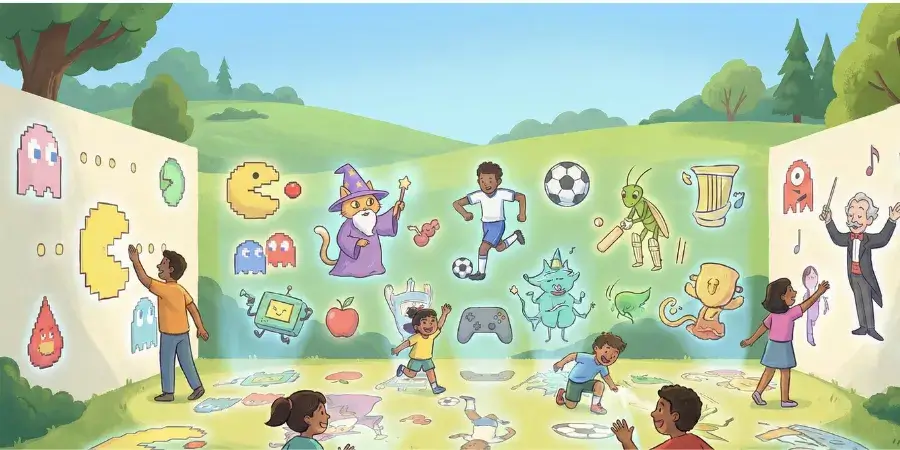
Every time you land on the main page of Google and see a playful version of its logo, you might hardly pause. Yet sometimes the logo is not just decorative but interactive, a game. These Google Doodle games have drawn millions of players worldwide, turning a brief search stop into a mini adventure. For example, the PAC MAN Google Doodle reportedly accumulated around 500 million hours of play.
What this really means is that these games are more than cute distractions: they tap into how people play, explore and share. That insight matters whether you are a gamer, a brand, a content creator or simply curious.
In this piece we will unpack what makes these Popular Google Doodle games so compelling, walk through some key examples and draw lessons for how you might apply the same thinking in your work.
Let’s break it down.
What Defines a Google Doodle Game
A Google Doodle games is a special version of the Google logo or homepage interactive experience built to mark an event, holiday, anniversary or cultural moment. The games range from simple click-to-play puzzles to full browser experiences. The official Google Doodle archive notes that doodles cover anniversaries, major events and cultural milestones. What distinguishes the “game” type is:
- It gives players a clear activity rather than just animation.
- It engages via controls, goals or interactivity rather than passive viewing.
- It often connects with a cultural theme (sporting event, holiday or historical figure).
- It remains accessible in the browser; many are still Google Doodle games still available to playafter the initial launch.
By design, these games do more than entertain, they capture attention, spark nostalgia, invite sharing and often teach or remind the player of something meaningful. In other words, they are layered.
Top Examples of Popular Google Doodle games
- PAC MAN Google Doodle
This is perhaps the most famous. Released on May 21, 2010 to mark the 30th anniversary of the original Pac-Man, it replaced the Google logo with a playable maze shaped like “Google.” Players controlled Pac-Man (and with a second coin/insert option, Ms Pac-Man) using arrow keys or swipes.
Why it stands out: It was the first Playable Google Doodle games to be truly playable, complete with sound and full game logic. Also it drew massive attention (500 million hours play recorded).
- Magic Cat Academy
The Doodle was first introduced in 2016 for Halloween Google Doodle games (and followed by sequels in 2020 and 2024) and it features a magical cat named Momo who fights ghosts by drawing shapes via mouse or touch.
One of the main factors that contribute to its success is the fact that it mixes the festive theme with some easy gaming and adorable animations, thus turning the Doodle into not only a fun way of changing the logo but also an immersive experience.
- Champion Island Google DoodleGames
Released in July 2021 for the Tokyo 2020 Olympics, this one is a full browser RPG/sports game where you play as Lucky the calico cat, travel an island, compete in mini-games like skateboarding, archery, marathon, etc.
What makes it special: It isn’t just a quick click-game, it has exploration, multiple mini-games, side quests. It shows how far a Best Google Doodle games can go.
- Quick Draw Google game
This Doodle was launched in 2016 and it’s a game where you have to draw things in 20 seconds, while a neural network is figuring out what the drawing is.
Point of interest: It combines a very simple user interaction with technology/machine learning. The focus is not on scoring but just some fun ways of interacting while doodling with AI.
- Celebrating Bubble Tea Google Doodle
On January 29, 2023, this Doodle was introduced that celebrates bubble tea (boba). By simple interactions, users can fulfill orders and mix ingredients.
Explanation of the point: A less heavy, almost casual game connected to a cultural food/drink moment. It demonstrates the tonal variety of Popular Google Doodle games.
- Garden Gnomes Doodle
Released June 10, 2018 as “Garden Day” in Germany, this game has you fling garden gnomes from a catapult, bounce off obstacles, plant flowers.
Why it matters: It’s a simple mechanic (flinging) but engaging. And again shows how varied the Google Doodle games list with examples get.
- Rubik’s Cube Doodle
This one is on lists of Best Google Doodle games of all time. The Doodle replicates the classic cube on their homepage allowing you to rotate and solve in your browser.
Why include it: Because it shows a more “tool-game” hybrid, less about levels, more about interacting with an object we know.
- Global Candy Cup Google Doodle
Released for Halloween 2015, this Doodle has you choose a witch team and race through obstacle courses collecting candy.
Why it’s good to mention: It shows how Popular Google Doodle games also build around seasonal themes and team/social elements.
- Fischinger Google Doodle Game
This one appears in lists of Most popular interactive Google Doodle games (though less widely discussed). It celebrates the art/music of Oskar Fischinger via interactive visuals.
Why include: Because diversity matters, Google Doodle games do more than arcade styles; they can be artistic experiments too.
- Scoville Google DoodleGame
Another example pulled from general lists Google Doodle games list with examples where the game centers around the Scoville scale of chilli peppers.
Why mention it: It shows educational/novelty potential, less about “beat the level” and more concept-based fun.
Why these Google Doodle Games Engage People
Here are the reasons these Popular Google Doodle games work, pulled from the examples above and applied more broadly.
1. Surprise and delight: The case of you searching something on Google and the logo changing into a game that you can play is definitely a big magnet. The surprise makes the fun even better.
- Familiar frames with fresh interaction: You already know the game with PAC-MAN. With Champion Island Google Doodle, you recognise sports mini-games. The innovation comes from how the interface and the setting change.
- Accessibility: These kinds of games are generally made available in the browser, and thus, no downloading is required, which makes the entry point lower. So, it naturally leads to more unplanned and spontaneous gaming sessions with Playable Google Doodle games.
- Cultural or event relevance: Most of them are based on events (e.g., Olympics and Halloween) or anniversaries. This offers a more up-to-date and easily shareable gaming experience within Popular Google Doodle games.
- Shareability and communal feeling: When people play and share scores, talk about their favourite parts, the experience becomes social. Even if you play solo, you feel part of something bigger.
- Memorable mechanics: Whether you are drawing shapes in Magic Cat Academyor trying to beat the maze in PAC-MAN, the core game is clear and satisfying.
Lessons content creators and brands can take from Google Doodle games
If you are a writer, content lead, brand strategist or creator (as you are), what can you borrow from this approach?
Make the familiar interactive: Take something your audience already sees or knows (logo, homepage, badge) and layer an interactive twist. That surprise leads engagement seen in Top Google Doodle games you can still play today.
Design for low barrier to entry: No steep learning curve. The moment people open your content or product they should understand what to do. That matters more than huge feature sets in many cases seen in Best Google Doodle games.
Tie to a theme or moment: If you launch something during a cultural moment, holiday or event, your audience has context. They feel like they are part of a shared time inside Most popular interactive Google Doodle games.
Encourage sharing: Facilitate ways for users to share what they did, what score they got, or how they experienced your content. The social ripple amplifies reach, much like Popular Google Doodle games.
Focus on core delight: The core action (eat dots, fling a gnome, draw a shape) matters. If you focus on delight, people will remember what you did, not necessarily big brand claims.
Closing Takeaway
Here is what we want you to walk away with. When content or experience is built with real human delight in mind, and layered on something familiar yet unexpected, it has the power to stick. The Popular Google Doodle games did not require big budgets to be meaningful. They succeeded because they hit at curiosity, fun, accessibility and shareability all at once.
If you are planning your next piece of content, campaign or writer-led project, ask: how can I make it interactive? How can I surprise my audience while staying within something they know? How can I lower the barrier so people jump in quickly? And how can I tie it to a moment that feels of-the-time?
Here is the final thought: Popular Google Doodle games remind us that simplicity plus novelty wins. The biggest impact often comes from a seamless idea executed with intent. Go ahead and bring that mindset into your next piece of writing, your next concept. You already have the tools, now focus on delight.