
The Birth of The Unsent Project
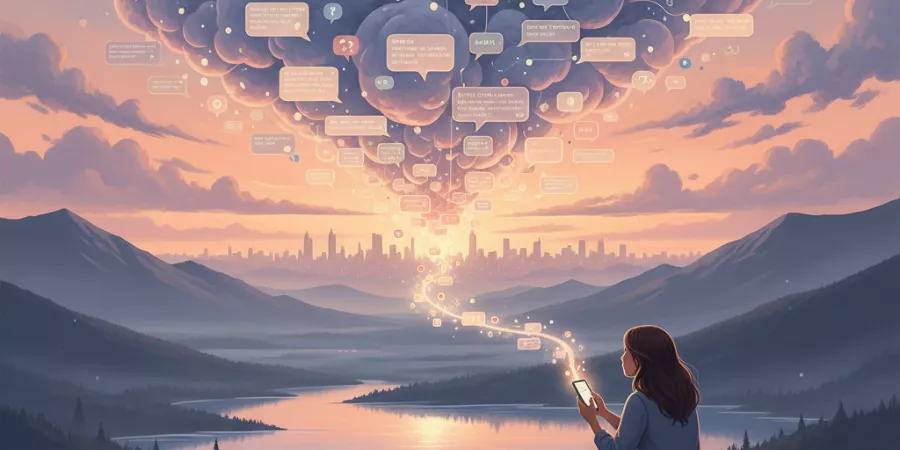
In 2015 artist Rora Blue, kept it very low-key when she launched what eventually turned into a worldwide phenomenon The Unsent Project. The core idea was extremely simple yet very deep: people should write the one message that they had always wanted to send, but never did, to their “first love.” What Rora Blue started as a Tumblr prompt and a small creative experiment quickly became a huge digital archive that many later connected with anonymous love confessions and unsent letters online as the project expanded.
One part of Rora Blue’s goal was beauty, she wanted to contributors to select a color that, for them, would represent the feeling or the memory of their first love. The color-coding, therefore, had personal and intimate significance as well as visual unity, it allowed the readers not only to read the words but also to experience the emotion that was behind them, which is why many now refer to it as a growing first love messages archive.
Eventually, the collection evolved to not just romantic first loves. The definition became more and more inclusive, first of all, it referred to the letters that have never been sent to friends, family members, even pets. The emotional nature of the letters correspondingly became broader, starting from love and regret and going all the way to gratitude, nostalgia, grief, and apology.
What The Unsent Project Is — And How It Works
The Unsent Project is a publicly available anonymous area for those communications that haven’t been spoken. The website is open to everyone and anyone can read the messages, which is why it often appears in conversations about emotional confession websites and guides explaining how does The Unsent Project work.
- If you are willing to add your voice, you choose a color, jot down a brief message (most of the time it is “To [Name]”), and hit submit.
- Posts don’t have names attached. The platform doesn’t require any personal information. That is the reason why contributors have the liberty to be truthful.
- After that, the messages are considered part of a permanent archive. There is no official way to remove a message, as per the site’s terms.
- The archive can be accessed by searching a name or by looking through colors or dates, which is why several users look up search your name on The Unsent Project and wonder about the unsent message archive meaning as they explore the system.
The Unsent Project is, in fact, a digital confessional where people can find the expression of those feelings that haven’t been told, not to the one person who was supposed to get it, but to anyone from the world. Some newcomers even refer to it as an informal Unsent Project archive in themselves as they browse.
The Scale: Millions of Unsung Words
Today the archive houses more than 5 million unsent messages written by people from around the world. A portion of these have been shared widely as Unsent Project messages, especially those that move readers with a strong emotional pull.
That number is staggering. It suggests that millions of people, across cultures, languages, backgrounds, carry thoughts they never vocalized. They never hit “send.”
But instead of letting those words die unread, they were given a home. The archive transforms private pain, longing, regret, or love into a collective narrative, one that speaks both to individuality and shared human emotional experience. The popularity even inspired explanations like how The Unsent Project works 2025 for new audiences.
The Unsent Project Colour Meaning?
- Red — Is typically selected to indicate one of a kind of love, passion, desire, gratitude, or an emotional state of being. Red can portray a strong romantic feeling or sincere thanks to someone.
- Blue — Is mainly employed to denote sadness, melancholy, regret, wistfulness, nostalgia, or calm reflection. A majority of “lost love” or “what could have been” writings are blue.
- Black — Is frequently associated with mourning, despair, emotional darkness, loss, or a feeling of finality. Deep hurt, heartbreak, betrayal, and closure stories are most often accompanied by the color black.
- Yellow — Is very often linked with feelings of hope, warmth, cheerfulness, or a bittersweet type of longing. Letters that mix the themes of sadness and loss with a hopeful view usually utilize yellow.
- Green —May be a colour that reflects the ideas of getting well, personal growth, gaining acceptance, moving forward, or emotional change in a message. The green color can indicate a feeling of getting well or looking forward rather than yearning.
- Pink / Purple / Lighter Colours —These can symbolize the gentler aspects of the feeling: the purity, the unfulfilled love, the gentle longing, feeling sorry in a lighter way, or being wistful. Some letters use pastel-like shades to indicate the subtle nature of the feeling instead of the severe pain or passion.
Why People Use The Unsent Project
There are many reasons people turn to The Unsent Project, and some people write long posts about why people use The Unsent Project anonymous messages as a means of emotional processing.
- Emotional release without risk: Some emotions are so painful and risky that people usually do not express them directly – rejection, shame, guilt, fear. Writing them in anonymity, however, gives a safe outlet for such emotions.
- Healing and closure: Sometimes the very idea of closure comes from the unspoken, unsent message. Writing is a therapeutic way of finding the words that we have never said before, maybe even letting go for the first time, acknowledging mistakes, accepting grief.
- Connection through shared vulnerability: Empathy is built up through the exposure of other people’s unsent messages. It makes us think that pain, longing, heartbreak, hope – these are human experiences that everyone goes through. We are not alone in our regrets or unexpressed love.
- Creative expression: The color-coding system, by itself, is kind of a poetic, aesthetic way of seeing the emotional side of writing. It inquires: what color is love, regret, longing, loss? That mere question is what turns the memories into art.
What The Archive Reveals: Human Emotion in Raw Form
Browse The Unsent Project long enough, and a pattern starts to emerge. Many entries echo familiar pulses of life. unspoken love, regret over words unsaid, harsh truths we could not face, broken hearts, hope for reconciliation, guilt, forgiveness, nostalgia, longing.
In that sense the archive becomes a mirror. It reflects not only individual stories but collective emotional truths. For instance:
- A message addressed to “ex-lover” expressing regret for not saying “I love you”
- A note to a departed friend or family member filling with apology and longing
- A confession to “me, years ago,” offering forgiveness or encouragement
Because the project gives no identifiers, the messages come without context, no names, photos, or timelines. That vanishing of identity makes them more universal. They are not about “Alice and Bob.” They are about “first love,” “loss,” “regret,” “hope.”
This universality may help explain why the project resonates so deeply across demographics and geographies.
Criticism and Limitations
There is no such perfect platform as this one. The Unsent Project is a great idea, however, it also has some restrictions.
As all submissions are anonymous and cannot be changed, people should rely on their own judgment before they share. A message that has been posted cannot be removed.
The lack of surroundings can be a limitation as well as a strength. When there is no context, the emotional side of a message may be perceived as less heavy. However, at the same time, the absence of context makes messages more indistinct. A note addressed to “you” might be for anyone. That establishes both liberty and doubt.
Some opponents of the idea ask: Are these messages “real”? The reply depends on what one expects. Several sources have it that the submissions are from real people, but due to anonymity, independent verification is not possible.
Basically, the archive should not be considered as a factual record of relationships or histories, but rather, as personal emotional mementos.
How Do You Search Your Name On The Unsent Project Archive?
Steps to Search Your Name on The Unsent Project
- Go to the website, open com
- At the top (or near the top) you will find a search bar.
- Type your name, or the name you want to check, into the search bar. Then press Enteror click “Search.”
- The site will display any messages addressed to that name (if any exist).
Tips & What to Know
- The archive lets you search by name or by keywords(not just exact names), so even partial strings might show something.
- Because submissions are anonymous, seeing your name does not guarantee the message is actually about you. It only means someone addressed their unsent text to that name.
- If your name is common, many unrelated entries may show up, you might need to scroll and read carefully to see if anything seems relevant.
- The archive does notlet you track who submitted the message or any identifying info, it remains anonymous.
Things to Note
- Seeing a message addressed to your name does notconfirm it is for you, many users share common names.
- Because the system is anonymous, there is no way to respond or contact the sender.
- It is possible that your name yields no results, that does not necessarily mean no one ever thought of you, just that no one submitted under that name (or that the message has not been approved/published).
Key Alternatives to The Unsent Project
| Platform / Site | What It Offers / What’s Different |
| PostSecret | One of the original and most influential anonymous-confession projects. Users mail in or digitally share anonymous secrets (written on postcards). It focuses on deeply personal secrets, fears, regrets, hopes. |
| ToMyDearest.xyz | A more direct alternative to Unsent Project. Lets you post anonymous messages, rants, stories, unsent letters, quickly, without formalities. |
| Confessout | A straightforward web app for anonymous confessions. You can submit your truth anonymously, and the platform preserves your privacy. Great for venting or sharing secrets without identifying yourself. |
| Sincerely – Off My Chest (or similar anonymous journaling/confession apps) | Lets you write anonymous entries, thoughts, feelings, confessions, and sometimes receive responses or empathy from strangers. More communal and interactive than the typical “unsent letter” model. |
| Generic anonymous confession or rant sites / confession boards (e.g. anonymousconfessions.net, random confession forums) | Such sites might not have the polished “first-love / unsent-letter” style, but they are places where people can express their emotions, share their regrets, secrets, or simply release their feelings. Most of the time, these are open for the public to comment or interact. |
Why The Unsent Project Matters — Especially Now
In a world flooded with public social media where people tend to show only the best parts of their lives, The Unsent Project is different because of its honesty. It gives something that very few platforms do: the willingness to be open without being judged, sharing without having any consequences, giving the emotional truth without “putting on a show.”
Many people find that writing unsent messages is a way of emotional catharsis. People who read them, get support and compassion. The general culture gets a record of the things that are most of the time invisible – the trillions of words that are typed but never sent. Besides that, the initiative reveals the enormous human necessity of sharing one’s innermost feelings, being listened to, even if it is only done anonymously, even if it is only by strangers.
Conclusion
The Unsent Project proves that unsent messages, those drafts we leave in the dark, are not wasted. They carry emotional weight. They carry secrets, regrets, love, grief, hope.
By collecting over five million such messages, The Unsent Project transforms isolated emotional fragments into a collective archive of shared humanity.
Reading the messages forces recognition: we may not know the senders or recipients. We may not even know the moment. But we know the feeling.
That, more than anything, is why The Unsent Project matters. It gives hidden feelings a home. It offers closure without confrontation. It connects hearts without names.
If you have words you could never say, writing them, even anonymously, might give you the release you need. At minimum, you might remind yourself you are not the only one. And that may be enough.