The Big Drop: What Happened
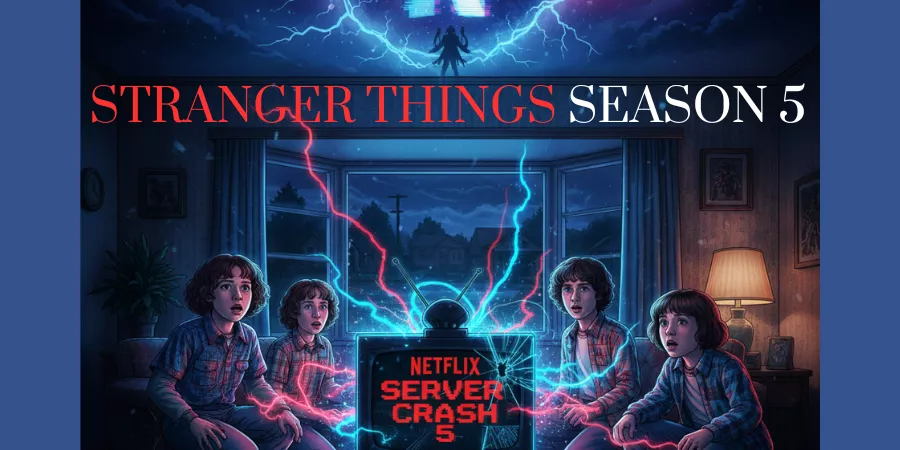
When the first four episodes of Stranger Things Season 5 dropped, things went sideways fast. Within minutes Netflix started glitching, which many fans later described as part of a Stranger Things Season 5 premiere crash tied to a wider Netflix crash Stranger Things surge. Outage trackers logged more than 14,000 reports in the United States. Fans in India jumped in with the same story and some even called it an early Netflix outage linked to Stranger Things server issues beginning at launch. Frozen apps. Error messages. Total chaos for anyone ready to binge after years of waiting, especially with early signs of Netflix streaming problems hinting at a potential global streaming outage and server overload during the rush.
People were lined up worldwide. Snacks ready. Phones off. Hearts set on this finale. Then the flood of logins and streaming requests hit the servers harder than expected. What everyone hoped would be smooth turned into a wait filled with frustration. And well, you know what, that is crazy considering how long people waited for this moment.
What the crash looked like — user-side
As the episodes went live at 5 p.m. Pacific Time on November 26, 2025, reports of trouble began rising sharply. Viewers saw Something went wrong messages. Some got NSES-403 or similar streaming error codes, which matched what many users had already mentioned in discussions about Stranger Things fans report error codes during premiere events.
Others experienced endless loading screens or the app refusing to load entirely. In many cases the problems appeared specifically on TV devices, smart TVs or streaming boxes, rather than mobile or browser clients, a pattern consistent with early notes about Netflix down during Stranger Things moments for some households.
Downdetector numbers climbed fast. Peak was 14,290 reports in the U.S., before dropping to under 800 within roughly 45 minutes.
Close to half of the reports indicated video playback issues. Others mentioned server connection failures or login errors that added fuel to conversations asking why Netflix crashed during Stranger Things Season 5 and how many users were affected by the Stranger Things outage during the launch window. In India and other regions the outage was less severe but still real, many users described freezing screens or delay in playback even after global restoration began, repeating threads about how the Stranger Things premiere caused global streaming problems.
Why it happened — surge meets limits
The key factor behind the crash appears to be sheer demand. The release of Season 5 represented one of Netflix’s biggest drops ever. According to reports Ross Duffer (co-creator of Stranger Things) had revealed that the company had increased bandwidth by about 30 percent ahead of the premiere, anticipating heavy load.
Even that boost proved insufficient. Millions of fans tried to watch at the same time. The spike in simultaneous streaming and new sessions likely exceeded what even a tailored infrastructure update could handle. As one commentary noted: demand outpaced what the bandwidth buffer was built for, and many discussions framed it as a Stranger Things Season 5 outage moment showing that Netflix servers failed under Season 5 demand.
Another factor seems to be the type of devices being used. Reports concentrated on TV devices, those tend to trigger heavier bandwidth and session loads than mobile or browser streaming, because of higher resolution, longer play times, and different streaming protocols.
What this shows is that even big platforms need to balance user demand spikes with infrastructure that can adapt dynamically. Planning for 30% more traffic helps. Planning for an order of magnitude spike can matter more, especially when early signs of a Stranger Things Season 5 premiere crash or continuing Stranger Things Season 5 outage were already being discussed in real time.
Fan Fallout: Reactions, Frustrations and Memes
When Season 5 of Stranger Things went live, the world seemed ready. Just minutes later the internet erupted with surprise, jokes, anger and a wave of memes. Reports of global server outages poured in, with many users calling it another wave of Netflix outage problems tied to Stranger Things premiere issues that had begun earlier. Users flooded social media to describe black screens, loading wheels that never moved, error codes and failed login attempts that felt similar to lingering Netflix streaming problems after the initial surge. Some saw the crash as a brutal betrayal of their years-long fandom. Others turned to humour to cope, especially once threads about Stranger Things server issues began trending.
Social media feeds overflowed. On Twitter, X, Reddit, and other platforms fans shared screenshots of error messages, quips about “the Upside Down invading Netflix servers” and comparisons to real-world disasters. One headline captured the mood: Final season release triggers server meltdown and meme storm, which some framed as part of a wider Stranger Things Season 5 outage still unfolding in various regions.
Amid the frustration some voices called for accountability. Some long-time subscribers expressed regret, calling the outage a breach of trust. Others said they would avoid binges at the release moment, maybe streaming an hour later when the rush subsided, especially after noticing how often Netflix outage updates kept circulating. On fan forums, people argued that a big show like Stranger Things deserved technical reliability as much as strong storytelling.
Still much of the tone leaned into ironic detachment. A meme widely shared featured a dimly lit server room with the caption: Netflix after Stranger Things dropped. One Reddit user wrote:
“They scaled up their infrastructure 30%, dumb ass. It still crashed.”
That mix of mocking anger and resigned amusement summed up a certain kind of fan fatigue. Some laughed at how predictable it felt. Others felt disappointed, especially fans who had waited years for closure and were still dealing with pockets of Netflix down during Stranger Things reports that lingered even after most issues settled.
The Emotional Divide: Rage, Humor, and Disappointment
For many, the crash felt personal. People had cleared their schedules, gathered snacks, turned off phones and lined up for a binge. Then they got loading icons and error messages instead, which some blamed on a leftover global streaming outage ripple from earlier. On forums complaining about the crash, some voices came through harsh:
“Netflix knows people are lazy and will not cancel until they really mess up. You have to speak with your wallet because that is where you can make a difference.”
Others expressed regret for encouraging friends to watch right away. Some mentioned they would cancel their subscription after the season ended. Voices like that revealed a sense of betrayal mixed with frustration.
At the same time humor acted as a kind of pressure valve. Fans plastered feeds with GIFs, jokes, memes referencing the show’s themes, Upside Down, server monsters, digital mayhem. The shared sarcasm and absurdity helped turn collective anger into something easier to laugh about.
That reaction spoke to something deeper: fans felt like witnesses to a moment where cultural hype collided with technical reality. A lot of them seemed to think, maybe this time everything would go smoothly. When it did not, they voiced disappointment loudly, often linking it back to lingering Stranger Things premiere issues that seemed to persist longer in certain regions.
Why Reactions Spread So Fast: Shared Expectation, Shared Disappointment
What triggered so many reactions was scale. Millions tried to stream at once. The release aimed for a global audience. Fans around the world logged in at roughly the same hour. That simultaneity turned a simple server problem into a shared event, which many tied back to early Stranger Things server issues that had carried over into some time zones.
That shared expectation created a kind of communal tension. People who watched early got in. Others, in different time zones or on less stable devices, got left behind. That divide created lots of commentary. On Reddit some fans admitted they waited a bit longer and avoided problems entirely. Others vented about wasted time, disrupted watch parties and ruined plans, pointing to a few isolated Netflix streaming problems still appearing on certain devices.
Then there is nostalgia and emotional investment. For many, Stranger Things has been part of life for years. Hoping to watch the finale felt like returning home. When that homecoming got interrupted, the letdown felt heavier than a typical buffering screen.
Mixed responses — rage, jokes, memes, grief — showed how much fans cared. When something huge breaks at a huge moment fans react accordingly, especially when earlier signs of a Netflix outage linger in the background.
What This Means for Big Streaming-Release Events
First, for fans: this shows that sometimes waiting pays off. Immediate release-hour streaming can carry risk. Waiting even a few hours might give servers time to settle. A laugh, a meme, a later watch might hurt less than missing the start altogether, especially when early chaos resembled another ripple of a Stranger Things Season 5 premiere crash during the most crowded moments.
Second, for platforms: high demand means high responsibility. When a release draws global simultaneous viewers a buffer of 30 percent may not be enough. Reliability needs to match ambition. Outages on big drops erode trust, even if fixed quickly.
Third, for fandom culture: this moment blends content and community. People who love a show witness shared disruption and commiseration. That collective reaction, anger, humour, disappointment, becomes part of the release story itself. For better or worse, the premiere becomes more than a show. It becomes an experience, good or bad, especially when fans recall lingering pockets of Netflix down during Stranger Things that continued in a few regions.
Final Thoughts
The crash during Stranger Things Season 5 premiere was a textbook example of too much demand, too fast. It negated hours of anticipation for thousands, but also highlighted how powerful collective fan energy can be. That energy, unrestrained excitement, global simultaneous streaming, even the biggest platforms can struggle to handle, and some users saw the late spikes as a final echo of a broader Stranger Things Season 5 premiere crash still tapering off.
There is a lesson for all involved in the game here: platforms, creators, and the audiences. For services like Netflix, a blowout premiere is not only a signal to increase the bandwidth but also to implement smarter rollout strategies, maybe staggered or region-aware launches, load-balancing optimized for spikes, and communication plans to handle expectations. For fans, it might be the feeling of streaming risks during the premiere hour, thus, they accept that delays or rescheduling will lead to stable experiences.
However, this outage does not diminish the first thing that matters – the story that is being told. Season 5 of Stranger Things is still the most anticipated finale in a long time, and a mishap cannot take away the emotional impact of a series that has been going for a long time and is now ending its arc. The failure serves as a different level to the experience, the layer being that it is a reminder that the infrastructure behind it should be of a level that can match the urgency when millions of people decide to watch a show as one, even when some feared a late-stage Stranger Things Season 5 outage might flare again.
Most importantly, reliability should be viewed as part of the bargain for streaming platforms which is what this event is really about, according to fans. Fans are willing to spend their time and emotion on the content. A mere access to the content is not everything they deserve, rather they deserve an experience which lives up to the hype. Those platforms which understand this equilibrium will be allowed by the audience to build trust with them. Those who do not, will find it difficult for even their biggest shows to be successful, especially when memories of a Netflix crash Stranger Things moment still linger across the fan base.