When a corroded underground storage tank at a Massachusetts auto repair shop began leaking gasoline in 2019, the owner initially dismissed small fuel inventory discrepancies as measurement error. By the time soil testing revealed contamination, 8,400 gallons of gasoline had leaked into surrounding soil and groundwater over 14 months. The EPA-mandated cleanup cost $847,000, while state environmental regulators assessed $127,000 in penalties for violating underground storage tank (UST) regulations. The business owner’s insurance covered only $250,000 of cleanup costs due to gradual pollution exclusions in the policy, leaving him personally liable for $724,000 forcing bankruptcy and business closure after 23 years of operation.
This scenario illustrates why environmental risk management through proactive maintenance isn’t optional nice-to-have but essential business protection. The average underground storage tank leak cleanup costs $125,000-$500,000, while stormwater violations average $37,500 in penalties, and Clean Air Act violations start at $46,000 per day. These costs dwarf preventive maintenance expenses comprehensive UST monitoring systems cost $8,000-$15,000 installed with $2,000-$4,000 annual maintenance, delivering payback if they prevent even a single leak over 10-15 year system life.
However, environmental risk management extends far beyond storage tanks to encompass stormwater runoff systems, wastewater treatment, air emissions equipment, and hazardous material handling. Understanding the specific regulatory requirements, failure modes, maintenance protocols, and cost-benefit economics across these environmental systems helps businesses protect themselves from catastrophic cleanup costs while maintaining regulatory compliance.
Underground Storage Tanks: High-Risk Infrastructure
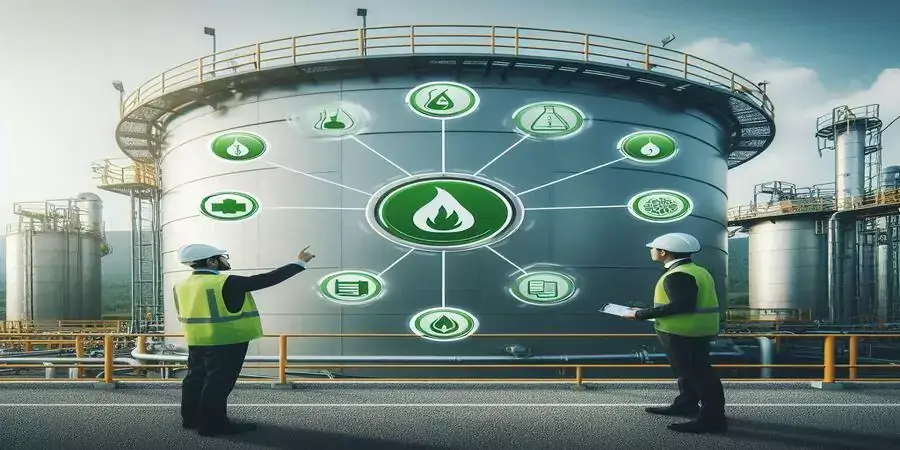
Approximately 544,000 active underground storage tanks (USTs) operate in the United States storing petroleum products and hazardous substances at gas stations, airports, hospitals, universities, and industrial facilities. These tanks represent significant environmental risk given their capacity (typically 10,000-30,000 gallons), toxic contents, and underground location making leaks difficult to detect until substantial contamination occurs.
Regulatory requirements under EPA 40 CFR Part 280:
Leak detection mandatory for all USTs: Owners must implement continuous leak detection using automatic tank gauging, statistical inventory reconciliation, interstitial monitoring between tank walls, or other approved methods. Detection systems must identify leaks as small as 0.2 gallons per hour with 95% detection probability.
Corrosion protection required: Steel tanks must have cathodic protection preventing corrosion, with systems tested by qualified technicians every three years. Fiberglass tanks don’t require corrosion protection but need regular integrity testing.
Spill and overfill prevention: Devices preventing spills during delivery and overfills during tank filling must be installed and maintained operational.
Release reporting within 24 hours: Confirmed or suspected releases must be reported to implementing agencies within 24 hours, with corrective action beginning immediately.
Operator training: Class A, B, and C operators must complete training on system operation, maintenance, and emergency response, with refresher training every three years.
Financial responsibility: Owners must demonstrate financial ability to cover cleanup costs and third-party liability, typically $1 million per occurrence through insurance, bonds, or state trust funds.
Consequences of non-compliance:
EPA can assess civil penalties up to $73,431 per tank per day of violation not a one-time fine but daily accumulating penalties. A facility with three non-compliant tanks faces potential $220,000+ in daily penalties until violations are corrected. Criminal prosecution is possible for knowing violations resulting in releases, with penalties including imprisonment.
Beyond regulatory penalties, cleanup costs average $125,000-$500,000 depending on contamination extent. Severely contaminated sites requiring excavation of thousands of cubic yards of soil and groundwater pump-and-treat systems lasting years can exceed $2-5 million. Third-party liability for contaminating neighboring properties, municipal water supplies, or causing health impacts adds additional exposure potentially exceeding millions.
Preventive maintenance protocols and costs:
Monthly visual inspections ($0 internal labor or $150-300 contractor): Check for equipment damage, unusual odors, dead vegetation indicating leaks, proper functioning of leak detection equipment, spill prevention devices, and recordkeeping compliance.
Annual system testing ($800-1,500): Test cathodic protection systems, verify leak detection equipment calibration, inspect tank tops and piping where accessible, test emergency shutdown systems, and review inventory reconciliation records.
Every 3 years – tank tightness testing ($500-800 per tank): Pressure decay or vacuum testing verifying tank holds pressure/vacuum demonstrating no leaks exist. Required for tanks not continuously monitored by other methods.
Every 10 years – cathodic protection rectifier replacement ($3,000-6,000): Replace rectifiers providing electrical current for corrosion protection before failure.
Tank closure/removal when obsolete ($15,000-$45,000 per tank): Properly removing or closing tanks prevents future liability. Oil tank removal requires cleaning, gas-freeing, documenting contents removal, soil sampling to verify no contamination, and disposing of tanks properly.
Real-world prevention success:
A regional fuel distributor operating 47 gas stations with 203 USTs implemented comprehensive monitoring including statistical inventory reconciliation, automatic tank gauging, and interstitial sensors on all tanks at total cost of $1.4 million installation plus $380,000 annual monitoring/maintenance. Over 10 years, the systems detected 11 early-stage leaks averaging only 120 gallons total release versus typical 5,000-10,000 gallon releases when detected through contaminated wells or soil vapor. Early detection reduced average cleanup costs from projected $350,000 per incident to actual $45,000, saving an estimated $3.4 million in cleanup costs plus avoided penalties, operational disruptions, and reputation damage. Total 10-year prevention cost of $5.2 million generated $3.4 million direct savings plus substantial indirect benefits, demonstrating positive ROI even before accounting for prevented catastrophic releases.
Stormwater Management: Urban Runoff Challenges
Stormwater runoff from industrial facilities, construction sites, and urban areas represents significant water pollution source. EPA estimates that stormwater runoff causes approximately 70% of pollution in U.S. waterways, carrying oil, grease, heavy metals, sediment, nutrients, bacteria, and toxic chemicals directly into streams, lakes, and coastal waters.
Clean Water Act regulatory requirements:
Industrial facilities with activities involving materials exposed to precipitation must obtain NPDES (National Pollutant Discharge Elimination System) permits requiring stormwater pollution prevention plans, best management practices implementation, monitoring and reporting, and employee training. Failure to obtain permits or implement plans results in penalties averaging $37,500 per violation.
Construction sites disturbing one acre or more require permits mandating erosion and sediment controls, inspections during rain events, and water quality monitoring. Non-compliance results in stop-work orders plus penalties.
Municipal separate storm sewer systems (MS4s) in urbanized areas must reduce pollutant discharges to “maximum extent practicable” through public education, illicit discharge elimination, construction site controls, post-construction controls, and good housekeeping.
Maintenance requirements and best practices:
Monthly inspections during dry weather ($0-200): Check outfalls for unusual discharges, inspect detention basins for standing water or trash accumulation, verify erosion control measures intact, check oil/water separators for proper operation, and document findings.
Quarterly catch basin cleaning ($75-150 per basin): Remove accumulated sediment, debris, and oil preventing system capacity loss and pollutant discharge. Severely clogged basins can overflow during storms sending concentrated pollutants directly to waterways.
Semi-annual detention basin maintenance ($500-2,000 depending on size): Mow vegetation, remove trash and debris, repair erosion, and remove accumulated sediment maintaining storage capacity. Basins losing capacity fail to detain runoff causing downstream flooding and water quality impacts.
Annual comprehensive inspection ($800-1,500): Professional inspection identifying structural damage, capacity loss, or system deficiencies requiring repair before major failures occur.
Bi-annual oil/water separator cleaning ($300-800): Remove accumulated oil and sediment maintaining separation efficiency. Failed separators allow direct discharge of petroleum products to waterways triggering violations.
Cost-benefit data:
Seattle Public Utilities’ stormwater maintenance program costs approximately $47 million annually for system inspection, cleaning, and repair across the city. Analysis found the program prevents an estimated $120 million annually in flooding damages, water treatment costs, and ecosystem restoration expenses that would occur without maintenance a 2.6:1 benefit-cost ratio. The program also documented 40% fewer pollution events in maintained watersheds versus those with deferred maintenance.
Specific failure examples:
A food processing plant in North Carolina failed to maintain stormwater detention basins allowing sediment accumulation that reduced capacity by 60%. During a moderate storm, the undersized system overflowed discharging process water with elevated nutrients and bacteria directly to a tributary stream. State environmental regulators assessed $89,000 in penalties, required immediate basin dredging costing $47,000, and mandated enhanced monitoring for two years. Total cost: $152,000 versus $12,000 for proper maintenance over the five-year neglect period.
Air Quality Management: Emissions and Compliance
Businesses operating combustion equipment, manufacturing processes, or handling volatile organic compounds face Clean Air Act requirements managing air emissions. Non-compliance results in substantial penalties plus potential criminal prosecution for knowing violations.
Regulatory framework:
Title V Operating Permits required for major sources emitting 100+ tons annually of any criteria pollutant or 10/25 tons of hazardous air pollutants require comprehensive emissions monitoring, recordkeeping, and reporting. Permit violations trigger penalties starting at $46,000 per day of violation.
New Source Performance Standards apply to new or modified emission sources requiring best available control technology and specific emission limits. Facilities must conduct initial performance tests and periodic compliance testing.
Risk Management Plans required for facilities handling threshold quantities of regulated substances must document worst-case release scenarios, accident prevention programs, and emergency response procedures. RMP violations carry civil penalties up to $225,000 per day plus criminal prosecution for knowing violations.
Maintenance requirements:
Continuous emissions monitoring systems (CEMS) on major sources require daily calibration checks, quarterly relative accuracy test audits, and annual certification by qualified contractors. CEMS downtime exceeding allowances results in assumed violations during unmonitored periods.
Baghouse and scrubber maintenance ($5,000-15,000 quarterly): Replace filter bags as pressure drop increases, inspect and repair scrubber pumps and nozzles, verify control efficiency through testing, and document maintenance activities. Failed control devices allow excess emissions triggering violations.
Combustion equipment tuning ($2,000-5,000 annually): Optimize fuel-air ratios minimizing nitrogen oxide and carbon monoxide emissions, clean burners and heat transfer surfaces, verify safety systems operational, and conduct emissions testing verifying compliance.
Leak detection and repair (LDAR) programs for facilities handling volatile organic compounds require quarterly monitoring of valves, pumps, compressors, and connectors using specialized equipment detecting fugitive emissions. Leaking components must be repaired within 15 days. Comprehensive LDAR programs cost $15,000-$50,000 annually depending on facility size but prevent violations carrying $46,000+ daily penalties.
Real consequences:
A chemical manufacturer in Louisiana failed to properly maintain scrubbers controlling volatile organic compound emissions. EPA investigation found the company operated with inoperable control devices for 18 months, disabled alarms to avoid shutdowns, and falsified maintenance records. EPA assessed $2.8 million in civil penalties, required $6.4 million in supplemental environmental projects, and referred the case for criminal prosecution resulting in guilty plea and additional $4 million criminal fine. Total consequences: $13.2 million versus $240,000 for proper scrubber maintenance over the 18-month period a 55:1 cost ratio for neglect.
Hazardous Waste Management: Cradle-to-Grave Responsibility
Businesses generating hazardous waste face comprehensive RCRA (Resource Conservation and Recovery Act) requirements creating “cradle-to-grave” liability from generation through disposal. Simple, regular upkeep of hazardous waste management systems prevents violations carrying substantial penalties.
Generator requirements:
Proper waste determination: Generators must identify if wastes are hazardous through either characteristic testing (ignitability, corrosivity, reactivity, toxicity) or listed waste identification. Improper determination treating hazardous waste as non-hazardous results in illegal disposal charges.
Container management: Hazardous waste containers must be in good condition, compatible with waste contents, closed except when adding/removing waste, labeled with “Hazardous Waste” and accumulation start date, and inspected weekly for leaks or deterioration.
Accumulation time limits: Small quantity generators (100-1000 kg monthly) can accumulate for 180 days, large quantity generators (>1000 kg monthly) only 90 days. Exceeding limits without permits triggers penalties.
Training requirements: Personnel handling hazardous waste must complete initial training within 6 months of employment and annual refresher training covering hazardous waste management procedures, emergency response, and regulatory requirements.
Maintenance protocols:
Weekly container inspections ($0 internal labor): Check for leaks, damage, proper labeling, closure, and compliance with accumulation limits. Document findings in inspection log.
Monthly secondary containment inspections ($0 internal labor): Verify containment systems free of cracks or damage, drainage valves closed, and capacity adequate for 110% of largest container or 10% of total contained volume.
Quarterly compatibility reviews ($200-500): Review waste streams and storage containers verifying chemical compatibility preventing reactions, corrosion, or degradation. Update as waste streams change.
Annual training ($500-2,000 per employee): Provide comprehensive hazardous waste management training meeting regulatory requirements, document completion, and maintain training records.
Consequences of non-compliance:
A metal finishing shop in Ohio improperly stored hazardous waste in deteriorating containers without secondary containment or proper labeling. Rain water entered damaged containers causing overflow that contaminated soil around the storage area. EPA assessment: $156,000 in civil penalties plus $385,000 in mandatory cleanup costs and hazardous waste disposal fees. The facility owner also faced criminal misdemeanor charges for knowing violations. Total cost: $541,000+ versus roughly $8,000 annually for proper container maintenance, secondary containment, and disposal a 68:1 cost ratio for non-compliance.
Integrated Environmental Management Systems
Rather than managing environmental risks as separate compliance programs, leading companies implement integrated Environmental Management Systems (EMS) based on ISO 14001 framework providing systematic approach to identifying, managing, and continuously improving environmental performance.
Core EMS elements:
Environmental policy: Top management commitment to compliance, pollution prevention, and continuous improvement.
Planning: Identify environmental aspects and impacts, legal and other requirements, objectives and targets, and environmental management programs.
Implementation: Define roles and responsibilities, provide training and awareness, establish operational controls and emergency response procedures, and document the EMS.
Checking: Monitor and measure key characteristics, evaluate compliance, investigate nonconformances, maintain records, and conduct internal audits.
Management review: Top management reviews EMS performance, compliance status, objectives achievement, and opportunities for improvement.
Benefits of integrated approach:
Companies with certified EMS report 15-30% reduction in environmental incidents, 10-20% reduction in environmental compliance costs through efficient resource use, 30-50% fewer regulatory violations, and enhanced reputation and stakeholder relationships. Implementation costs range from $50,000-$200,000 for mid-size facilities including consulting, training, and system development, with ongoing annual costs of $15,000-$40,000 for audits and system maintenance.
Conclusion
Environmental risk management through proactive maintenance isn’t optional overhead but essential business protection preventing catastrophic cleanup costs, regulatory penalties, and operational disruptions that destroy businesses. The data demonstrates that prevention-to-cleanup cost ratios range from 10:1 to 70:1 across environmental systems every dollar spent on proper maintenance prevents $10-70 in future cleanup and penalty costs.
Underground storage tanks requiring $10,000-$15,000 in monitoring systems prevent average cleanup costs of $125,000-$500,000. Stormwater system maintenance costing $5,000-$15,000 annually prevents discharge violations carrying $37,500 penalties plus cleanup costs. Air quality equipment maintenance at $10,000-$25,000 annually prevents violations starting at $46,000 daily. Hazardous waste container management costing under $10,000 annually prevents disposal violations reaching hundreds of thousands in penalties plus cleanup.
For businesses operating environmental risk infrastructure, the strategic imperative is clear: invest in proactive maintenance, monitoring, and compliance programs that cost tens of thousands annually, or face reactive cleanup, penalties, and business disruption costing hundreds of thousands to millions when prevention fails. The choice between prevention and crisis management represents one of business’s clearest risk-reward tradeoffs one where spending modestly and consistently prevents catastrophic future costs with near certainty.
ALSO READ: Plastic Pollution Poses $1.5 Trillion Threat to Global Health, Landmark Report Warns