
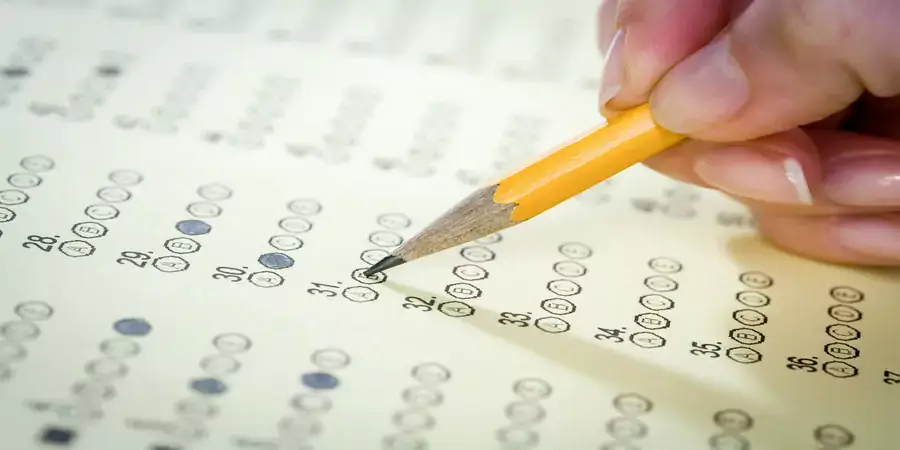
When Priya attempted her first IBPS Clerk prelims mock test after three months of studying from preparation books, she scored 42 out of 100 well below the expected cutoff of 60-65. The problem wasn’t her knowledge of concepts. She’d mastered quantitative aptitude formulas and reasoning techniques. The issue was exam-specific intelligence: she didn’t know that English section has easiest questions attempted first, that certain reasoning question types consistently appear, or that calculator-dependent arithmetic questions waste precious seconds.
After shifting her preparation strategy to focus heavily on IBPS clerk previous year papers solving 15 complete papers over six weeks Priya’s scores jumped to 72-78 range. The difference wasn’t more knowledge but strategic familiarity with how IBPS actually tests concepts, which question types appear repeatedly, and how to navigate the exam efficiently.
Understanding how to effectively use previous year papers distinguishes candidates who merely study from those who strategically prepare for IBPS Clerk’s specific testing patterns.
Understanding IBPS Clerk Exam Structure
Before analyzing how previous papers help, understanding the exam structure is essential.
Prelims Exam Pattern
Three sections, 100 questions, 60 minutes:
- English Language: 30 questions, 20 minutes
- Numerical Ability: 35 questions, 20 minutes
- Reasoning Ability: 35 questions, 20 minutes
Sectional timing: Strictly enforced cannot switch between sections Marking scheme: +1 for correct, -0.25 for incorrect (negative marking) Cutoff pattern: Both sectional cutoffs (must qualify in each section) and overall cutoff
Recent cutoff ranges (2023-2024):
- General category: 60-65 marks
- OBC: 55-60 marks
- SC/ST: 50-55 marks
Mains Exam Pattern
Four sections, 190 questions, 160 minutes:
- General/Financial Awareness: 50 questions, 35 minutes
- English Language: 40 questions, 35 minutes
- Reasoning Ability & Computer Aptitude: 50 questions, 45 minutes
- Quantitative Aptitude: 50 questions, 45 minutes
Marking: +1 correct, -0.25 incorrect Descriptive paper: Letter writing and essay (30 minutes, 25 marks)
Understanding this structure reveals why previous papers matter the exam tests not just knowledge but speed, accuracy, and strategic section navigation under strict time pressure.
What Previous Year Papers Actually Reveal
Past IBPS Clerk papers aren’t just practice questions they’re blueprints revealing consistent patterns that smart aspirants exploit.
Pattern 1: Recurring Question Types
Analysis of IBPS Clerk papers from 2018-2024 shows striking consistency in question type distribution:
Reasoning section consistently includes:
- Seating arrangement/puzzles: 10-12 questions (highest weightage)
- Syllogism: 5 questions
- Blood relations: 3-4 questions
- Direction sense: 2-3 questions
- Coding-decoding: 3-4 questions
- Inequality: 5 questions
Quantitative Aptitude section patterns:
- Simplification/approximation: 10-15 questions (easiest, attempt first)
- Number series: 5 questions
- Data interpretation: 10 questions
- Arithmetic word problems: 10-15 questions (time, speed, profit/loss, SI/CI)
English Language section:
- Reading comprehension: 10 questions
- Cloze test: 5-10 questions
- Error detection: 5-10 questions
- Fill in the blanks: 5 questions
- Para jumbles: 5 questions
Strategic insight: Knowing this distribution helps prioritize preparation. Spending equal time on all reasoning topics wastes effort seating arrangements deserve double the attention of blood relations.
Pattern 2: Difficulty Level Variations
IBPS deliberately varies difficulty across question types within sections:
Easy questions (50-60% of section):
- Direct application questions requiring basic formula knowledge
- Straightforward reasoning without complex conditions
- Simple vocabulary-based English questions
Moderate questions (25-30%):
- Multi-step calculations
- Puzzles with 3-4 variables
- Inference-based reading comprehension
Difficult questions (10-20%):
- Complex data interpretation
- Advanced seating arrangements with multiple conditions
- Tricky vocabulary or error detection
Strategic application: Previous papers teach you to identify question difficulty quickly and skip time-consuming difficult questions initially, returning if time permits. This strategic approach is essential for reducing exam-day anxiety while maximizing your score.
Pattern 3: Time Traps to Avoid
Certain question types consistently consume disproportionate time:
High time consumption questions:
- Circular seating arrangements: 4-6 minutes average
- Complex data interpretation: 3-4 minutes per question
- Paragraph-based reasoning: 5-7 minutes for set
Low time consumption questions:
- Simplification: 30-45 seconds
- Syllogism: 45-60 seconds
- Direction sense: 45 seconds
- Fill in the blanks: 30 seconds
Strategic insight from previous papers: Attempting all 15 simplification questions (taking 8-10 minutes total) before touching complex DI ensures you maximize “easy marks” before time pressure increases errors.
Effective Strategies for Using Previous Year Papers
Simply solving previous papers doesn’t guarantee improvement. Strategic analysis and targeted practice make the difference.
Strategy 1: Diagnostic Phase (Week 1-2)
Objective: Identify your current level and weak areas
Method:
- Take 2-3 complete previous year papers under strict exam conditions (sectional timing, no calculator, no interruptions)
- Score honestly including negative marking
- Create detailed error analysis spreadsheet tracking:
- Questions attempted vs. left
- Correct vs. incorrect by topic
- Time spent per section
- Which question types you struggled with
Sample error analysis:
| Section | Attempted | Correct | Incorrect | Left | Negative Marks | Net Score |
|---|---|---|---|---|---|---|
| English | 25 | 18 | 7 | 5 | -1.75 | 16.25 |
| Quant | 28 | 15 | 13 | 7 | -3.25 | 11.75 |
| Reasoning | 30 | 20 | 10 | 5 | -2.5 | 17.5 |
Key insight: This candidate’s problem isn’t knowledge (decent attempt rate) but accuracy high incorrect answers causing significant negative marking. Strategy needs accuracy focus, not speed.
Strategy 2: Topic-Wise Deep Dive (Week 3-6)
Objective: Strengthen weak areas identified in diagnostic
Method:
- Collect all previous year questions on your weakest topics (e.g., if Data Interpretation is weak, gather all DI questions from past 5-6 years)
- Solve topic-wise in sets of 10-15 questions
- Time yourself but don’t obsess over speed initially focus on accuracy
- After each set, analyze solution methods for questions you got wrong
- Identify shortcuts or patterns you missed
Example Seating Arrangement improvement:
- Solve 50+ seating arrangement questions from previous papers
- Identify common condition patterns (person X sits opposite Y, two people between A and B, etc.)
- Develop systematic approach to diagramming
- Note which arrangement types (linear vs. circular vs. rectangular) you handle better
Critical: Don’t just check if answer is right/wrong understand WHY. If you used a 5-minute method when a 2-minute shortcut exists, that matters.
Strategy 3: Speed Building Phase (Week 7-10)
Objective: Increase speed while maintaining accuracy
Method:
- Revisit complete previous year papers with stricter time targets
- For prelims: Try completing each section in 18 minutes instead of 20
- Use sectional tests from previous papers, practicing one section at a time
- Track improvement in attempts per section while keeping accuracy above 65%
Progressive timing strategy:
- Week 7: 22 minutes per section (2 extra minutes)
- Week 8: 21 minutes
- Week 9: 20 minutes (actual exam time)
- Week 10: 19 minutes (pressure training)
Strategy 4: Full-Length Simulation (Week 11-12)
Objective: Build exam-day stamina and timing
Method:
- Take complete previous year papers in one sitting
- Follow exact exam day routine (same time of day, 60 minutes straight, no breaks)
- Simulate exam stress as closely as possible
- Review performance focusing on:
- Did time pressure cause silly mistakes?
- Energy level drop in third section?
- Which section should you attempt first?
Section order experimentation: Previous papers let you test different section orders. Some candidates perform better starting with English (easier, builds confidence), others prefer tackling Reasoning first (hardest, need fresh mind). Use papers to find your optimal order.
Common Mistakes Revealed by Previous Papers
Analyzing your performance on previous papers exposes preparation gaps you might not otherwise recognize.
Mistake 1: Over-Preparation of Certain Topics
Many aspirants spend excessive time on topics they already know well, neglecting weaknesses.
Example: Candidate strong in profit/loss problems solves 100+ such questions, scores 95% accuracy. Meanwhile, struggles with time-speed-distance (50% accuracy) but avoids practicing it because it’s difficult.
Previous paper insight: IBPS gives relatively equal weightage to most arithmetic topics. Your 95% in profit/loss doesn’t compensate for 50% in time-speed-distance. Previous papers force you to confront weak areas because questions appear regardless of your preferences.
Mistake 2: Ignoring Negative Marking Impact
Common scenario: Candidate attempts 32 out of 35 questions in Quant section
- Correct: 20 questions = +20 marks
- Incorrect: 12 questions = -3 marks
- Net score: 17 marks
Better strategy from paper analysis:
- Attempt only 25 questions (highest confidence)
- Correct: 20 questions = +20 marks
- Incorrect: 5 questions = -1.25 marks
- Net score: 18.75 marks
Previous papers teach that selective attempting often beats aggressive attempting when accuracy is below 70%.
Mistake 3: Linear Section Approach
Many candidates attempt questions in the order they appear, wasting time on difficult questions encountered early.
Paper analysis reveals better approach:
- Quick scan of entire section (30 seconds)
- Identify and complete all easy questions first (10-12 minutes)
- Tackle moderate questions (5-6 minutes)
- Attempt difficult questions only if time remains (2-3 minutes)
This ensures you never leave easy marks unattempted because you got stuck on a hard question early.
Mistake 4: Inadequate Time for Review
Candidates who spend all 20 minutes attempting questions have zero time to review, leaving silly mistakes uncorrected.
Optimal timing from paper practice:
- 17-18 minutes: Attempting questions
- 2-3 minutes: Quick review of marked questions and obvious errors
Previous papers help you build speed to finish in 17-18 minutes, reserving crucial review time.
Integrating Previous Papers with Overall Preparation
Previous year papers work best as part of comprehensive strategy, not as standalone preparation.
Month 1-2: Concept Building
- Focus: Theory and concept understanding from books
- Previous papers: Minimal just 1-2 papers for initial assessment
- Purpose: Understand what you need to learn
Month 3-4: Topic-Wise Practice
- Focus: Practicing concepts through standard question sets
- Previous papers: Topic-wise previous year questions
- Purpose: Apply concepts to IBPS-specific question styles
Month 5-6: Speed and Strategy
- Focus: Full-length previous year papers
- Mock tests: Supplement previous papers with online mocks
- Purpose: Exam simulation and timing strategies
Last 2 Weeks: Revision and Confidence
- Focus: Weak area revision
- Previous papers: Revisit incorrectly solved questions from earlier attempts
- Purpose: Eliminating remaining gaps, building confidence
Critical balance: Previous papers show what IBPS tests and how. But if concepts are weak, papers alone won’t help. First build foundation, then use papers to refine exam-specific skills.
Related searches: 6 Ways Technology Is Modernising Exam Delivery
Where to Find Quality Previous Year Papers
Access to authentic previous year papers matters fake or low-quality papers waste time and mislead preparation.
Reliable Sources
Official and Semi-Official:
- IBPS official website: Sometimes releases sample papers
- Leading bank exam coaching institutes: Oliveboard, Adda247, Gradeup provide authentic paper compilations
- Banking exam portals: AffairsCloud, Bankersadda compile memory-based papers
Format options:
- PDF downloads: Best for printing and offline practice
- Online test interfaces: Simulate actual computer-based exam experience
- Mobile apps: Convenient for topic-wise practice on-the-go
Language availability: Papers available in both Hindi and English, matching actual exam options. Practice in the language you’ll use on exam day.
Evaluating Paper Authenticity
Red flags indicating low-quality papers:
- Questions with obvious errors or unclear language
- Difficulty level dramatically different from actual exam
- Poor quality solutions with calculation mistakes
- Very old papers (pre-2015) as exam pattern changed significantly
Quality indicators:
- Papers from recognized coaching institutes
- Detailed solutions with explanations
- Difficulty and pattern matching recent exam trends
- Positive user reviews and feedback
Free vs. Paid Resources
Free resources:
- Sufficient for basic practice
- Usually 5-10 previous year papers available
- May lack detailed solutions
- Good for initial assessment
Paid resources (₹200-500 for complete set):
- Comprehensive collection (20-30 papers)
- Detailed video solutions
- Performance analytics and comparison
- Worth investment for serious aspirants
Recommendation: Start with free resources for initial practice. If you find previous papers helpful (most candidates do), invest in paid comprehensive collections for extensive practice.
Measuring Progress Through Paper Analysis
Track improvement systematically rather than relying on gut feeling about preparation level.
Key Metrics to Track
Weekly scorecard:
- Average score across papers attempted
- Section-wise accuracy percentage
- Time management (finishing with review time or not)
- Negative marks per section
- Questions left unattempted
Target progression:
- Month 3: 45-50 marks (baseline)
- Month 4: 55-60 marks (developing strategy)
- Month 5: 65-70 marks (exam-ready)
- Month 6: 70-75 marks (confident)
Warning signs requiring strategy change:
- Scores plateauing for 3+ weeks
- Increasing negative marks despite practice
- Consistently running out of time in specific sections
- High anxiety or mental fatigue during practice
Conclusion: From Practice to Performance
Previous year papers bridge the gap between knowing concepts and performing under exam conditions. IBPS Clerk exam rewards not just knowledge but strategic navigation of time-bound, pressure-filled testing environment.
The candidates who score highest aren’t always those who studied most extensively they’re those who understood the exam’s specific demands through previous paper analysis and adapted their approach accordingly.
Effective use of previous papers requires:
- Diagnostic honesty: Accurately identifying weaknesses without ego
- Strategic practice: Focusing on high-weightage areas and weak topics
- Analytical mindset: Understanding why you got questions wrong, not just what’s correct
- Progressive challenge: Gradually increasing difficulty and time pressure
- Integration: Combining paper practice with concept building and mock tests
For IBPS Clerk aspirants, previous year papers aren’t optional supplementary material they’re essential training ground where exam success is built through repeated exposure to actual testing patterns, strategic refinement, and confidence development that transforms test anxiety into controlled performance.
Start with diagnostic papers, identify gaps, practice strategically, and watch your scores rise as you develop the exam-specific intelligence that distinguishes successful candidates from those who merely studied hard but lacked strategic preparation.
Also Read: Save Big on Your CCSP Exam Costs with These Insider Tips