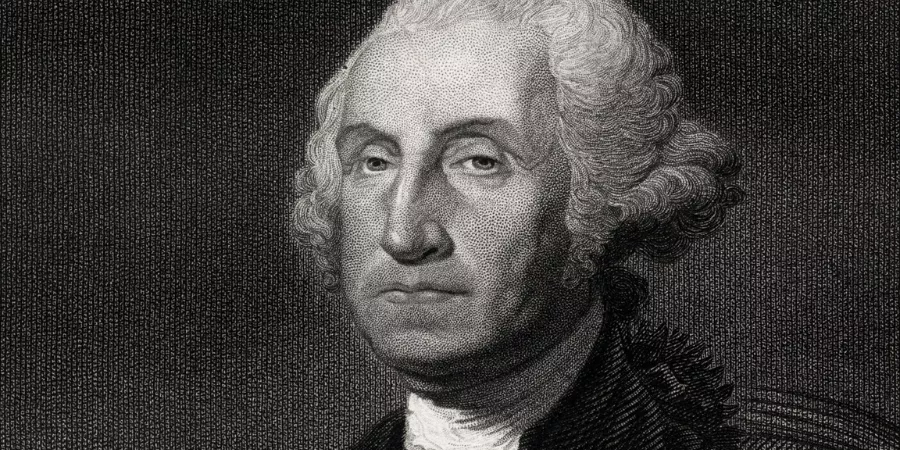
George Washington continues to be one of the most frequently quoted figures in history due to the fact that his statements are still perceived as powerful, straightforward, and profoundly based on his personality. The United States was formed through revolutionary activities, and his leadership, which was a complete combination of the two, greatly influenced the infant and most vulnerable period of the country’s history.
The present piece discusses George Washington as a person; his childhood, origin, and upbringing; his career highlights; and an assemblage of the Top 50 George Washington quotes, which are still inspiring people’s qualities like leadership, discipline, courage, and civic responsibility today.
Who is George Washington?
George Washington was not only the first President of the United States, but also a key person in the American Revolution. He was appointed as the Commander of the Continental Army, fought on the side of the colonies throughout the war, and afterwards, he was the one who took the country through its formative years of government.
His impact on the country was not limited to military and political aspects. He set the tone for the future leaders with his moral conduct, patience, and sense of public duty. Those traits were the ones that defined the leaders and the time period to come, almost one hundred years after Washington’s death.
Washington’s reputation as the Father of the Nation is not ungrounded as he was the one who held the young republic together when the situation was very delicate and the future was very uncertain.
George Washington Early Life and Background
Birth and Family Roots
George Washington was born on February 22, 1732, at the Popes Creek plantation in Westmoreland County, Virginia. His mother and father were Augustine Washington and Mary Ball Washington, respectively.
He was raised in the plantation society of Virginia, where the ownership of land, farming, and status by inheritance were the daily life main factors.
Childhood, Education, and Responsibility
Washington’s childhood was full of responsibilities from the very beginning. His father had died, and he had less access to formal education than some of his elder brothers and sisters. His training was of practical nature and everyday life discipline rather than by the elite universities’ indoctrination.
The early training he got in measuring and surveying land was one of the turning points in his life.
George Washington as a Surveyor
Before the rise of major political power, Washington already had a reputation as a surveyor. Surveying was a task that required accuracy, stamina, and a person who could withstand bad conditions. Those qualities later became part of his leadership character in war and politics.
Mount Vernon and Personal Life
Washington later became almost synonymous with Mount Vernon, his estate, and home in Virginia. Mount Vernon became the picture of his life as a planter and public personality, and it still plays a significant role in grasping his private discipline and public ambition.
The life of Washington also included the tragedy of slavery, a defining factor and a bitter part of the history of that time. Historical documents evidence that the enslaved workforce made it possible for him to have his households and plantations.
George Washington Career and Achievements
A biography of Washington can be divided into three distinct periods: colonial military service, Revolutionary leadership and presidential nation-building.
Colonial Military Service: French and Indian War
Washington through the French and Indian War got his first taste of military experience. He was a young officer who got firsthand experience in field related matters like, logistics, command, and survival in tough conditions.
The very first service of Washington was a contributing factor to his future reliability and acceptability when the colonies were in need of a unifying military leader.
Revolutionary War Leadership: Commander of the Continental Army
Starting with the Revolutionary War, the Second Continental Congress elected Washington the leader of the Continental Army. He encountered a monumental problem: an inexperienced army, scant resources, and an enemy that had gained experience and was well organized and strong.
Persistence was the main characteristic of his leadership. He changed tactics, supported morale, and created an army that could last through the long campaigns. According to the historical materials of Mount Vernon, Washington’s general policy was victorious even at the time of his losses, and this was the case in the major events of Trenton and the final victory at Yorktown.
President of the US: The Benchmark
Post-war, Washington was chosen to be the very first President of the United States. The norms of leadership, both executive and government, as well as national peace, were set by his presidency at the very beginning. Besides, he assisted in making the presidency a public duty based office instead of a personal power one.
Top 50 George Washington Quotes
Below are the Top 50 George Washington quotes, organized for readability and value. Several are preserved through historical collections, including Mount Vernon’s quote archive and documented writings.
Leadership and Character Quotes
- “A man’s intentions should be allowed in some respects to plead for his actions.”
- “I shall make it the most agreeable part of my duty to study merit, and reward the brave and deserving.”
- “Discipline is the soul of an army.”
- “Guard against the impostures of pretended patriotism.”
- “Be courteous to all, but intimate with few.”
- “Labor to keep alive in your breast that little spark of celestial fire called conscience.”
- “Happiness and moral duty are inseparably connected.”
- “Associate with men of good quality if you esteem your own reputation.”
- “To be prepared for war is one of the most effectual means of preserving peace.”
- “It is better to offer no excuse than a bad one.”
Quotes on Freedom, Republic, and National Unity
- “Liberty, when it begins to take root, is a plant of rapid growth.”
- “The preservation of the sacred fire of liberty… is finally staked on the experiment entrusted to the hands of the American people.”
- “The Constitution is the guide which I will never abandon.”
- “The name of American… must always exalt the just pride of patriotism.”
- “Observe good faith and justice toward all nations.”
- “Citizens… should exclude permanent antipathies against particular nations.”
- “Let us raise a standard to which the wise and honest can repair.”
- “The basis of our political systems is the right of the people to make and to alter their constitutions of government.”
- “Real men despise battle, but will never run from it.”
- “The propitious smiles of Heaven can never be expected on a nation that disregards the eternal rules of order and right.”
Quotes on Hard Work, Discipline, and Personal Growth
- “Nothing is a better proof of a good mind than a power of bearing adversity.”
- “Perseverance and spirit have done wonders in all ages.”
- “Experience teaches us that it is easy to kindle, but difficult to extinguish.”
- “Delay is preferable to error.”
- “Few men have virtue to withstand the highest bidder.”
- “The harder the conflict, the greater the triumph.”
- “The best and only safe road to honor, glory, and true dignity is justice.”
- “The time is near at hand which must determine whether Americans are to be freemen or slaves.”
- “Nothing can stop the man with the right mental attitude.”
- “Do justice to all, and fear no one.”
Quotes on Service, Duty, and Legacy
- “I hope I shall possess firmness and virtue enough to maintain what I consider the most enviable of all titles, the character of an honest man.”
- “The willingness with which our young people are likely to serve… shall be directly proportional to how they perceive the veterans of earlier wars.”
- “It is impossible to rightly govern the world without God and the Bible.”
- “A primary object should be the education of our youth.”
- “The advancement and diffusion of knowledge is the only guardian of true liberty.”
Quotes on Society, People, and Human Nature
- “It is infinitely better to have a few good men than many indifferent ones.”
- “Be polite to all, but too familiar with none.”
- “Religious controversies… produce more acrimony than any other cause.”
- “The bosom of America is open… to the oppressed and persecuted of all nations and religions.”
- “We should all be considered as one people.”
Quotes for Modern Leadership and Decision-Making
- “Truth will ultimately prevail where there is pains to bring it to light.”
- “If the freedom of speech is taken away then dumb and silent we may be led, like sheep to the slaughter.”
- “A people unused to restraint must be led, they will never be driven.”
- “The nation which indulges toward another an habitual hatred… is a slave to its animosity.”
- “A free people ought to be armed.”
- “It is better to be alone than in bad company.”
- “The spirit of encroachment tends to consolidate the powers of all the departments in one.”
- “Government is not reason, it is force.”
- “There is scarcely any part of my conduct… which may not hereafter be drawn into precedent.”
- “It is better to be prepared for any event than to be unprepared.”
Why George Washington Quotes Still Hold Today?
The quotes of George Washington have always been popular because they address the same human pressures that are always present: leading during difficult times, taking responsibility when there is nobody to see it, and making the right choice when there is a lot at risk.
In case you are one of the students, an entrepreneur, a professional leader, or a writer, these words work as reminders that discipline, judgment, and restraint are the real differentiators between noise and legacy most of the time.
The statements of Washington also show a time when the national identity was being fashioned anew. Several of his sayings emphasize the importance of unity, duty, and long-term stability because he knew what most leaders learn late: a nation can gain victory over its enemies but still not secure the future if the values of the society decay.
George Washington turned into a symbol as he combined power with principle, ambition with self-restraint, and leadership with loyalty to his duty.