
Who This Guide Is For
This guide is for trading firms and CTOs evaluating whether cloud infrastructure can meet execution speed requirements for algorithmic trading strategies, or if traditional colocation remains necessary for competitive performance.
You’ll learn current latency benchmarks comparing cloud versus colocation, understand which strategy types suit each infrastructure approach, and calculate total cost of ownership including hidden expenses that simple pricing comparisons miss.
The Changing Infrastructure Landscape
Algorithmic trading infrastructure decisions have traditionally favored physical colocation in exchange data centers based on the assumption that proximity to matching engines provides insurmountable latency advantages. This conventional wisdom drove billions in infrastructure investment as firms competed for rack space closest to exchange gateways.
However, technological advances in network optimization, hardware acceleration, and intelligent routing have fundamentally altered the performance equation. Managed cloud service providers specializing in financial services now offer latency performance approaching traditional colocation while providing operational flexibility and cost advantages that physical infrastructure cannot match.
The question facing trading firms has shifted from “Can cloud infrastructure handle low-latency trading?” to “Which trading strategies require colocation versus which strategies perform adequately on cloud platforms?” This reframing reflects technical reality where performance gaps have narrowed to the point that strategic considerations often outweigh raw speed metrics.
Understanding where cloud infrastructure fits in trading technology stacks requires examining actual performance data, cost structures, and operational characteristics rather than relying on outdated assumptions about cloud computing limitations.
Latency Performance: Cloud vs. Colocation Reality
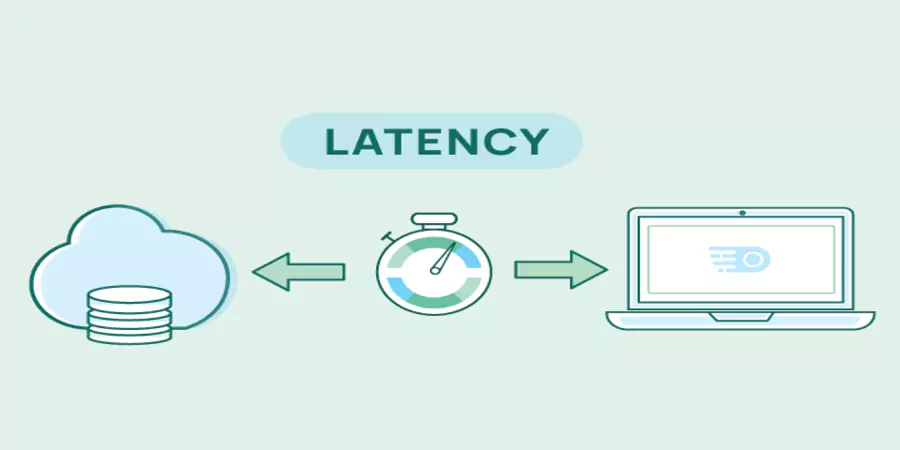
Measuring trading infrastructure latency requires precision at microsecond scales, where a microsecond equals one millionth of a second. For context, light travels approximately 300 meters in one microsecond, meaning that physical distance between components creates unavoidable delays governed by physics.
Traditional colocation minimizes these delays by placing trading servers in the same facilities housing exchange matching engines, reducing network hops and total distance traveled. The best colocation setups achieve round-trip latency of 400-450 microseconds from algorithm execution through order submission to exchange acknowledgment.
Cloud-based trading platforms now achieve 450-550 microseconds for comparable workloads according to independent benchmarking. This 10-15% performance differential represents the current state of technology, with the gap continuing to narrow as cloud providers invest in trading-specific optimizations.
However, these aggregate numbers obscure important variations based on strategy type, market conditions, and implementation quality. Ultra-high-frequency market making strategies operating on sub-100 microsecond timescales still require colocation given their extreme latency sensitivity. Statistical arbitrage, execution algorithms, and most quantitative strategies operate on timeframes where 100-microsecond differences prove irrelevant to strategy profitability.
The latency discussion must also consider consistency alongside absolute speed. Cloud infrastructure using dynamic routing sometimes demonstrates more stable latency during peak volatility periods when exchange gateway connections experience congestion, despite slightly higher median latency than colocation under normal conditions.
Technical Innovations Enabling Cloud Trading
Several specific technical advances have enabled cloud platforms to close performance gaps with traditional infrastructure, each addressing different aspects of the latency challenge.
Custom silicon acceleration using field-programmable gate arrays handles market data processing directly in hardware rather than through software running on general-purpose CPUs. This hardware-based approach reduces processing time from milliseconds to microseconds for tasks like parsing market data feeds and generating trading signals.
Kernel-bypass networking eliminates operating system overhead that traditionally added 50-100 microseconds to each network operation. Smart network interface cards process network packets directly without kernel involvement, reducing round-trip times substantially.
Bare-metal cloud instances provide physical servers without virtualization layers that previously introduced performance overhead. These instances offer direct hardware access matching colocation capabilities while maintaining cloud operational advantages around provisioning, scaling, and management.
Dynamic routing algorithms continuously monitor network paths between trading systems and exchange gateways, selecting optimal routes based on real-time congestion data. During peak trading activity, these intelligent systems sometimes achieve faster execution than static colocation connections suffering from localized network congestion.
The combination of these technologies addresses different components of total latency from algorithm execution through network transmission to exchange processing, cumulatively closing the performance gap that once made cloud infrastructure unsuitable for time-sensitive trading.
Cost Analysis: Total Cost of Ownership Comparison
Comparing infrastructure costs requires examining total cost of ownership rather than simple monthly fees, as both colocation and cloud involve various expense categories that affect overall economics differently.
Colocation infrastructure requires substantial upfront capital expenditure for hardware purchases, typically $200,000-500,000 for trading system buildouts depending on capacity requirements. This capital outlay covers servers, network equipment, storage systems, and backup infrastructure that firms must purchase before generating any trading revenue.
Monthly colocation costs include rack space rental at $2,000-5,000 per rack, power consumption at $500-1,500 monthly, network connectivity at $3,000-8,000 for exchange connections and internet access, plus hardware maintenance and eventual replacement expenses. Total monthly costs typically run $15,000-25,000 for mid-sized trading operations.
Cloud infrastructure eliminates upfront hardware purchases, operating on consumption-based pricing where firms pay only for resources used. Basic algorithmic trading deployments start at $3,000-5,000 monthly including compute instances, storage, and network connectivity. Scaling to enterprise capacity runs $8,000-15,000 monthly depending on specific requirements.
However, this simple comparison misses several factors affecting true costs. High-volume trading operations exceeding 50,000 contracts daily often find colocation more economical on a per-trade basis despite higher fixed costs. Cloud per-transaction costs remain relatively flat regardless of volume, while colocation fixed costs amortize across larger transaction counts.
Hidden colocation costs include engineering time managing physical infrastructure, longer provisioning times requiring capacity planning months in advance, and reduced flexibility responding to changing business needs. Cloud infrastructure provisions within minutes and scales elastically during volatility spikes without maintaining excess capacity.
Smaller trading firms and quantitative hedge funds lacking capital for infrastructure investments find cloud economics particularly attractive, accessing institutional-grade trading systems for monthly costs an order of magnitude below colocation requirements.
Strategy-Specific Infrastructure Requirements
Different algorithmic trading strategies have varying latency sensitivity that determines appropriate infrastructure approaches. Understanding these requirements prevents both over-investment in unnecessary speed and under-investment creating competitive disadvantages.
Ultra-high-frequency market making strategies posting and canceling thousands of orders per second require sub-100 microsecond latency, making physical colocation mandatory. These strategies profit from being first to respond to market changes, where microsecond differences directly affect profitability. Cloud infrastructure cannot currently match these extreme performance requirements.
Statistical arbitrage strategies exploiting temporary mispricings across related instruments typically operate on timeframes of seconds to minutes, where 100-microsecond latency differences prove immaterial. These strategies benefit more from cloud advantages like global deployment and elastic scaling than from marginal latency improvements.
Execution algorithms optimizing large order execution over minutes to hours focus on minimizing market impact rather than raw speed. Cloud infrastructure provides more than adequate performance for these strategies while offering analytical tools and data storage capabilities supporting algorithm development and backtesting.
Quantitative strategies using fundamental data, alternative data, or machine learning models operate on timeframes where latency becomes completely irrelevant. These approaches benefit substantially from cloud platforms’ computational capacity for model training and data processing.
The key insight is that most algorithmic trading strategies do not require absolute minimum latency, instead needing “good enough” performance combined with other operational capabilities. Only a small percentage of trading activity genuinely requires colocation’s extreme low-latency characteristics.
Hybrid Architecture Design Approaches
Rather than binary cloud-versus-colocation decisions, many trading firms now implement hybrid architectures strategically blending both infrastructure types based on workload characteristics. This approach optimizes performance and cost by matching each system component with appropriate infrastructure.
Core execution systems handling latency-critical order submission and cancellation might remain colocated near exchange matching engines, while everything else runs in the cloud. This includes risk management systems, market data storage and analytics, trading algorithm backtesting, and research environments that benefit from cloud computational capacity without requiring minimal latency.
The hybrid approach allows firms to scale different components independently based on actual requirements. During high volatility periods requiring additional computational capacity for risk calculations, cloud resources provision within minutes. Expanding colocation capacity takes weeks or months through hardware procurement and installation.
However, hybrid architectures introduce complexity around data synchronization, network connectivity between environments, and operational overhead managing two distinct infrastructure types. Firms must ensure that benefits from optimized infrastructure placement exceed costs of increased complexity.
Many firms start with cloud infrastructure for new strategies or less latency-sensitive workloads, maintaining existing colocation for proven high-frequency strategies until cloud performance improves sufficiently to justify migration. This evolutionary approach manages risk while gradually shifting toward more cloud-centric architectures.
Regulatory and Compliance Considerations
Trading infrastructure must satisfy various regulatory requirements around audit trails, data retention, security controls, and operational resilience that affect cloud versus colocation decisions differently.
Cloud platforms provide detailed logging and monitoring capabilities that streamline compliance with regulatory reporting requirements. Every access to trading systems, configuration change, and data query gets automatically logged with timestamps and user attribution, creating comprehensive audit trails that regulators increasingly demand.
The SEC’s Consolidated Audit Trail requires capturing detailed order lifecycle data that cloud platforms’ native logging capabilities support more easily than self-managed colocation infrastructure. Similarly, European regulations under MiFID II mandate transaction reporting and best execution analysis that cloud analytics tools facilitate.
However, some firms face regulatory constraints requiring data residency in specific jurisdictions or restricting cloud usage for certain activities. These firms must carefully evaluate regulatory implications before migrating trading systems to cloud infrastructure.
Security controls represent another consideration where cloud platforms offer advantages through dedicated security teams, automated threat detection, and regular security updates that would require substantial in-house expertise to replicate in colocation environments.
Exchange connectivity requirements have evolved to accommodate cloud trading, with major exchanges now certifying cloud-based connections to their matching engines. This removes previous barriers where exchanges mandated physical presence in their data centers for direct market access.
Implementation Planning and Migration Strategy
Moving trading infrastructure to cloud platforms or implementing hybrid architectures requires careful planning addressing technical, operational, and risk management dimensions that affect successful execution.
Performance testing should precede any production deployment, measuring actual latency, throughput, and consistency under various market conditions. Synthetic trading simulations cannot capture all real-world scenarios, making paper trading with live market data an essential validation step before committing capital to cloud-based strategies.
Risk management during migration includes maintaining fallback capabilities to existing infrastructure until cloud systems prove reliable through extended testing periods. Running parallel systems increases costs temporarily but provides insurance against unexpected cloud performance issues.
Data migration presents technical challenges when moving historical data, reference data, and configuration settings from colocation to cloud environments. Planning data transfer during low-volume periods and validating data integrity prevents operational disruptions.
Staff training on cloud operational models differs substantially from traditional infrastructure management. Engineers familiar with physical server management must learn cloud-native concepts around infrastructure-as-code, automated scaling, and distributed architecture patterns.
Vendor selection for cloud services should emphasize providers with demonstrated financial services expertise and trading-specific optimizations rather than general-purpose cloud platforms lacking understanding of latency requirements. Specialized providers offer network connectivity to exchanges, hardware acceleration options, and support teams familiar with trading infrastructure challenges.
Future Technology Trajectory
The performance gap between cloud and colocation infrastructure continues narrowing as cloud providers invest in trading-specific optimizations while physical data centers face fundamental limitations around further latency reduction.
Emerging technologies including programmable network switching, improved fiber optic transmission, and next-generation hardware acceleration promise additional latency reductions that benefit cloud platforms disproportionately given their ability to rapidly deploy new technology. Colocation facilities constrain hardware upgrades to depreciation cycles and budget availability.
Software-defined networking enables more sophisticated routing optimizations that cloud providers can implement at scale across their global networks, while individual firms in colocation facilities lack similar capabilities.
The expanding footprint of cloud data centers globally creates more geographic options for deploying trading infrastructure close to target markets, reducing the colocation advantage based on exchange proximity as cloud facilities open near major financial centers.
However, physics ultimately limits how much latency can be reduced. Light speed through fiber optic cables represents an unchangeable constraint, meaning that theoretical minimum latency depends primarily on physical distance between components. This reality ensures that ultra-high-frequency strategies will continue requiring colocation despite cloud improvements.
Frequently Asked Questions
Q: What latency performance can trading firms realistically expect from cloud infrastructure?
Current cloud trading platforms achieve 450-550 microseconds round-trip latency for typical algorithmic trading workloads, compared to 400-450 microseconds for colocation. This 10-15% difference matters for ultra-high-frequency strategies but proves irrelevant for statistical arbitrage, execution algorithms, and most quantitative strategies operating on longer timeframes. Performance varies by cloud provider, specific implementation, and market conditions.
Q: How much does cloud trading infrastructure cost compared to colocation?
Cloud deployments start at $3,000-5,000 monthly for basic algorithmic trading systems without upfront hardware investment, while colocation requires $200,000-500,000 initial capital expenditure plus $15,000-25,000 monthly operating costs. However, high-volume operations above 50,000 daily contracts often find colocation more economical per trade despite higher fixed costs. Total cost of ownership depends on trading volume, strategy complexity, and required redundancy.
Q: Which trading strategies require colocation versus cloud infrastructure?
Ultra-high-frequency market making requiring sub-100 microsecond latency necessitates colocation near exchange matching engines. Statistical arbitrage, execution algorithms, quantitative strategies, and most algorithmic trading approaches operate on timeframes where cloud latency proves acceptable. The determining factor is whether your strategy profits from microsecond-level speed advantages or whether other operational capabilities matter more than absolute minimum latency.
Q: Can firms run hybrid architectures with both cloud and colocation?
Yes, many firms maintain colocation for core latency-sensitive execution while using cloud for risk management, analytics, backtesting, and research. This hybrid approach optimizes cost-performance tradeoffs but introduces complexity around data synchronization and network connectivity between environments. Success requires clear architectural boundaries defining which workloads run where based on actual performance requirements rather than assumptions.
Q: What are the biggest risks in migrating trading infrastructure to the cloud?
Performance consistency under various market conditions represents the primary concern, requiring extensive testing before production deployment. Data security and regulatory compliance require validation that cloud platforms meet specific industry requirements. Vendor lock-in from platform-specific implementations complicates potential future migrations. Operational teams need training on cloud-native management differing from traditional infrastructure approaches. Mitigate risks through thorough testing, parallel operations during transition, and maintaining fallback capabilities.
Implementation Roadmap
Begin by categorizing your trading strategies by latency sensitivity, identifying which genuinely require colocation versus which could operate adequately on cloud infrastructure. Most firms find that only 10-30% of strategies actually need extreme low-latency characteristics.
Conduct performance benchmarking with candidate cloud providers using realistic trading workloads and market data rather than synthetic tests. Measure latency, throughput, and consistency across various market conditions before committing to specific platforms.
Implement pilot deployments with non-critical strategies or paper trading to validate cloud performance in production environments without risking trading capital. Run parallel operations for 60-90 days collecting comprehensive performance data.
Develop migration plans addressing data transfer, system configuration, network connectivity, and staff training. Create detailed runbooks for routine operations and incident response ensuring teams can manage cloud infrastructure effectively.
Establish monitoring and alerting for latency metrics, system availability, and trading performance. Cloud platforms provide extensive monitoring tools, but you must configure them to track metrics relevant to trading operations rather than generic infrastructure health.
Related: Big Tech’s $364B AI Infrastructure War Reshapes Global Computing
About the Author
Michael Zhang is a trading infrastructure architect with 19 years of experience designing and implementing low-latency trading systems for proprietary trading firms and hedge funds. He holds an MS in Computer Engineering from Carnegie Mellon and previously served as Head of Trading Infrastructure at two top-tier quantitative trading firms, managing migrations from traditional colocation to hybrid cloud architectures. Michael has designed trading systems processing 200,000+ orders per second with sub-millisecond latency requirements and currently advises trading firms on infrastructure strategy. He specializes in performance optimization, network architecture, and cost-effective scaling of trading technology across both physical and cloud infrastructure.
Disclaimer: This guide provides general analysis of trading infrastructure options. Actual performance varies based on specific implementations, market conditions, and strategy characteristics. Conduct thorough testing and validation before deploying trading capital on any infrastructure platform. Technology costs and capabilities change rapidly; verify current specifications with providers before making infrastructure decisions. Neither the author nor publisher has financial relationships with cloud providers or infrastructure vendors mentioned.