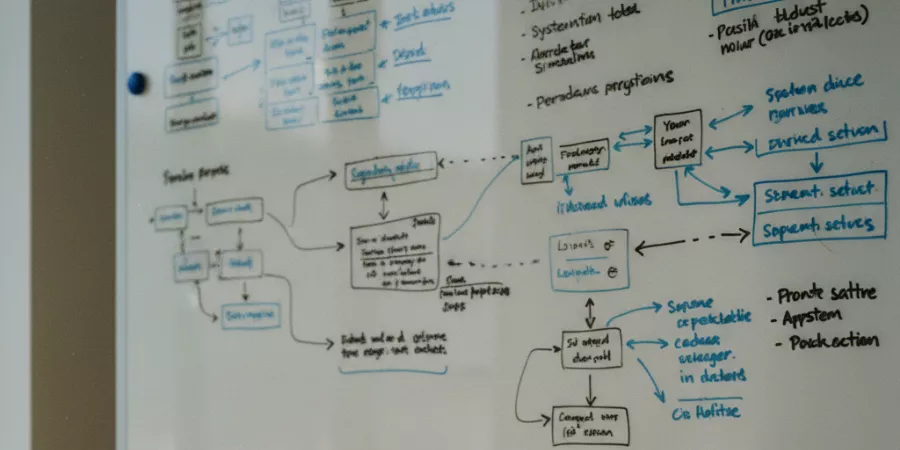
System design has become a non-negotiable skill for software engineers in 2026. Whether you are preparing for FAANG interviews, architecting microservices at a startup, or scaling infrastructure at an enterprise, understanding distributed systems, data modeling, and scalability patterns separates competent developers from exceptional ones. While online courses and video tutorials provide interactive learning, books offer the depth, rigor, and reference value that ephemeral content cannot match.
Why Books Still Matter for System Design Mastery
In an era dominated by YouTube tutorials and bootcamp courses, physical and digital books remain the gold standard for learning system design. Books provide comprehensive coverage that video content cannot replicate due to time constraints. They allow non-linear learning, enabling readers to skip familiar concepts and dive deep into challenging sections at their own pace. Most importantly, well-written technical books serve as permanent reference materials that engineers consult throughout their careers.
The best system design books in 2026 share common characteristics: they are authored by engineers with proven experience building large-scale systems, they balance theoretical foundations with practical implementation guidance, they provide real-world case studies from recognizable companies, and they remain relevant despite rapid technological change by focusing on enduring principles rather than fleeting frameworks.
Designing Data-Intensive Applications by Martin Kleppmann
Martin Kleppmann’s Designing Data-Intensive Applications remains the single most recommended system design book among practicing engineers. First published in 2017, this book has aged remarkably well because it focuses on foundational concepts, data structures, replication strategies, partitioning techniques, and consistency models, rather than specific technologies that may become obsolete.
Kleppmann’s background includes work at LinkedIn, Rapportive, and contributions to Apache Samza, giving him credibility that resonates with readers. The book’s three-part structure covers foundations of data systems, distributed data challenges, and derived data, providing a logical progression from basics to advanced topics. Engineers preparing for system design interviews consistently cite this book as the single most valuable resource, and practicing architects reference it when making critical infrastructure decisions.
What Makes This Book Essential
The depth of coverage on consensus algorithms, replication lag, and transaction isolation levels exceeds what most online resources provide. Kleppmann explains not just how distributed databases work but why specific design decisions matter and what tradeoffs each approach carries. For developers who want to understand the why behind architectural choices rather than just copying patterns, this book is indispensable. After building foundational knowledge here, engineers can tackle system design interview questions with answers with significantly more confidence.
System Design Interview by Alex Xu (Volumes 1 and 2)
Alex Xu’s two-volume System Design Interview series has become the definitive interview preparation resource. Volume 1 covers foundational questions including designing a rate limiter, consistent hashing, key-value stores, unique ID generators, URL shorteners, web crawlers, notification systems, news feed systems, chat systems, and search autocomplete systems. Volume 2 tackles proximity services, nearby friends, Google Maps, distributed message queues, metrics monitoring, ad click aggregation, hotel reservation systems, and distributed email services.
What distinguishes Xu’s approach is the structured four-step framework he provides for tackling any system design question: understand the problem and establish design scope, propose high-level design and get buy-in, design deep dive into specific components, and wrap up with considerations around bottlenecks, tradeoffs, and future scaling. This methodology translates directly into interview performance and real-world architecture discussions.
Building Microservices by Sam Newman
Sam Newman’s Building Microservices addresses the architectural style that has dominated backend development for the past decade. The second edition, updated in 2021, incorporates lessons learned from widespread microservices adoption including common pitfalls, operational complexity, and when monoliths remain the better choice.
Newman covers service decomposition strategies, inter-service communication patterns, data management in distributed systems, deployment pipelines, monitoring and observability, security in service-oriented architectures, and organizational structures that support microservices effectively. The book acknowledges that microservices introduce significant complexity and provides honest guidance about when this complexity is justified versus when simpler architectures serve better.
Fundamentals of Software Architecture by Mark Richards and Neal Ford
Mark Richards and Neal Ford’s Fundamentals of Software Architecture takes a broader view than system design books focused primarily on distributed systems. It covers architectural thinking, modularity, component-based thinking, architectural characteristics like scalability and reliability, architectural styles from layered to event-driven, soft skills for architects, and evolutionary architecture practices.
This book is particularly valuable for senior engineers transitioning into formal architect roles or for developers who want to understand how system design decisions fit within broader organizational and technical contexts. The emphasis on tradeoff analysis, where every architectural decision involves compromises rather than objectively correct answers, reflects real-world architecture work more accurately than books presenting idealized solutions.
Release It! by Michael Nygard
Michael Nygard’s Release It! focuses on production systems, the aspects of software that only become apparent after deployment at scale. The book covers stability patterns and anti-patterns, capacity planning, networking issues, security considerations, and operational concerns that system design interviews often neglect but that real systems cannot ignore.
Nygard’s experience includes consulting for large enterprises facing production incidents, giving the book a battle-tested quality. Chapters on circuit breakers, bulkheads, steady-state operation, and fail-fast principles provide patterns that directly prevent outages. For engineers who have primarily worked in development environments and want to understand production reliability, this book fills critical knowledge gaps.
Database Internals by Alex Petrov
Alex Petrov’s Database Internals dives deeper into database architecture than most system design resources venture. The book covers storage engines, B-tree and LSM-tree data structures, file formats, distributed database algorithms, replication protocols, consistency guarantees, and consensus algorithms implemented in production databases.
While this book is more specialized than general system design texts, understanding database internals significantly improves system design capabilities. Many scalability challenges ultimately reduce to data storage and retrieval optimization, and engineers who understand how databases actually work make better architectural decisions than those treating databases as black boxes.
Complementing Books with Other Resources
Books provide depth, but they work best when complemented with other learning modalities. Video courses offer visual explanations of complex architectures that text alone cannot convey. Interactive coding platforms allow hands-on practice implementing designs. Mock interviews provide feedback on communication skills that books cannot teach. Engineers pursuing comprehensive system design mastery typically combine reading with the best YouTube channels and courses for system design to build both theoretical knowledge and practical application skills.
The most effective learning approach involves reading books for foundational understanding, watching video content for alternative explanations and visual learning, practicing design problems to apply concepts, and building actual systems, even small ones, to encounter real constraints that theoretical study cannot fully convey.
Building a System Design Reading Plan
For developers new to system design, start with Alex Xu’s Volume 1 to understand the interview format and common patterns, then progress to Designing Data-Intensive Applications for deeper theoretical grounding. For engineers already comfortable with basics, Building Microservices and Fundamentals of Software Architecture provide architectural breadth, while Database Internals and Release It! offer specialized depth in specific domains.
The recommended reading pace is one chapter per week with time allocated for note-taking and researching unfamiliar concepts. Trying to rush through these books diminishes their value. System design mastery develops over months and years, not weeks. The investment in thorough reading compounds throughout a career as the foundational principles remain relevant even as specific technologies evolve.
The Enduring Value of Deep Knowledge
System design books published five or even ten years ago remain valuable in 2026 because they teach principles rather than tools. Load balancing, caching strategies, database sharding, event-driven architectures, and consensus algorithms work the same way today as they did a decade ago. The specific databases, message queues, and cloud platforms change, but the underlying concepts endure. Engineers who invest time in understanding these fundamentals through quality books build knowledge that remains relevant throughout their careers, making books one of the highest-return investments a developer can make.