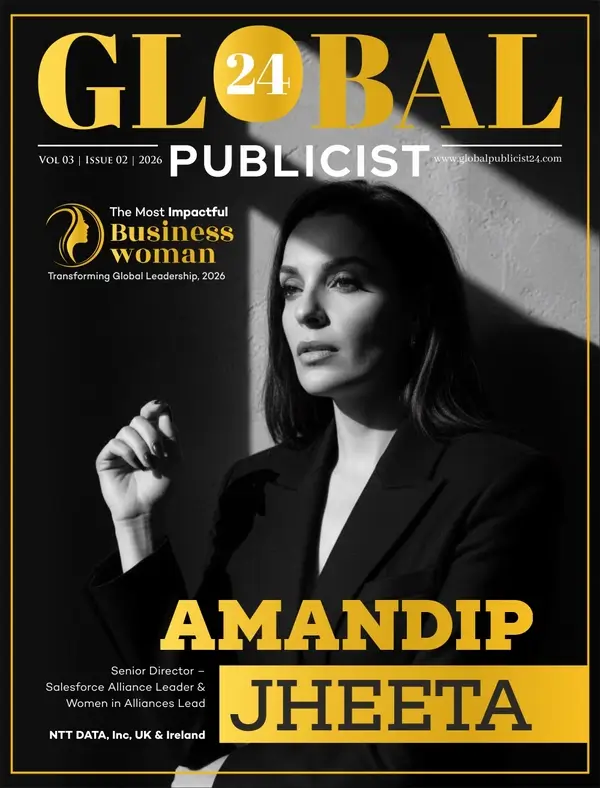
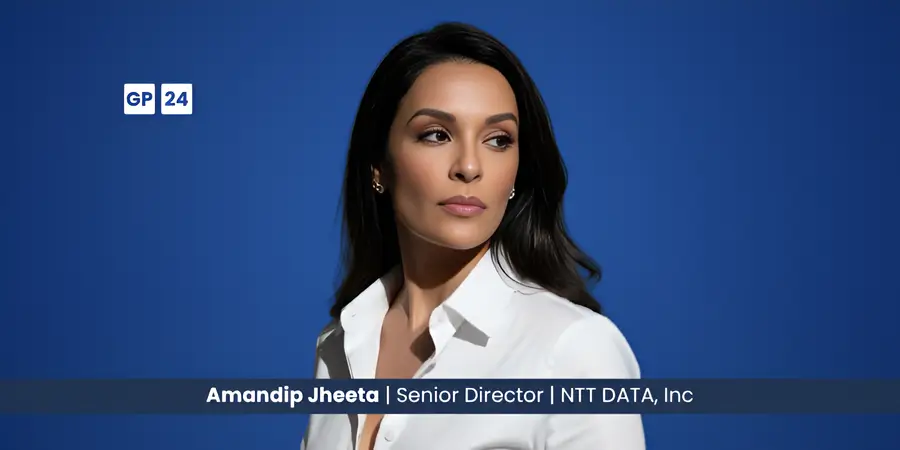
I did not start my career with a grand plan to become a Senior Director in the global technology ecosystem; I started with curiosity, resilience, and a willingness to be the only woman in rooms where I was not expected to lead. I began in hands‑on technical development roles, then moved into business analysis – where I learnt to translate between requirements, systems, and real business outcomes. From there I progressed into project and delivery leadership roles, then account ownership, before finally stepping into relationship/alliance leadership. Each stage of my career expanded my view – from code, to projects, to clients, to the wider ecosystem.
Along the way, I have navigated personal setbacks; moments when balancing life, motherhood, and an ambitious career felt almost impossible; and professional knockbacks when promotions, recognition, or opportunities that I felt I had earned did not appear. Those experiences taught me to rebuild, reset and rise again, with more clarity, more empathy, and a deeper commitment to creating space for others.
My journey has been shaped by being underestimated, and then quietly, consistently outperforming expectations. I learnt to translate between business, technology, and people, helping clients to see how platforms like SAP and Salesforce could unlock growth, while guiding teams through the complexity of transformation. Today, as a Senior Director and Alliance Leader at NTT DATA, I bring that same blend of commercial focus, empathy, and conviction that transformation must serve both performance and people.
As a Senior Director leading Salesforce alliances in the UK & Ireland, what pivotal moments shaped your leadership philosophy?
There were a number of pivotal moments that shaped my leadership philosophy. The first was early in my career, when I realised I was the only woman in a room of over 200 men and my presence was assumed to be administrative rather than technical. It taught me that confidence is a discipline. You do not wait to be invited to speak; you prepare so well that you cannot be ignored.
Another defining moment was being recognised by a client and nominated for an award at a time when the organisation I worked for often used me as a tokenistic diversity figure. The award process was eye-opening. I was interviewed by a panel of CEOs and industry leaders, and my experience and impact stood out among many credible nominees. Winning gave me a renewed sense of purpose and encouraged me to put my career first and prioritise my goals.
A further key moment was moving into alliance leadership and seeing the power of ecosystem thinking. When you sit at the intersection of a strategic partner like Salesforce and a service integrator like NTT DATA, you stop focusing on single deals and begin thinking in terms of shared roadmaps, co-innovation, and how you collectively move an industry forward. That shift from individual success to ecosystem impact expanded my thinking and strengthened my leadership approach.
What challenges did you encounter on your journey to becoming a Senior Director in the technology ecosystem, and how did they strengthen your leadership approach?
The most significant challenges I faced were navigating bias, breaking through fixed perceptions of what leadership should look like, and balancing ambition with authenticity. Throughout my career, I often had to prove that I was not in the room to take notes, but to drive strategy, manage risk, and deliver outcomes. There were also times when progression did not follow performance. Despite delivering at a senior level, opportunities stalled because assumptions and perceptions outweighed contribution. Eventually, the lack of progression became so clear that the only way to grow was to resign, which was difficult but ultimately transformative. It taught me to back my own capability, to stop waiting for permission, and to pursue environments where potential is recognised rather than constrained.
These experiences strengthened my resolve to lead with both performance and vulnerability: to be open about the challenges I have faced, while remaining relentless about delivering results.
Another challenge has been leading through periods of uncertainty including Covid, market shifts, evolving business models, and now the rapid advances in AI that reshape customer expectations almost overnight. Instead of resisting change, I learnt to anchor myself in purpose and clarity on outcomes, respect for people, and a focus on value rather than short-lived wins. These challenges have made my leadership more grounded, more empathetic, and more strategic.
As a Salesforce Alliance Leader at NTT DATA, how do you view the evolving role of strategic partnerships in shaping global digital transformation?
As a Salesforce Alliance Leader at NTT DATA, I see strategic partnerships as the engine that turns digital ambition into measurable outcomes. Customers do not just need software; they need an ecosystem that brings together platforms, data, AI, industry expertise, and change management.
Long‑term alliances like the relationships between NTT DATA and our partners is built on a foundation of trust, shared investments, and repeatable patterns that accelerate transformation. Whether it is consolidating fragmented technology estates, modernising legacy systems, or embedding AI into core processes, the most successful programmes are those where partners operate as one integrated team, not as separate vendors.
In your view, what will define successful global leadership in 2026 and beyond?
In my opinion, successful leadership in 2026 and beyond will be defined by three things: a deep understanding of the wider ecosystem you operate in; human-centred decision-making; and courage. Leaders will need to understand not just their own organisations, but also how partners, platforms, and data all connect to create value.
Leaders will also need to balance AI-driven insights with human judgement, and listen to voices that have often been left out of decision-making. They will need courage: the courage to make ethical decisions about AI, data, and sustainability, to call out bias, and to build cultures where inclusion and high performance support each other.
With AI reshaping enterprise ecosystems, how do you see the Salesforce alliance landscape evolving over the next 3–5 years?
Over the next three to five years, the Salesforce alliance landscape will be shaped by AI agents. Indeed, it is already moving that way with Salesforce’s growing focus on AI, data platforms, and trust. AI capabilities are moving from assistive to more autonomous execution, orchestrating end‑to‑end workflows across Sales, Service, and industry clouds. Partners who can design, govern, and scale these AI‑driven workflows, grounded in clean, unified data, will be the ones that can continue to thrive and add value.
In my opinion, alliances’ roles will deepen around AI, security, and industry specialisation, with partners increasing co‑investment in IP, accelerators, and operating models that blend human expertise with AI at scale. The differentiator will not just be who has access to AI, but who can industrialise it safely, compliantly, and inclusively across global enterprises. Some of this has already started.
How should leaders balance innovation with responsible governance, especially in AI‑driven environments?
Leaders need to balance innovation and governance by making sure new ideas can move quickly, while also keeping people, data, and customers safe. In AI‑driven environments, that starts with putting clear guardrails in place from day one: things like simple data policies, transparent use of models, and regular testing to make sure systems behave as expected. It means bringing legal, security, engineering, and business teams together to agree on what responsible AI looks like for their organisation.
At the same time, governance should not slow innovation down – a pattern that we’ve seen repeatedly in the tech sector. Leaders should create safe spaces to experiment, learn, and test ideas, with clear rules and accountability once something moves into real use. And most importantly, leaders need to encourage this through their teams, staying curious about AI, encouraging teams to explore its potential, but being firm on ethics, inclusion, and customer trust.
How would you describe your leadership style in three words and why?
If I had to describe my leadership style in three words, they would be: courageous, inclusive, and performance‑driven.
Courageous because I have learnt to speak up even when it is uncomfortable, to challenge bias, to push for better outcomes, and to back talent that others might overlook.
Inclusive because I know first‑hand what it feels like to be the only one in the room, and I am intentional about making sure others never feel invisible.
Performance‑driven because delivering results, growth, client and partner success speaks volumes.
What personal disciplines or leadership habits have been instrumental in your success as a Senior Director?
Several disciplines have shaped the way I lead. I prepare as much as possible – not just to get the work right, but so I can be present and fully engaged when it matters most. I’m intentional with my time, prioritising relationships, mentoring, and the work that drives long‑term impact. I’ve also learnt the importance of decision discipline: making thoughtful, timely decisions so my teams feel supported, clear, and able to move forward with confidence.
I also prioritise feedback, seeking it proactively from sponsors, peers, and my teams, acting on it quickly, and sharing with colleagues where I can help shape their careers.
As one of the most impactful businesswomen transforming leadership, what responsibility do you feel toward mentoring the next generation of women leaders?
Being recognised as one of the most impactful businesswomen transforming leadership comes with real responsibility. I feel a deep obligation to make sure my journey does not end with me but actively opens doors for others. Today, I mentor women both inside my organisation and externally, and I am involved in several formal programmes that support girls and women in technology. I see mentoring and sponsorship as critical if we want to retain and grow the next generation of female talent in tech. I also continue to have mentorship through significant senior leaders so I can continue to learn and grow.
Recently, I have taken part in several outreach programmes with girls of different school ages, helping them understand the many roles available in technology and guiding them on GCSE choices to encourage them into STEM subjects. I also speak on industry panels, sharing my experiences, lessons learned, and advice for women navigating situations similar to those I faced earlier in my career.
In addition, I serve as an ambassador and judge for women in tech awards and cross‑industry forums. These platforms allow me to amplify my voice, highlight role models, and celebrate the achievements of women and girls entering or progressing through STEM fields.
I also believe deeply in being visible and honest, sharing not just the successes, but also the doubts, trade‑offs, and lessons. When women see someone who looks like them leading at a global level, it expands their sense of what is possible.
What advice would you give to women aspiring to lead at the global enterprise level?
My advice to women aspiring to lead at the global enterprise level is to own your ambition, build your sponsors, build strong networks and protect your values. Do not apologise for wanting big roles or complex portfolios, prepare for them, ask for them, and position yourself visibly for them. Invest in your learning to ensure you have the knowledge to perform.
Invest in relationships with sponsors who will advocate for you in rooms you are not yet in and make it easy for them by being consistent and dependable. Finally, be clear on your non‑negotiables, your ethics, your boundaries and your definition of success; that will ensure that as you move up, you do not lose yourself in the process.
What keeps you motivated during high‑pressure global engagements?
What keeps me motivated during high‑pressure engagements is impact, knowing that the work we are doing changes how clients operate and how people work. I enthusiastically take on complex challenges where technology and people can create something better than any one party could have delivered alone.
On a personal level, my family and my daughters are a constant source of motivation, I want them to see that leadership can look like them – especially being a culturally diverse leader. And the young women I mentor also motivate me; every breakthrough they achieve reminds me why this work matters.
How do you maintain balance while operating in a high‑stakes, performance‑driven environment?
Balance for me is less about everything being perfectly even, and more about being intentional with how I run my life. Some weeks are very full on, and I have learnt to accept that. But I balance those moments with time for family and rest. Small things, like morning school drop for my daughters or switching off through travel and Disney moments, help me reset and stay grounded.
I have learnt the hard way that if I don’t listen to my mind and body, I can become run down and potential burn out – so I try with all the best intention to take stock and recognise when I need to pause and reset. For me, success is not about doing everything, but about doing the right things with the right energy.
Outside of work, what inspires you creatively or intellectually?
Outside of work, I am inspired by learning new things, picking up a new book whenever possible. Travel is important; experiencing new cultures and visiting new places. I enjoy creating social media content that blends parenting, confidence‑building, and a bit of fun when I am not in corporate mum mode; it is my way of processing experiences and hopefully encouraging others.
I also draw inspiration from conversations with people outside my immediate circle, in different places like fitness groups and connecting with entrepreneurs – because they challenge my assumptions and spark new ideas.
If you could define your leadership legacy in one sentence, what would it be?
If I could define my leadership legacy in one sentence, it would be: “She delivered results at scale, changed the rooms she was in, and left the door open – and held – for the women coming behind her.”