When SaaS company Notion asked their most enthusiastic customers to record video testimonials, they received exactly three submissions from hundreds of requests. The feedback was consistent: customers loved the product but felt too camera-shy, lacked professional recording equipment, or couldn’t articulate their thoughts smoothly on video. Meanwhile, Notion’s text-based testimonials stellar reviews buried in static website pages generated minimal engagement compared to competitors’ video content.
The solution wasn’t abandoning video testimonials. It was reimagining how to create them using AI-powered tools that transform genuine customer feedback into professional video content without requiring customers to become comfortable on-camera presenters. This approach, executed ethically and legally, allows businesses to leverage the persuasive power of video testimonials while respecting the reality that most customers aren’t natural video performers.
The critical distinction: AI tools should enhance authentic customer voices, not fabricate fictional ones. This article explores how AI video maker technology creates compelling testimonials from real customer feedback while navigating the ethical and legal requirements that govern customer advocacy content.
Why Video Testimonials Outperform Text Reviews
Video testimonials consistently generate 2-3x higher engagement and conversion rates than text equivalents, according to Wyzowl’s 2024 Video Marketing Report. The reasons extend beyond novelty video communicates authenticity signals that text cannot replicate.
Facial expressions, vocal tone, and body language convey enthusiasm and sincerity far more convincingly than words alone. When a customer’s voice cracks slightly while describing how your product helped their struggling business, that emotional authenticity creates trust that polished marketing copy never achieves. Video viewers subconsciously process these nonverbal cues, making assessments about credibility and genuineness that influence purchase decisions.
From a cognitive perspective, video reduces the effort required to process information. Reading testimonials demands active attention and interpretation. Video delivers the same information while engaging multiple sensory channels simultaneously, improving retention and comprehension. Viewers remember 95% of a message when watched versus 10% when read as text, according to research from Forrester.
The challenge: creating quality video testimonials at scale proves difficult for most businesses. Professional video production for testimonials costs $2,000-5,000 per video when factoring in shooting, editing, and post-production. Customer reluctance to appear on camera limits the testimonials available to film. And coordinating schedules between customers and production crews creates logistical nightmares that delay content creation for months.
AI video tools address these friction points by transforming existing customer feedback from emails, support tickets, reviews, or interviews into professional video content without requiring customers to perform on camera.
The Legal and Ethical Foundation: Authenticity First
Before exploring implementation tactics, establishing the legal framework is essential. In the United States, the Federal Trade Commission (FTC) strictly regulates testimonials and endorsements. These regulations explicitly prohibit fabricating testimonials or materially altering customer statements in ways that misrepresent their experience or opinions.
The FTC’s Endorsement Guides specify that testimonials must reflect the honest opinions, findings, beliefs, or experiences of the endorser. Creating entirely fictional testimonials even using AI tools that make them “seem real” violates these regulations and exposes businesses to significant legal liability, including fines, corrective advertising requirements, and reputational damage.
This means AI video creation must begin with authentic customer feedback. You cannot simply invent testimonials, generate them with ChatGPT, and present them as real customer experiences. The source material must be genuine customer statements, whether from:
- Recorded customer interviews (audio or video)
- Written reviews or survey responses
- Email feedback or support ticket comments
- Case study interviews or success story conversations
The AI’s role is enhancing presentation improving audio quality, adding professional visuals, correcting verbal stumbles, or translating written feedback into video format while preserving the customer’s authentic message and sentiment.
Additionally, you must have explicit permission to use customer feedback in marketing materials. This typically requires written consent that specifies how you’ll use their testimonial, including whether AI tools will be involved in content creation. Transparent disclosure builds trust while ensuring legal compliance.
Strategic Approaches to AI-Enhanced Testimonials
With ethical foundations established, several strategic approaches leverage AI video tools effectively while maintaining authenticity.
Text-to-Video Transformation
Many customers provide detailed written feedback review site comments, email testimonials, or survey responses that contains powerful advocacy but lacks the engagement of video. AI video tools can transform this text into video presentations using voiceover, relevant visuals, and professional formatting.
The process begins by obtaining permission from the customer whose written feedback you’ll use. Once approved, you can create a video that presents their exact words through AI-generated voiceover, accompanied by relevant visuals: product screenshots, data visualizations showing their results, or stock footage representing their industry.
Tools like CapCut Web, Synthesia, and Pictory specialize in this text-to-video transformation. You input the testimonial text, select voice characteristics that match the customer’s demographic profile (age, gender, accent), and the system generates a professional narrated video.
The key is accuracy. The video must present the customer’s actual words without alteration beyond minor grammatical corrections. If you edit for clarity, those edits should be minimal and never change meaning. Consider including a disclaimer: “This video presents written feedback from [Customer Name, Company] with their permission.”
Audio Enhancement and Visual Overlay
When customers agree to phone or video interviews but the recording quality is poor, AI tools can dramatically improve production value without altering content.
Audio enhancement AI removes background noise, balances volume levels, eliminates filler words (“um,” “uh,” “like”), and improves clarity. Descript and Adobe Podcast AI excel at this audio cleanup, transforming amateur recordings into professional-quality sound.
You can then overlay this enhanced audio with relevant visuals: customer company logos, product demonstrations, results data, or B-roll footage related to their use case. The customer’s authentic voice remains intact while presentation quality improves substantially.
This approach works particularly well for case study videos where you conduct customer interviews but don’t have professional video footage. The interview audio provides authentic customer perspective while professional visuals maintain viewer engagement.
Avatar-Based Presentation with Transparency
Some use cases justify using AI avatars to present customer testimonials, but only with explicit transparency. For instance, when customers provide written feedback but explicitly decline to appear in video, avatar presentation offers a compromise.
In these scenarios, best practice requires clear disclosure: “The following testimonial from [Customer Name, Title, Company] is presented using an AI avatar. The words reflect their authentic written feedback provided with permission.”
This transparency differentiates ethical AI use from deceptive practices. Viewers understand they’re watching a presentation of real feedback rather than being misled into thinking they’re watching an actual video of the customer.
Avatar use becomes more problematic when businesses attempt to make AI-generated presenters appear as if they’re real people giving spontaneous testimonials. This crosses into deceptive territory that violates both ethical standards and likely legal requirements.
Implementation Using Modern AI Video Tools
Several platforms enable the creation of enhanced testimonial videos from authentic customer feedback. Each offers different capabilities suited to specific use cases.
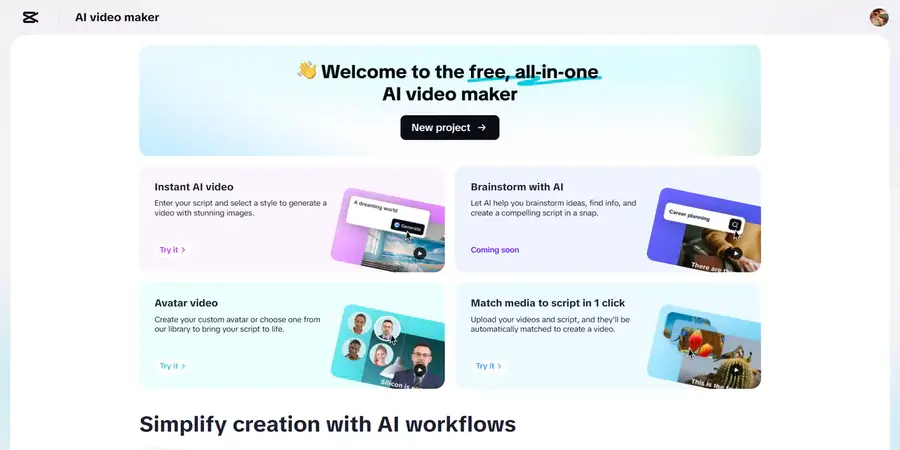
CapCut Web for Comprehensive Video Creation
CapCut Web provides accessible tools for businesses without extensive video production expertise. The platform’s strength lies in its comprehensive feature set that handles multiple aspects of testimonial video creation.
For text-based testimonials, CapCut’s script-to-video functionality transforms written customer feedback into narrated presentations. You input the testimonial text, select voiceover characteristics, and customize visual elements. The text to speech free feature generates natural-sounding narration in multiple languages and accents, allowing you to match voice characteristics to your customer demographic.
Visual customization options include adding customer company logos, incorporating product screenshots, overlaying data visualizations showing results, and including relevant stock footage. These visual elements reinforce the testimonial message while maintaining viewer engagement.
The AI caption generator automatically creates synchronized captions, which research shows increases video engagement by 40% while improving accessibility for hearing-impaired viewers and those watching without sound. Captions also improve retention of key testimonial points.
For businesses creating multiple testimonial variations for different platforms, CapCut’s format adaptation tools export videos optimized for Instagram (vertical 9:16), YouTube (horizontal 16:9), or square formats for LinkedIn and Facebook feeds. This multi-platform optimization from a single source video reduces production time substantially.
Synthesia for Professional Avatar Presentations
When appropriate and transparently disclosed, Synthesia creates avatar-based testimonial presentations with remarkable realism. The platform offers diverse avatar options representing different demographics, allowing selection of avatars that broadly match customer profiles without attempting to impersonate specific individuals.
Synthesia works best for structured testimonial presentations where you’re clearly framing content as “feedback from our customers” rather than attempting to simulate actual customer video recordings. The professional presentation quality and multilingual capabilities make it particularly valuable for international businesses presenting testimonials to audiences in different regions.
Descript for Audio-First Enhancement
For testimonials based on recorded customer interviews, Descript provides audio and video editing through text editing. You upload the interview recording, and Descript transcribes it. You can then edit the video by editing the transcript removing verbal stumbles, reordering points for clarity, or eliminating off-topic tangents.
This text-based editing interface dramatically simplifies video editing for non-experts while maintaining the customer’s authentic voice and message. The Overdub feature can even recreate brief portions of audio if you need to correct minor errors without requiring customers to re-record.
However, ethical use requires restraint. Editing should improve clarity and flow without changing meaning or creating misleading impressions of customer sentiment. The goal is polishing delivery, not altering substance.
Strategic Content Frameworks for Maximum Impact
Beyond production mechanics, effective testimonial videos follow strategic content frameworks that maximize persuasive impact.
The Transformation Arc
The most compelling testimonials follow a before/after structure: the problem the customer faced, why existing solutions failed, how your product provided the solution, and specific results achieved.
Structure your testimonial video to highlight this transformation clearly:
Opening (5-10 seconds): Present the customer and their business challenge concisely Problem (15-20 seconds): Describe the pain point in the customer’s words Solution (20-30 seconds): Explain what made your product/service different Results (15-20 seconds): Quantify outcomes with specific metrics Closing (5-10 seconds): Summarize the value in one memorable statement
This structure, typically 60-90 seconds total, delivers complete context while respecting viewer attention spans. The specificity particularly quantified results builds credibility that vague praise cannot achieve.
Specificity Over Generality
Generic testimonials like “They were great to work with” or “I’d highly recommend them” sound like marketing fluff because they provide no evidence. Specific testimonials citing concrete examples and quantifiable outcomes prove far more persuasive.
When creating AI-enhanced testimonials from customer feedback, prioritize content that includes:
- Specific metrics: “Reduced customer churn by 34%” not “Improved retention”
- Concrete examples: “Their support team responded to our critical issue within 20 minutes on a weekend” not “Great customer service”
- Comparative context: “After trying three other platforms” not “We chose them”
- Timeline context: “Within the first month” not “Quickly”
This specificity transforms testimonials from endorsements into evidence, making them dramatically more effective at driving conversions.
Multi-Testimonial Aggregation
Rather than creating individual testimonial videos, consider compilation videos that present multiple customer voices addressing a common theme or concern. These compilations prove particularly effective for addressing objections or demonstrating broad satisfaction.
For instance, a compilation addressing “Why customers chose us over competitors” featuring 30-second clips from five different customers creates social proof through volume while allowing viewers to identify with customers from similar industries or use cases.
AI video tools make these compilations efficient by standardizing formatting across multiple testimonials. Each customer segment follows the same visual template, creating cohesive presentation despite varying source material quality.
Measuring Testimonial Video Effectiveness
Creating videos represents only half the challenge measuring their impact enables continuous improvement and justifies continued investment.
Engagement Metrics
Track video completion rates to assess whether content maintains viewer attention. If 70% of viewers watch your 60-second testimonial completely, you’ve created engaging content. If only 20% complete viewing, either the testimonial lacks compelling content or the production needs improvement.
Platform analytics from YouTube, LinkedIn, or website hosting reveal completion rates, replay frequency, and drop-off points. Use this data to identify which testimonial elements engage viewers most effectively.
Conversion Impact
For testimonials embedded on landing pages or product pages, A/B test pages with and without video testimonials to measure conversion impact. Most businesses see 20-35% conversion rate improvements when adding quality testimonial videos to key conversion pages.
Track not just whether visitors who watch testimonials convert at higher rates (they typically do), but whether the presence of testimonial videos affects the conversion behavior of visitors who don’t watch them. Often, simply seeing that testimonials exist builds confidence even for viewers who don’t watch completely.
Qualitative Feedback
Analyze customer comments and feedback about testimonial videos. Do prospects mention the testimonials during sales conversations? Do they reference specific customers or results featured in videos? This qualitative feedback reveals which testimonials resonate most powerfully with your target audience.
Sales teams can systematically track how often prospects mention testimonials, which specific testimonials get referenced, and whether testimonial content addresses key objections effectively. This intelligence guides future testimonial creation efforts.
Platform-Specific Optimization Strategies
Different platforms require adapted approaches to testimonial video distribution.
Website Integration
On product or landing pages, place testimonial videos prominently near conversion points above the fold on landing pages or directly above pricing tables. Short-form testimonials (30-60 seconds) work best here since visitors have specific intent and limited patience.
Create playlist-style galleries where visitors can browse multiple testimonials filtered by industry, use case, or company size. This allows prospects to find testimonials most relevant to their situation, increasing perceived relevance and persuasive impact.
Social Media Distribution
For LinkedIn, focus on professional, results-oriented testimonials that emphasize business outcomes. Keep videos under 90 seconds and ensure captions are always enabled since most LinkedIn users watch without sound.
Instagram and TikTok audiences expect more casual, authentic presentation. Use vertical format videos (9:16 ratio) that feel native to the platform. Consider breaking longer testimonials into series of 15-30 second clips that can be posted across multiple days, extending content lifespan.
For Twitter/X, ultra-short testimonial snippets (15-30 seconds) highlighting a single powerful quote or metric perform best. These can drive traffic to longer-form content on your website.
Email Campaigns
Embedded testimonial videos in email dramatically improve click-through rates. However, many email clients don’t support video playback, so use animated thumbnail GIFs that link to hosted video content. The perceived motion increases click rates while maintaining email deliverability.
Segment testimonial distribution by prospect characteristics. Send SaaS company testimonials to SaaS prospects, enterprise testimonials to enterprise prospects, etc. This relevance targeting increases engagement substantially compared to generic testimonial distribution.
Building a Sustainable Testimonial Production System
One-off testimonial creation provides limited value. Sustainable competitive advantage requires systematic testimonial generation and refreshment.
Customer Success Team Integration
Train customer success teams to identify testimonial opportunities during regular customer interactions. When customers mention positive outcomes or express enthusiasm, that’s the moment to request testimonial participation.
Provide simple frameworks: “Would you be willing to share a brief written statement about your experience? We can transform it into a professional video testimonial without requiring you to appear on camera.” This low-friction request dramatically increases participation rates.
Quarterly Refresh Cycles
Establish quarterly processes for creating new testimonial content. Fresh testimonials featuring recent customers demonstrate ongoing success while preventing staleness. Videos featuring customers from two years ago may raise questions about whether you’re still delivering value.
Additionally, business contexts change. Testimonials highlighting pandemic-specific challenges feel dated in 2025. Refreshing content ensures continued relevance to current prospect concerns.
Diversity and Representation
Ensure testimonial portfolios represent diverse customer types: different industries, company sizes, use cases, and demographic backgrounds. Prospects need to see testimonials from customers they identify with seeing someone “like them” succeed with your solution dramatically increases perceived applicability.
Track testimonial diversity systematically and identify gaps. If you serve both startups and enterprises but only feature enterprise testimonials, you’re missing opportunities to convince startup prospects.
The Future of AI-Enhanced Testimonials
As AI video technology advances, capabilities will expand while ethical considerations intensify.
Real-Time Video Translation
Emerging AI tools can translate testimonial videos into multiple languages while maintaining lip-sync accuracy the avatar’s mouth movements match the translated speech. This capability allows global businesses to create testimonials once and distribute them across linguistic markets without expensive re-recording.
However, cultural nuance matters enormously. Direct translation may preserve literal meaning while losing cultural resonance. The most effective implementations combine AI translation with cultural consultation to ensure testimonials resonate appropriately across markets.
Hyper-Personalization
Future systems may dynamically customize testimonial videos based on viewer characteristics detected through website behavior or CRM data. A SaaS prospect from healthcare might automatically see healthcare customer testimonials, while a retail prospect sees retail testimonials all generated dynamically from a testimonial library.
This personalization promises significantly improved conversion rates by ensuring maximum relevance. However, it requires sophisticated infrastructure and raises privacy questions about behavioral tracking.
Verification and Authentication
As AI-generated content becomes ubiquitous, verification systems will emerge to distinguish authentic testimonials from fabricated ones. Blockchain-based authentication, customer verification badges, and third-party testimonial verification services may become standard practices that combat declining trust in online reviews.
Businesses implementing AI-enhanced testimonials should consider proactive verification measures now customer permission documentation, source material preservation, and transparent disclosure about AI use in production. These practices protect against future regulatory requirements while building trust with increasingly skeptical audiences.
Maintaining Authenticity in an AI-Driven Landscape
The greatest risk in AI-enhanced testimonials isn’t technical it’s the temptation to prioritize production polish over authentic customer voice. Slick, professionally produced videos that feel like marketing content generate less trust than rough, authentic customer recordings that convey genuine enthusiasm.
AI should enhance presentation without sanitizing emotion or eliminating the imperfections that signal authenticity. A customer who stumbles over words while describing how your product saved their business conveys sincerity that polished corporate speak cannot replicate.
Use AI tools to improve what customers actually said, not to transform their testimonials into what you wish they had said. The distinction separates ethical enhancement from deceptive manipulation.
When customers provide authentic feedback even when that feedback is delivered through AI-enhanced video production prospects recognize and respond to that authenticity. The trust generated by genuine customer advocacy cannot be replicated through fabricated testimonials, no matter how realistic the AI generation appears.
Build your testimonial strategy on the foundation of real customer success, enhanced by AI tools that make those genuine stories more accessible and engaging. This approach creates sustainable competitive advantage while maintaining the ethical standards and legal compliance that protect your business and respect your customers.