
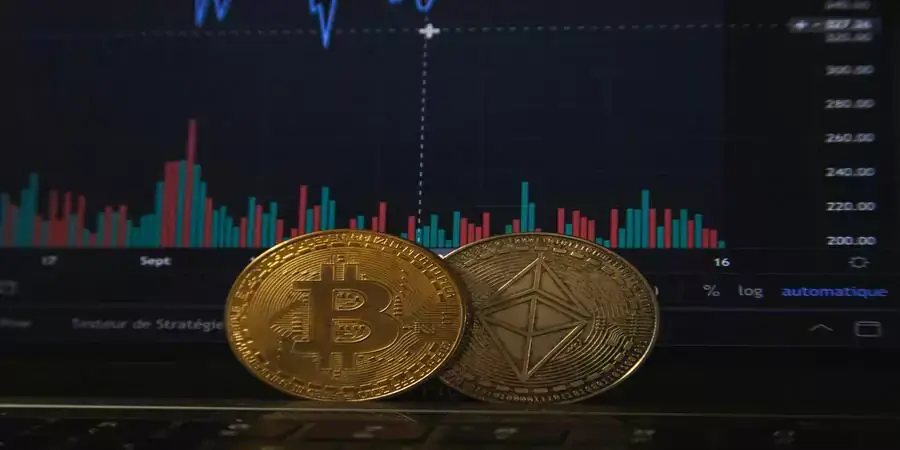
When Bitcoin surged to $103,000 in December 2024, financial planner Maria received calls from seven clients wanting to invest substantial portions of their retirement savings into cryptocurrency. One client, a 58-year-old teacher with $420,000 in her 401(k), wanted to move 40% into Bitcoin after hearing about a colleague who “made six figures” in crypto. Maria’s response was data-driven: Bitcoin has experienced four separate drawdowns exceeding 80% since 2011, including an 83% crash from November 2021 to November 2022 when it fell from $69,000 to $15,500. The teacher’s proposed $168,000 investment could have shrunk to $28,000 in a comparable crash a loss she couldn’t recover from with only 7 years until retirement.
This scenario illustrates why understanding cryptocurrency risk requires moving beyond headlines about price surges to examine historical volatility, the prevalence of scams and fraud, regulatory uncertainty, tax complexity, and appropriate portfolio allocation for investors with different risk profiles and timelines. While Bitcoin’s December 2024 surge to record highs attracted enormous attention, the same pattern has repeated four times previously each followed by crashes erasing 70-90% of value. Understanding whether crypto deserves a place in your investment portfolio requires examining both the quantifiable risks and the speculative nature of an asset class that still lacks fundamental valuation metrics after 15 years of existence.
Historical Volatility: What the Data Actually Shows
Cryptocurrency’s defining characteristic is extreme price volatility far exceeding traditional investments. Understanding the historical pattern of booms and busts provides essential context for evaluating current risk.
Bitcoin’s complete boom-bust cycles since inception:
| Peak Date | Peak Price | Trough Date | Trough Price | Drawdown | Recovery Time |
|---|---|---|---|---|---|
| June 2011 | $31 | Nov 2011 | $2 | -94% | 411 days |
| Apr 2013 | $266 | July 2013 | $65 | -76% | 154 days |
| Dec 2013 | $1,156 | Jan 2015 | $172 | -85% | 1,065 days |
| Dec 2017 | $19,783 | Dec 2018 | $3,191 | -84% | 1,065 days |
| Nov 2021 | $69,044 | Nov 2022 | $15,479 | -78% | Ongoing |
Key observations from historical data:
Bitcoin has never maintained a new all-time high without subsequently experiencing drawdowns exceeding 70%. The pattern is consistent: explosive growth attracting mainstream attention, followed by crashes eliminating most gains. The 2024 surge to $103,000 represents the fifth time Bitcoin has reached what seemed like unsustainable heights each previous time ending with catastrophic drawdowns.
Recovery times from crashes vary dramatically, ranging from 5 months to nearly 3 years. Investors buying at peaks faced years underwater before returning to breakeven. Someone buying Bitcoin at the December 2017 peak of $19,783 waited until December 2020 three years to break even, then watched it surge to $69,000 before crashing back to $15,000. This volatility makes timing critically important in ways it isn’t for diversified stock portfolios.
Comparison to traditional investments:
The S&P 500’s worst drawdown since 1980 was 57% during the 2008 financial crisis, recovering to new highs within 4 years. Bitcoin’s typical drawdown of 75-85% represents more than double the worst stock market crash in 40 years, occurring with far greater frequency Bitcoin has experienced four 75%+ crashes while stocks have had zero in that severity range since 1982.
Even highly volatile tech stocks rarely experience Bitcoin-level drawdowns. Tesla, considered extremely volatile, fell 73% from its 2021 peak to 2023 low severe but still less than Bitcoin’s typical crashes. The NASDAQ Composite’s worst drawdown was 78% during the 2000-2002 dot-com crash, comparable to Bitcoin’s typical crash but representing a once-in-50-years event for stocks versus a recurring pattern for crypto.
Altcoin volatility is even more extreme:
While Bitcoin dominates discussion, thousands of alternative cryptocurrencies experience even more dramatic volatility. A 2023 analysis of the top 50 cryptocurrencies by market cap found:
- 76% experienced drawdowns exceeding 90% at some point in their history
- 38% fell more than 95% from all-time highs
- 14% of coins that ranked in the top 50 in 2017 have since lost 99%+ of their value or ceased trading entirely
Ethereum, the second-largest cryptocurrency, fell 94% from its January 2018 peak of $1,432 to $83 in December 2018. Cardano crashed 96% from its September 2021 peak. Solana fell 97%. These aren’t obscure coins they’re among the largest and most established cryptocurrencies. Smaller coins experience near-total losses with shocking regularity.
Investor Loss Data: Who Actually Makes Money?
Despite stories of crypto millionaires, data on investor returns reveals that substantial majorities lose money or underperform simple holding strategies due to poor timing and panic selling.
Research on crypto investor outcomes:
A 2023 Bank of International Settlements study analyzing blockchain data from 2015-2022 found:
- Only 28% of Bitcoin investors realized net profits over the period
- 41% realized net losses
- 31% broke even or held without selling
- Median investor underperformed simply buying and holding by 33% due to poor trading timing
The pattern shows most investors buy during price surges when media coverage intensifies, then sell during crashes when fear peaks the opposite of successful investing. The minority who profit typically bought early and held through volatility, or traded rarely and timed well. Frequent traders overwhelmingly underperformed holders.
Why most crypto investors lose money:
Buying high, selling low: Crypto price surges attract mainstream investors who buy near peaks after extensive media coverage. When crashes occur, fear drives panic selling near bottoms. This pattern guarantees losses for the majority while enriching early investors who sell into the hype.
High fees eating returns: Frequent trading on exchanges charging 0.5-2% per trade quickly erodes capital. An investor making 20 trades annually pays 10-40% in cumulative fees requiring exceptional market timing to overcome.
Tax inefficiency: Short-term crypto trading generates short-term capital gains taxed at ordinary income rates up to 37% federal plus state taxes, versus 15-20% long-term capital gains rates for assets held 12+ months. Frequent traders surrender 40-50% of profits to taxes while long-term holders keep more of gains.
Emotional decision-making: Crypto’s extreme volatility triggers emotional responses that undermine rational investing. Watching your investment fall 50% in weeks creates intense pressure to sell, even when selling locks in losses. Very few investors possess the psychological fortitude to hold through 80% drawdowns.
RELATED: Understanding Cryptocurrency Market Crashes: Causes, Psychology, and Investor Response Strategies
Scams, Fraud, and Lost Coins: The Hidden Risk
Beyond market volatility, cryptocurrency investors face substantial risk of loss through scams, fraud, exchange failures, and personal security mistakes that traditional investments don’t present.
Prevalence of crypto fraud:
The FBI’s 2023 Internet Crime Report documented $5.6 billion in cryptocurrency-related fraud losses reported by victims more than triple the $1.6 billion reported in 2021. This represents only reported losses; actual totals likely far exceed these figures given many victims don’t report fraud or realize they’ve been scammed.
Common scam types and examples:
Pump-and-dump schemes: Fraudsters accumulate large positions in low-value coins, then use social media and fake news to create buying frenzy inflating prices before selling, causing crashes. The SEC has prosecuted dozens of cases involving social media influencers paid to promote worthless tokens without disclosure.
Fake ICOs and rug pulls: Initial Coin Offerings raised billions from investors for projects that never delivered products or were outright scams from inception. One 2022 analysis found that 80% of 2017-2018 ICOs that offered investors participation were scams or failed projects. High-profile examples include Centra Tech raising $25 million for fake partnerships with Visa and Mastercard, and Squid Game token executing a rug pull that stole $3.4 million from investors in minutes.
Phishing and social engineering: Fraudsters impersonate legitimate exchanges or services to steal login credentials or private keys, draining wallets. Crypto’s irreversibility means stolen funds are unrecoverable.
Ponzi schemes: BitConnect promised 1% daily returns, attracting $2.4 billion in investments before collapsing in 2018. OneCoin, marketed as the “next crypto to explode,” stole an estimated $4 billion from investors in what may be history’s largest Ponzi scheme.
Exchange failures and hacks:
Even legitimate exchanges face security and solvency risks. FTX, once the world’s third-largest exchange, collapsed in November 2022 after misappropriating $8 billion in customer deposits, leaving users unable to access funds. Mt. Gox, handling 70% of Bitcoin trading in 2014, lost 850,000 Bitcoin (worth $450 million then, $87 billion at 2024 prices) to hacking creditors are still awaiting compensation a decade later.
A comprehensive list of exchange failures and hacks reveals dozens of incidents resulting in billions in losses, with limited or no recovery for victims. Unlike bank deposits insured by FDIC up to $250,000, crypto exchange balances have no insurance or government protection.
Personal security risks:
Cryptocurrency’s self-custody model places full security responsibility on users. Common loss scenarios include:
- Lost or forgotten passwords/private keys making holdings permanently inaccessible
- Computer failures or damaged hardware wallets
- Theft by hackers exploiting security vulnerabilities
- Physical theft through $5 wrench attacks targeting known crypto holders
- Death without proper inheritance planning leaving assets unrecoverable
One 2023 estimate suggests 20-25% of all Bitcoin that will ever exist approximately 3-4 million coins worth $300-400 billion is permanently lost due to forgotten keys or deceased holders without access information.
Regulatory Uncertainty: The Wild West Continues
Despite 15 years of existence, cryptocurrency regulation remains incomplete and inconsistent across jurisdictions. This creates ongoing uncertainty affecting valuations and investor protection.
US regulatory status in 2025:
The incoming Trump administration’s stated intent to make the US a crypto-friendly location creates both opportunities and uncertainties. While the administration signals reduced enforcement, actual regulatory framework remains unclear. Key unresolved questions include:
Whether most cryptocurrencies qualify as securities under SEC jurisdiction or commodities under CFTC oversight different agencies assert conflicting authority while courts issue contradictory rulings. How stablecoins will be regulated and whether they require bank-style reserves and supervision. Whether DeFi (decentralized finance) platforms face the same requirements as traditional financial institutions. How capital gains taxes and reporting requirements may change.
This uncertainty means rules governing crypto could change dramatically within months, affecting valuations and legality of certain activities.
Global regulatory variations:
Regulatory approaches vary wildly across countries. China banned cryptocurrency trading entirely. India imposes 30% tax on crypto gains plus 1% withholding on transactions. El Salvador adopted Bitcoin as legal tender. The EU passed comprehensive Markets in Crypto Assets (MiCA) regulation creating unified framework. This patchwork creates challenges for investors and suggests no global consensus on appropriate oversight.
Why regulatory uncertainty matters:
Clear regulations generally support asset valuations by providing legal certainty and investor protections. Crypto’s regulatory limbo means:
- Exchanges and services could face sudden enforcement actions forcing shutdowns
- Tax treatment could change retroactively, increasing investor obligations
- Assets currently traded freely could be declared securities requiring compliance with securities laws
- Government could impose restrictions on use cases or transactions
These possibilities create tail risks beyond normal market volatility a single regulatory action could wipe out substantial value overnight in ways affecting stocks or bonds.
Tax Complexity: Hidden Costs Most Investors Miss
Cryptocurrency taxation in the US is far more complex than stock investing, with substantial compliance costs and surprise tax bills catching investors off guard.
How crypto is taxed:
The IRS treats cryptocurrency as property, not currency. Every transaction buying goods, converting one coin to another, selling for fiat triggers taxable event requiring gain/loss calculation. This creates enormous reporting burden for active users.
Tax implications examples:
You buy Bitcoin for $30,000, then use it to purchase $45,000 worth of Ethereum when Bitcoin is worth $45,000. You owe capital gains tax on $15,000 gain (the appreciation from $30,000 to $45,000) even though you still hold cryptocurrency rather than realizing cash.
You receive $5,000 worth of cryptocurrency from staking rewards or DeFi yield farming. This counts as ordinary income taxed at your marginal rate (potentially 37% federal plus state taxes), owing $1,850-$2,500 in taxes despite receiving no cash to pay them.
Tracking requirements and penalties:
Investors must track cost basis and date for every crypto acquisition, then calculate gains/losses for every sale or exchange. Someone making 100 crypto transactions annually must report 100 separate gain/loss calculations on tax returns. Specialized software is essentially mandatory for anyone beyond minimal trading, costing $100-$500 annually.
Failing to report crypto transactions can trigger audits, penalties, and criminal prosecution for tax evasion. The IRS has been aggressively pursuing crypto tax compliance, receiving transaction data from major exchanges and sending warning letters to thousands of investors with unreported crypto income.
Short-term vs. long-term rates:
Crypto held less than 12 months generates short-term capital gains taxed at ordinary income rates up to 37%, while crypto held 12+ months qualifies for long-term rates of 0%, 15%, or 20% depending on income. Frequent traders pay nearly double the tax rate compared to holders, further reducing net returns.
Portfolio Allocation: How Much Crypto Is Appropriate?
Given extreme volatility and substantial risks, the question isn’t whether crypto is risky (it objectively is) but how much exposure is appropriate for investors with different profiles.
Professional guidance from financial planners:
Most financial advisors recommend 0-5% portfolio allocation to cryptocurrency for investors who understand and accept the risks. The reasoning: small enough allocation that total loss wouldn’t devastate financial plans, but large enough that significant gains would meaningfully impact wealth if crypto appreciates. A 5% crypto allocation growing 10x becomes 50% of portfolio substantial impact without inappropriate concentration.
Who should avoid crypto entirely:
- Anyone within 10 years of retirement who can’t afford to lose the investment
- Investors with emergency funds below 6 months’ expenses
- Anyone with high-interest debt (credit cards, payday loans)
- Individuals prone to emotional investment decisions or gambling behavior
- People unwilling to spend time understanding security requirements
- Those investing money they need for near-term goals (house down payment, college tuition)
Who might consider moderate allocation:
- Younger investors with 20+ year time horizons who can weather volatility
- High-income earners with substantial emergency funds and retirement savings already in place
- Individuals with high risk tolerance who won’t panic-sell during 50%+ drawdowns
- Tech-savvy investors comfortable with security requirements and self-custody
- Those viewing crypto as speculation separate from core retirement investing
Diversification within crypto:
Investors choosing crypto exposure should understand that “diversifying” across multiple coins provides limited risk reduction. All cryptocurrencies are highly correlated when Bitcoin crashes, everything crashes. Holding 10 different coins doesn’t meaningfully reduce risk compared to holding Bitcoin alone, while substantially increasing complexity and potential scam exposure from obscure projects.
Red Flags: Identifying Scams and Bad Projects
For investors determined to participate despite risks, knowing how to evaluate projects and identify scams is essential.
Warning signs of crypto scams:
- Guaranteed returns or “can’t lose” promises (all investments carry risk)
- Celebrity endorsements or influencer promotions without clear disclosure of compensation
- Pressure to invest quickly before “opportunity disappears”
- Complex referral or multi-level marketing structures rewarding recruitment
- Anonymous or unverifiable team members
- Whitepaper filled with buzzwords but lacking technical substance
- No clear use case or purpose beyond “investment opportunity”
- Extremely limited or no trading history/liquidity
Due diligence questions:
Before investing in any cryptocurrency, answer these questions:
- What problem does this solve that existing solutions don’t?
- Who is on the team and what’s their track record?
- Is there actual adoption/usage or just speculation?
- What’s the market capitalization and liquidity?
- Where is it traded and are those exchanges reputable?
- What’s the token distribution do founders control large percentages?
If you can’t answer these questions satisfactorily, don’t invest.
Conclusion
Cryptocurrency investing in 2025 remains extraordinarily risky by any objective measure. Bitcoin has experienced four separate 75%+ crashes, with recovery periods extending multiple years. The majority of investors lose money through poor timing, with only 28% realizing net profits according to BIS research. Fraud losses exceed $5 billion annually, with thousands of scams and dozens of exchange failures leaving investors with unrecoverable losses. Regulatory uncertainty persists despite 15 years of crypto existence, creating tail risks beyond normal market volatility. Tax complexity creates unexpected obligations for active traders.
For most investors, cryptocurrency represents speculation rather than investment. Unlike stocks generating earnings and dividends or bonds paying interest, cryptocurrencies produce no cash flows values depend entirely on finding someone willing to pay more tomorrow than you paid today. This greater fool theory works until it doesn’t, as demonstrated by crypto’s four previous boom-bust cycles.
That said, small allocations (1-5% of portfolio) may be appropriate for investors who understand and accept the risks, have long time horizons, maintain substantial emergency funds and retirement savings, and can psychologically tolerate 80% drawdowns without panic selling. Those investors should focus on the most established cryptocurrencies with deepest liquidity (Bitcoin, possibly Ethereum), use reputable exchanges, practice strong security, minimize trading to reduce taxes and fees, and prepare for potential total loss.
The question “how risky is crypto?” has a clear answer: extremely risky compared to traditional investments. Whether that risk is appropriate for your specific situation depends on your financial position, timeline, risk tolerance, and willingness to spend time understanding security requirements and tax implications. For most people, the honest answer is that crypto represents gambling rather than investing and the house usually wins.