
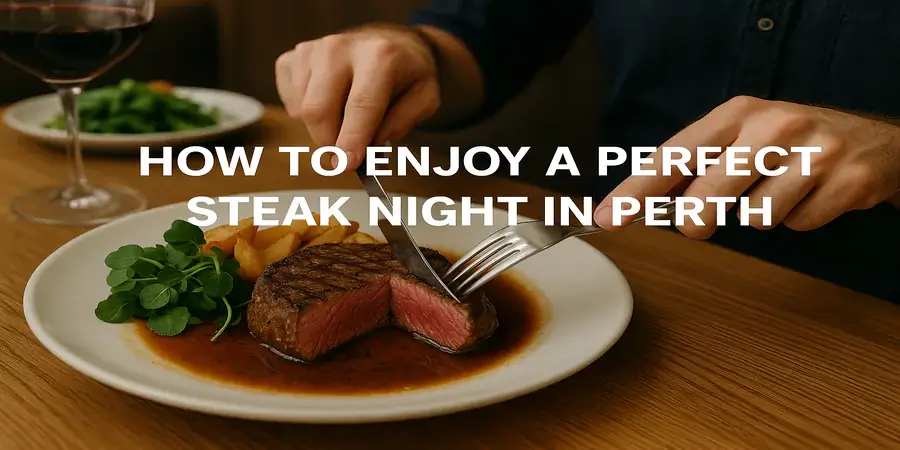
When OpenTable analyzed Australian dining reservation data for 2023, Perth emerged as the nation’s third-highest city for steakhouse bookings per capita behind only Sydney and Melbourne, with premium beef venues seeing average spend per person increase 28% to $85-$95 compared to pre-pandemic levels. This growth reflects both Western Australia’s reputation as a premium beef producer with Wagyu cattle from Harvey and grass-fed beef from Margaret River supplying restaurants across Australia and Perth’s dining culture that balances casual outdoor venues with sophisticated fine dining. However, navigating Perth’s steakhouse landscape requires understanding significant price and quality variations, from $25 pub rump steaks in Fremantle to $150 full-blood Wagyu ribeyes in the CBD’s premium establishments.
Understanding how to plan an exceptional steak night in Perth requires examining the city’s steakhouse scene by neighborhood and price tier, Western Australia’s beef production regions and quality grades, wine pairing options from nearby Margaret River, local butchers for home cooking, and the specific venues offering the best value across different dining occasions and budgets.
Perth’s Steakhouse Landscape by Neighborhood
Perth’s steak dining scene concentrates in several key areas, each offering distinct atmospheres, price points, and dining styles suited to different occasions.
Perth CBD – Premium Dining Hub
The central business district houses Perth’s most upscale steakhouse options, typically featuring dry-aged beef, sommelier-curated wine lists, and prices reflecting CBD rents and fine-dining service standards.
Representative establishments and positioning:
Rockpool Bar & Grill Perth (Crown Towers): One of Neil Perry’s flagship locations, Rockpool exemplifies premium steakhouse dining with dry-aged beef programs aging Blackmore Wagyu and Rangers Valley grain-fed beef for 60-120 days. Signature cuts include 300g grass-fed sirloin ($62), 400g grain-fed ribeye ($72), and full-blood Wagyu ribeye starting at $38 per 100g (typical 300g portion: $114). The extensive wine list emphasizes Margaret River Cabernet Sauvignon and Barossa Shiraz with bottles ranging $80-$800. Mains with sides typically total $90-$140 per person before wine.
Restaurant positioning: Premium special occasion dining, business dinners, celebrations requiring impressive wine lists and service. Reservations essential, especially weekends. Smart casual minimum dress code enforced.
The Meat & Wine Co Perth (Barrack Street): Mid-to-upper tier chain specializing in Australian and international beef with theatrical tableside presentations. The “World Tour” allows sampling multiple cuts including Australian grass-fed, grain-fed, and Wagyu plus US Angus and Uruguayan grass-fed (4-cut tasting: $89). Standard steaks range $42-$68 for Australian cuts, with sides $8-$14 extra. Wine list focuses on Australian regions with bottles $50-$200.
Restaurant positioning: Reliable corporate dining, groups wanting variety, tourists seeking quintessential Australian steakhouse experience. More accessible than Rockpool while maintaining upscale feel.
La Cholita (Hay Street): While primarily Mexican, La Cholita’s wood-fired beef options including 400g ribeye ($58) and carne asada platters showcase different steak preparation styles. The venue’s rooftop location and cocktail program appeal to younger demographics seeking steaks beyond traditional steakhouse settings.
Northbridge – Casual to Mid-Range Options
Perth’s entertainment district offers more relaxed steak dining with better value pricing, though quality varies significantly between establishments.
Petition Kitchen (State Buildings): Modern Australian restaurant serving grass-fed WA beef in contemporary preparations. The 250g eye fillet ($46) and 300g sirloin ($38) represent mid-range pricing with quality execution. The venue’s heritage building setting and carefully sourced ingredients create upscale casual dining without CBD premium pricing. Expect $60-$80 per person with wine.
Uncle Billy’s Brewery (James Street): Brewpub offering no-frills steaks at accessible pricing. The 300g scotch fillet ($34) and 400g porterhouse ($38) pair with house-brewed craft beers ($9-$12) creating affordable steak-and-beer combinations totaling $45-$55 per person. Quality is solid pub-standard rather than premium appropriate for casual dining, watching sports, or budget-conscious meals.
Subiaco – Neighborhood Fine Casual
Subiaco’s mix of locals and suburban visitors supports venues balancing quality with approachability more relaxed than CBD establishments but emphasizing sourcing and execution over price competition.
Lalla Rookh (James Street): Italian-influenced wine bar with excellent beef sourcing, particularly the bistecca Fiorentina (800g T-bone for two: $110). The Italian wine list showcases Tuscan reds ($65-$180 bottles) complementing charcoal-grilled beef. Portions suit sharing and mezze-style dining rather than individual steak plates. Expect $70-$90 per person.
Subiaco Hotel (Rokeby Road): Renovated pub offering gastropub-quality steaks in relaxed beer garden setting. The 300g porterhouse ($36) and 250g eye fillet ($42) with proper chips and salad represent good value for consistent quality. The venue appeals to families, pre-game diners (near Optus Stadium), and those wanting decent steaks without formality. Total spend: $50-$65 per person with beer/wine.
Fremantle – Waterfront and Historic Settings
Fremantle’s dining scene emphasizes location and atmosphere alongside food, with steakhouse options ranging from tourist-focused to locals’ favorites.
Bathers Beach House (Marine Parade): Beachfront location elevating fairly standard steak offerings through setting. The 300g sirloin ($44) and 250g eye fillet ($48) deliver reliable quality but primarily sell location overlooking Indian Ocean. Sunset bookings require 2-3 weeks advance notice during summer. Expect $70-$90 per person including sides and drinks, with location premium over similar quality elsewhere.
The Left Bank (Riverside Road): Riverside venue offering 300g scotch fillet ($38) and 400g ribeye ($44) in casual covered outdoor setting. The emphasis on local craft beer and relaxed vibe attracts younger crowd and families. Quality is good pub standard with generous portions. Total: $55-$70 per person.
South Beach Hotel (South Beach Promenade): Beach pub serving straightforward steaks in contemporary Australian pub setting. The 300g rump ($28) and 350g sirloin ($34) represent Perth’s best casual steak value quality grass-fed WA beef executed competently at prices reflecting pub economics rather than restaurant margins. Ideal for beach-day dinners or casual groups. Total: $40-$55 per person.
Price Tiers and Value Assessment
Understanding Perth’s steak pricing structure helps identify appropriate venues for different budgets and occasions.
Budget tier ($25-$40 for steak):
Primarily pubs and casual venues offering 250-350g grass-fed cuts without aging or premium sourcing. Quality ranges from acceptable to good but rarely exceptional. Sides typically included or $5-$8 extra. Total meal cost: $40-$55 per person.
Best value examples:
- South Beach Hotel: Quality WA grass-fed beef, generous portions, beachside setting
- Uncle Billy’s: Solid execution with craft beer pairings
- Subiaco Hotel: Gastropub quality at pub pricing
Appropriate for: Casual dinners, family meals, sports viewing, budget-conscious dining
Mid-range tier ($40-$65 for steak):
Restaurant-quality service and execution with grain-fed or premium grass-fed beef. Cuts may include short aging (28-35 days). Sides typically $8-$14 extra. Total meal cost: $65-$90 per person.
Best examples:
- Petition Kitchen: Excellent sourcing with modern Australian preparations
- The Left Bank: Riverside location with quality beef
- Lalla Rookh: Wine-focused Italian approach
Appropriate for: Date nights, celebrating occasions without splurging, quality-focused casual dining
Premium tier ($65-$150+ for steak):
Fine dining service, dry-aged or Wagyu beef, extensive wine lists, sommelier service. Premium cuts often priced per 100g. Sides $12-$18. Total meal cost: $100-$180+ per person.
Top examples:
- Rockpool Bar & Grill: Neil Perry flagship with exceptional beef program
- The Meat & Wine Co: International beef selection with theatrical service
- Bathers Beach House: Premium pricing reflects location as much as food
Appropriate for: Special celebrations, business entertaining, wine enthusiast dinners, impressing visitors
Western Australia’s Beef Production and Quality
Understanding WA beef helps evaluate restaurant claims and select appropriate cuts when cooking at home.
Major WA beef regions:
Harvey-Waroona (southwest WA): Primary cattle region producing both grass-fed and grain-fed beef. Harvey Beef is WA’s largest processor, supplying restaurants across Perth and exporting internationally. The region’s pastures support year-round grass feeding unusual in Australian context, creating distinct flavor profile leaner and more mineral-forward than grain-fed beef.
Margaret River: While famous for wine, the region also produces premium grass-fed beef on small farms supplying Perth restaurants directly. Margaret River beef typically emphasizes sustainable farming, grass-only feeding, and smaller-scale production creating premium pricing ($5-10 per kg more than Harvey region beef).
Kimberley (northern WA): Remote region producing grass-fed beef on enormous pastoral stations. Kimberley cattle spend most of life on natural grasses before finishing, creating lean beef with strong flavor. Less common in Perth restaurants than Harvey or Margaret River beef but appearing on menus emphasizing WA provenance.
Grass-fed vs grain-fed considerations:
Grass-fed characteristics:
- Leaner with less marbling
- More pronounced beef flavor, sometimes described as “gamey” by those preferring grain-fed
- Firmer texture requiring different cooking approaches (lower temperatures)
- Lower cost: $25-$35 per kg wholesale for grass-fed versus $35-$50 for grain-fed
- Faster cooking time due to lower fat content
Grain-fed characteristics:
- Higher marbling creating buttery texture
- Milder, sweeter flavor profile
- More forgiving cooking (fat provides moisture buffer)
- Finished on grain (corn, barley, wheat) for 70-120+ days after grass feeding
- Higher cost reflecting grain feeding expense
Wagyu considerations:
Full-blood Wagyu (100% Japanese genetics) represents premium tier with extreme marbling (30-50% fat content versus 15-25% for standard grain-fed). Western Australia produces Wagyu primarily in the southwest, with notable producers including Blackmore Wagyu (Alexandra Bridge) and Margaret River Wagyu supplying Perth restaurants. Pricing: $90-$150 per kg retail, $38-$55 per 100g in restaurants.
Crossbred Wagyu (F1-F3: Wagyu-Angus crosses) offers more moderate marbling at lower prices: $50-$75 per kg retail, creating accessible “Wagyu” options at mid-tier restaurants.
Wine Pairing: Margaret River and Beyond
Perth’s proximity to Margaret River wine region (3-hour drive south) creates natural pairing opportunities for steak dinners.
Margaret River Cabernet Sauvignon:
Margaret River’s gravelly soils and maritime climate produce Cabernet Sauvignon with structure and tannins complementing fatty beef cuts. The region’s Cabernet shows cassis, mint, and eucalyptus notes with firm tannins that cut through fat.
Notable producers and price points:
- Vasse Felix Cabernet Sauvignon ($35-$45 retail, $80-$120 restaurant): Accessible entry showing classic Margaret River structure
- Cullen Diana Madeline ($60-$80 retail, $150-$200 restaurant): Biodynamic blend emphasizing elegance
- Voyager Estate Cabernet Sauvignon ($40-$55 retail, $100-$140 restaurant): Powerful expression with aging potential
Pairing guidance: Margaret River Cabernet’s tannins suit fattier cuts (ribeye, porterhouse) while potentially overwhelming leaner options (eye fillet).
Margaret River Bordeaux blends:
Cabernet-Merlot-Cabernet Franc blends offer softer tannins and more fruit-forward profiles than pure Cabernet, suiting broader range of beef preparations.
Barossa and McLaren Vale Shiraz:
While outside WA, South Australian Shiraz represents classic Australian steak pairing with bold fruit, soft tannins, and sometimes peppery spice complementing charred beef.
Examples:
- Penfolds Bin 28 Kalimna Shiraz ($25-$35 retail): Accessible quality
- d’Arenberg The Dead Arm Shiraz ($45-$60 retail): Complex McLaren Vale expression
Alternative wine regions:
Great Southern (WA): Cooler climate producing elegant Cabernet and Shiraz with higher acidity and lower alcohol than Margaret River, suiting leaner grass-fed beef.
Swan Valley (20 minutes from Perth CBD): Historic wine region producing full-bodied reds, particularly Shiraz and blends. Proximity makes Swan Valley wines common on Perth wine lists at competitive pricing.
Perth’s Best Butchers for Home Cooking
Cooking steaks at home offers significant cost savings $25-$40 per kg at quality butchers versus $38-$55 per portion at restaurants while controlling preparation exactly to preference.
Mondo Butchers (multiple locations including Claremont, Inglewood):
Perth’s premier butcher chain supplying many restaurants, offering both grass-fed and grain-fed cuts with transparent sourcing information. Signature items include 40-day dry-aged scotch fillet ($49 per kg) and grass-fed eye fillet ($45 per kg). Staff provide cooking guidance and custom-cut requests. Expect to spend $30-$60 for quality steaks for two.
Re Store (Northbridge):
Whole-animal butcher emphasizing sustainable farming and nose-to-tail utilization. Higher prices ($55-$75 per kg for premium cuts) reflect ethical farming premiums and smaller-scale operations. The venue also offers butchery classes teaching cutting techniques and preparation.
Kakulas Sisters (Fremantle):
Historic market vendor offering competitively priced beef alongside Mediterranean provisions. Grass-fed steaks run $28-$38 per kg Perth’s best value for quality. The informal setting and bulk pricing suit regular customers stocking freezers rather than special occasion buyers.
Farmer Jack’s (multiple locations):
WA-focused supermarket chain with excellent in-house butchers carrying grass-fed and grain-fed WA beef. While not matching specialist butchers for dry-aged or premium cuts, Farmer Jack’s offers reliable quality at supermarket-plus pricing ($32-$48 per kg), convenient for weekly shopping.
Perth Mart Market (Farmers Market):
Saturday morning farmers market connecting consumers directly with WA beef producers. Prices vary by farm but typically $35-$50 per kg for grass-fed, with producers providing cooking recommendations. The market experience itself meeting farmers, discussing farming practices adds value beyond just purchasing meat.
Home Cooking Essentials
For those preparing steaks at home, several Perth resources support successful execution.
Equipment needs:
Cast iron pans or quality stainless steel (Everten in Subiaco and Mount Lawley stocks Lodge cast iron: $45-$120). Meat thermometer ensuring proper doneness (instant-read thermometers: $20-$45 at kitchenware stores). Quality salt (Murray River pink salt, Olsson’s sea salt: $8-$15 at David Jones Food Hall or specialty grocers).
Cooking technique essentials:
Room temperature meat (remove from refrigeration 30-60 minutes before cooking prevents cold centers). High heat searing (cast iron smoking-hot, 2-3 minutes per side for crust). Resting period (5-10 minutes under foil allows juices to redistribute). Reverse sear for thick cuts (slow oven cook to 10°C below target, then high-heat sear creates even doneness).
Sides and accompaniments:
Local produce from Perth markets (Subiaco Farmers Market Saturdays, Perth City Farm Market Sundays) provides seasonal vegetables. Classic combinations include rosemary and garlic roast potatoes, buttered broccolini, grilled asparagus, or simple rocket salad with parmesan and balsamic. Sauces like peppercorn, red wine jus, or chimichurri complement without overpowering quality beef.
Conclusion
Planning an exceptional steak night in Perth requires understanding the city’s diverse steakhouse landscape spanning $25 pub steaks at South Beach Hotel to $150 Wagyu experiences at Rockpool Bar & Grill, each appropriate for different occasions and budgets. Western Australia’s beef production particularly grass-fed cattle from Harvey region and premium grain-fed from southwest supplies both restaurants and home cooks with quality options distinguishing Perth’s steak scene from eastern states where interstate sourcing dominates.
The selection framework prioritizes: (1) Matching venue tier to occasion casual pubs ($40-$55 per person total) for relaxed meals, mid-range restaurants ($65-$90) for quality-focused dining, premium establishments ($100-$180+) for celebrations and business entertaining; (2) Understanding beef types and sourcing grass-fed for leaner, more pronounced flavor versus grain-fed for marbling and buttery texture; (3) Wine pairing emphasizing local Margaret River Cabernet Sauvignon ($80-$200 bottles at restaurants) complementing fatty cuts; (4) Leveraging Perth butchers like Mondo and Kakulas Sisters for home cooking ($25-$55 per kg) delivering restaurant-quality beef at significant savings.
Whether dining at steak restaurant Perth establishments or cooking at home with WA-sourced beef, the key is understanding that “perfect steak night” varies by individual priorities location and atmosphere at Bathers Beach House, beef program depth at Rockpool, value at South Beach Hotel, or control and cost-effectiveness cooking at home. Perth’s combination of local beef production, proximity to wine regions, and diverse restaurant scene from casual to premium creates options supporting any vision of ideal steak dining, provided diners understand the actual distinctions between venues, cuts, and preparation styles rather than relying on marketing claims or assumptions that all steakhouses offer equivalent experiences.
ALSO READ: Top 10 Food Ordering Apps in the World