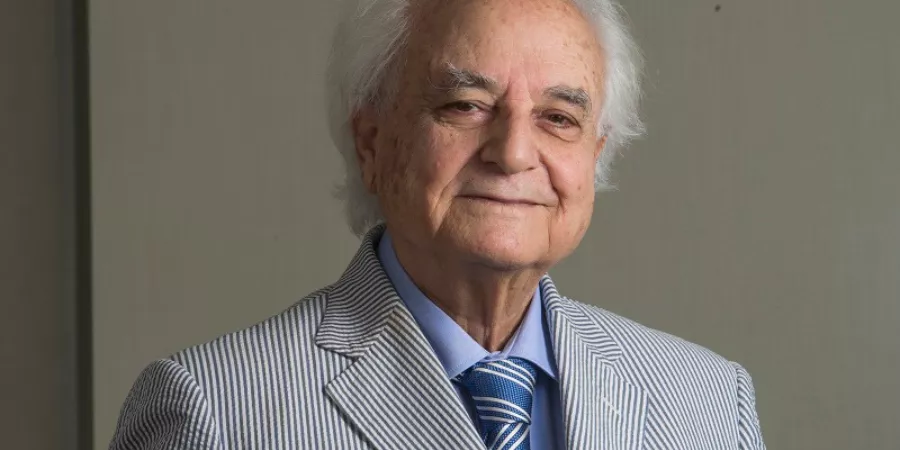
William Haddad is the founder and chairman of MACE, Mechanical and Civil Engineering Contractors Company, established in Libya on April 14, 1968. A civil engineering graduate of the American University of Beirut, he built MACE from a small desert pipeline business into a regional infrastructure company operating across Libya, Saudi Arabia, the UAE, and Qatar, with revenues eventually exceeding $256 million.
5 Quick Facts:
- William Haddad founded MACE in Libya in 1968.
- MACE stands for Mechanical and Civil Engineering Contractors Company.
- The company expanded into Saudi Arabia in 1973 and UAE in 1974.
- MACE serves oil companies, municipalities, and government ministries.
- William Haddad received a Lifetime Achievement Award at the Construction Week Awards.
The Man They Called “Bill”
Somewhere in the Libyan desert in the 1960s, American oil executives had a habit. When a job was difficult, when the terrain was punishing, when other contractors found reasons to walk away, someone around the table would eventually say, “If you want it done, give it to Bill Haddad.”
That sentence, repeated often enough across enough oil camps, quietly became the foundation of a company. William Haddad was working for someone else at the time. He had no plans drawn up, no investors lined up, no grand vision written on paper. What he had was a name people trusted, and in the end, that turned out to be enough to begin.
By the time MACE celebrated its 55th year, the company was headquartered in Abu Dhabi, employed hundreds of engineers, and had laid pipelines, built sewage networks, and delivered infrastructure projects across some of the most remote and demanding terrain in the Middle East. William Haddad, founder of MACE, never chased headlines. He just kept delivering.
Early Life and the Road to Libya
William Haddad studied Civil Engineering at the School of Engineering at the American University of Beirut, graduating in 1960. He joined the Consolidated Contractors Company shortly after, a well-established regional firm operating under the Wimpey group, and moved through assignments in Aden and Kuwait before landing in Libya in 1964.
Libya in those years was a different kind of place. Oil had been discovered in significant quantities, and foreign companies, Esso, Oasis, BP, were pushing hard to develop their fields. The work was physically brutal and logistically complicated. Supply chains stretched hundreds of kilometres across the desert with no roads, no towns, and no easy way back if something went wrong.
Haddad handled it well. He kept his sites clean, paid close attention to his workers, and delivered what he promised. Over four years, he quietly built a reputation that travelled faster than he did. The oil companies genuinely liked working with him and, more importantly, they trusted him.
Around this time, he came to a decision that many engineers never quite reach. He could keep building someone else’s business, or he could try building his own. He chose to try.
April 14, 1968: MACE Company History Begins
William Haddad founded MACE on April 14, 1968. He had his skills, his savings, and his reputation. No major backer, no family money, no safety net. Just a man who understood oil field construction deeply enough to know there was steady work out there for someone willing to do it properly.
MACE started in Libya providing construction and maintenance services to oil companies, cross-country pipelines, flow lines, pump stations, plant turnarounds. Haddad described Libyan oil at the time as being “like honey,” meaning light, clean, and enormously valuable. The producers wanted reliable infrastructure built around it and were generally willing to pay well for contractors they could count on.
MACE earned that trust early. Within a few years, the company had expanded operations well into the Libyan interior, maintaining refineries, gas plants, and worker camps more than 500 kilometres from any major city.
Keeping a business functional at that distance, supplying food, materials, and technical capability to teams in the middle of nowhere, takes a specific kind of operational discipline. MACE developed that discipline and held onto it for decades.
A New Business Line Born from One Conversation
The way MACE moved into catering and housing services is one of the more quietly interesting chapters in MACE company history, largely because it started entirely by accident.
During those years, American oil companies would periodically send representatives to inspect the living conditions of workers in the field. On one such visit, the vice president of Esso looked around at how Haddad’s camp was running and said simply: “You take good care of your people. Would you consider doing the same for us?”
Haddad said yes. MACE started housing 120 bachelors initially, feeding them and managing laundry. Word spread naturally. Other companies noticed what was being done and asked for the same arrangement. Gradually, what began as a favour turned into a proper business line, one that would later provide real stability when new project work slowed down.
The thinking embedded in that story is actually straightforward: people who are genuinely well looked after tend to produce better work, and that eventually gets noticed.
Moving Into Saudi Arabia and the UAE
Saudi Arabia: 1973
Five years after founding MACE, William Haddad moved the company into Saudi Arabia. The timing made sense. Saudi Arabia’s oil sector was expanding rapidly, and there was strong demand for contractors who already knew how to work in desert terrain and could handle large-scale infrastructure reliably.
MACE built relationships with Saudi Aramco, the Saudi Electrical Company (SCECO), and several government ministries, essentially replicating what had worked so well in Libya. The work was familiar: oilfields, pipelines, and maintenance contracts that renewed steadily.
UAE: 1974
A year later, in 1974, Haddad decided to establish MACE in Abu Dhabi. The UAE was clearly on the edge of something significant and he read the moment well. MACE construction Middle East operations eventually settled their headquarters there permanently.
In the UAE, the company built a particularly strong record with the Abu Dhabi Sewage Services Company (ADSSC), installing and maintaining sewerage networks across the city. Today, a large portion of Abu Dhabi’s underground utility infrastructure quietly carries the mark of MACE’s work, even though most people passing above it have no idea.
Libya: When the Ground Shifted
MACE’s Libyan operations continued successfully under the management of Haddad’s brother-in-law through the 1970s and into the early 1980s. In 1983, the Libyan government nationalised the company’s assets in the country. Everything MACE had built there was absorbed by the state overnight.
It was a significant blow, years of work, relationships, and infrastructure handed over without compensation. Haddad absorbed it and moved forward. The company had already diversified enough by then to keep operating steadily. That resilience did not happen by chance.
What Does MACE Build?
MACE infrastructure projects span a wide range of work across oil, gas, water, and civil sectors:
- Oil and gas pipelines: Cross-country pipelines, flow lines, pump stations, and plant maintenance
- Water and sewage networks: Installation and ongoing management for municipalities and government bodies
- Civil construction: Roads, housing, offices, and operational camps in remote environments
- Pipeline rehabilitation: Relining and restoring pipelines that have aged or degraded
- MEICA services: Mechanical, electrical, instrumentation, control, and automation work
By the 2015 financial year, MACE had reached revenues of $256 million, with 11.2% retained as profit. For a regionally focused engineering contractor with no stock market listing and no celebrity clients, those are genuinely strong numbers, the kind that come from decades of steady, competent work rather than from a single flashy contract.
The Business Logic Behind Long-Term Survival
One of the more practically useful things about studying William Haddad, founder of MACE, is the way he thought about revenue stability. He was never especially interested in chasing the biggest project or the most visible contract. He was consistently interested in keeping the business healthy across market cycles.
He put it plainly in interviews: “The number of new projects we get will fluctuate with the market, but operation and maintenance work will always be required no matter what. They provide a stable income that makes sure the company doesn’t have to borrow from the banks more than it should.”
That thinking matters considerably in construction and engineering, where companies routinely over-extend during boom years and then collapse when the cycle turns. MACE deliberately kept a large portion of its revenue tied to ongoing maintenance work, the kind of contracts that renew quietly year after year, regardless of whether a single new project has been signed. When markets softened, MACE had enough recurring income to stay intact and keep its people employed.
It sounds almost obvious when you say it out loud. Very few companies actually do it consistently.
How William Haddad Managed People
The William Haddad biography that emerges across interviews is one of a man who thought carefully about how organisations actually function and was willing to act on those thoughts even when the industry norm pointed elsewhere.
His management philosophy was straightforward: “I treat my employees how I want to be treated. Besides paying them fairly and ensuring they’re able to support their families, I believe in giving employees autonomy. People are individuals and everyone has their own ideas on how to skin a cat. If I have hired someone qualified to do the job, I don’t want to tell them how to behave.”
Construction is an industry where micromanagement is common and where command-and-control thinking tends to dominate. Haddad went the other direction, building a team of around 230 engineers who were trusted to manage their own work. Over time, that trust compounded into institutional competence, people who stayed, who knew the systems deeply, and who could be genuinely relied on.
He was also honest with young engineers in a way that some might find blunt. He told them directly: “There are some engineers who want to get rich overnight. This is not possible. Engineering is one of the most difficult jobs because it requires both mental and physical capabilities. I tell young engineers to be honest, deliver and keep up the good work. Otherwise, they will fail.”
Building Something Which Outlasts One Person
William Haddad was always conscious of the pattern he had seen in other founder-led companies, the way they often fragment or lose direction once the original founder steps away. He thought about this deliberately and worked to prevent it early.
His daughters and son-in-law became actively involved in MACE’s day-to-day operations over the years, absorbing the culture and the operational standards that had defined the company since those early Libyan desert days.
In his chairman’s message, Haddad wrote honestly: “It is my duty to see and make sure that MACE should continue for a long time in the future and not succumb to the malaise that most companies founded by individuals usually endure. It demands selfless and dedicated people to continue.”
That is a mature acknowledgment of a real problem, one that many founders never face directly until it is far too late.
Recognition
William Haddad was presented with the Lifetime Achievement Award at the Construction Week Awards, widely regarded as the most significant recognition in the regional construction industry.
MACE separately received a Merit International Safety Award from the British Safety Council, reflecting the company’s long attention to worker safety, something that had been a genuine priority since the first camps in Libya.
Lessons for Engineers and Entrepreneurs
The William Haddad founder of MACE story reads differently when you approach it, because the infrastructure challenges across the continent today bear a real resemblance to what the Middle East was working through in the 1960s and 1970s, fast-growing cities, urgent demand for pipelines and sewage networks, and a shortage of locally-rooted contractors with the operational depth to deliver reliably.
A few things from Haddad’s journey are worth sitting with genuinely:
- Reputation compounds before capital does: Haddad had nothing particularly behind him when he started MACE except the fact that people trusted him to deliver. In markets where formal credit and institutional backing are hard to access, that kind of trust is transferable, it opens doors that money alone usually cannot.
- Maintenance revenue keeps companies alive: Across Arab, engineering firms tend to celebrate project wins loudly and rarely build the kind of steady maintenance income that protects them when new projects slow down. MACE’s approach, deliberately anchoring a large share of revenue in recurring work, is directly applicable and probably widely underused.
- Treating workers well eventually shows up in the numbers: The catering division at MACE started because an oil executive noticed how well Haddad’s workers were being treated. That kind of observation happens in every market. The companies that figure this out tend to grow steadily over time.
Key Takeaways
- William Haddad, founder of MACE, started the company in Libya in 1968 with personal savings and a reputation built over four years of reliable work for major oil companies.
- MACE expanded into Saudi Arabia in 1973 and the UAE in 1974, eventually making Abu Dhabi its permanent headquarters.
- The company’s stability across decades came partly from a deliberate focus on maintenance contracts alongside new project work.
- MACE reached $256 million in revenue in 2015 with an 11.2% profit margin.
- Haddad managed through trust and autonomy, building a team of around 230 engineers who carried the company’s standards forward.
- MACE is now a family-led business with Haddad’s children involved in daily operations.
Frequently Asked Questions
Who founded MACE? William Haddad founded MACE, Mechanical and Civil Engineering Contractors Company, on April 14, 1968, in Libya. He had previously worked for Consolidated Contractors Company across Aden, Kuwait, and Libya, and started MACE independently in his mid-30s.
What does the MACE company do? MACE provides mechanical and civil engineering contracting services, including oil and gas pipeline construction and maintenance, water and sewage network installation, civil infrastructure construction, pipeline rehabilitation, and MEICA services for municipalities and energy companies across the Middle East.
When was MACE established? MACE was established on April 14, 1968, in Libya. The company later expanded into Saudi Arabia in 1973 and the UAE in 1974, and has since operated across the Gulf region including Qatar.
Where does MACE operate? MACE is headquartered in Abu Dhabi, UAE. The company has operated in Libya, Saudi Arabia, the UAE, and Qatar, serving clients including Saudi Aramco, the Abu Dhabi Sewage Services Company (ADSSC), and various government ministries.
What is William Haddad’s educational background? William Haddad graduated in Civil Engineering from the School of Engineering at the American University of Beirut (AUB) in 1960. He joined Consolidated Contractors Company after graduating and spent several years in regional assignments before founding MACE.
Has William Haddad received any industry awards? William Haddad received the Lifetime Achievement Award at the Construction Week Awards. MACE also received a Merit International Safety Award Certificate from the British Safety Council.