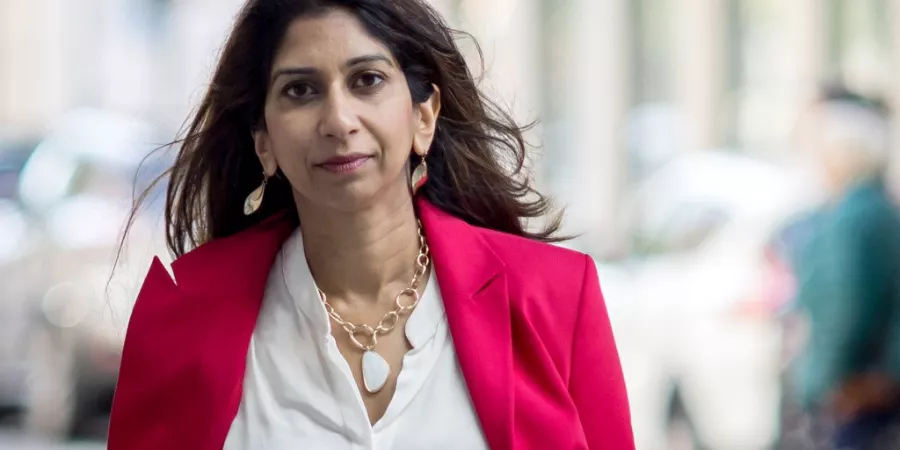
Suella Braverman is one of the most recognizable and divisive figures in recent British politics. She has moved quickly from barrister to cabinet minister to a headline-grabbing defection that reformed conversations on the right.
This article lays out the facts you need to know about her background, finances, political alliances, and stated ambitions, with clarity and no spin. Let us break it down.
Quick Snapshot
- Born 3 April 1980, London.
- Profession: Barrister turned politician.
- Current seat: MP for Fareham and Waterlooville, first elected 2015.
- Senior roles: Attorney General, chair of the European Research Group, Home Secretary (two short terms in 2022–2023).
Early Life, Education and Legal Career
Suella Braverman grew up in London in a family of Mauritian and Goan heritage. She attended Queens’ College, Cambridge to study law and later took a masters at Paris 1 Panthéon-Sorbonne.
She qualified as a barrister in England and also passed the New York bar, building a career that combined litigation and government-facing work. Those legal credentials helped launch a political career focused on justice, immigration and constitutional issues.
How she rose in politics
Her first election to Parliament came in 2015. She quickly made a name for herself on the party right, chairing the European Research Group, the prominent Brexit faction of Conservative MPs. That role positioned her as a hardline Brexiter and a vocal critic of compromises on withdrawal.
Over the next years she held ministerial posts, including two brief stints as Home Secretary under different prime ministers. Those promotions cemented her reputation as a tough, high-profile figure on immigration and law-and-order issues.
Controversies and the Turning Points
Suella Braverman’s career has been marked by a string of headline moments. She resigned from a ministerial post in 2018 over Theresa May’s Brexit withdrawal agreement.
In 2022 she was appointed Home Secretary, removed after a security protocol breach, then rehired shortly after a public row about leaks and media commentary. Her style has attracted fierce critics and ardent supporters in equal measure.
Those clashes, plus policy disputes inside her party, set the scene for her later dramatic move away from the Conservatives.
Defection to Reform UK and what it means
On 26 January 2026 Suella Braverman formally left the Conservative Party and joined Reform UK. The move was framed by her as an act of conscience, a rejection of a Conservative leadership she judged no longer aligned with her principles.
Her defection added an experienced name to Reform’s ranks and drew immediate media attention, criticism and internal reaction from both parties. The shift has tactical as well as symbolic weight: it signals to voters and politicians that Reform is attracting sitting MPs from the Conservative mainstream, not only fringe activists.
Political Ties and Networks
Suella Braverman’s network runs across the right of British politics. She has been close to other prominent Brexiteers and right-leaning ministers, and she shares policy affinities with figures who emphasise sovereignty, immigration control and law-and-order.
Since joining Reform UK she has appeared alongside party leaders and allies, and that proximity has drawn scrutiny about whether the move reshapes policy priorities or simply amplifies existing voices. Publicly, she has argued that the Conservative Party no longer represents the cause she champions.
Net Worth and Income Streams
Estimates of Suella Braverman’s net worth vary, but most publicly available analyses put her wealth in the low millions of pounds. That valuation reflects a legal career, earnings from public speaking, published financial disclosures related to paid engagements, and her MP salary and allowances.
Public registers show paid appearances and declared external earnings in the years since she entered Parliament, which is a normal pattern for senior MPs with legal backgrounds. Conservative estimates published in financial and political commentary place her net worth broadly between roughly £1 million and £5 million.
Does She Want to be Prime Minister
Suella Braverman has been mentioned in conversation about party leadership for years. She ran or prepared to run in earlier leadership contests and has publicly said she is an ambitious figure who wants to influence national direction.
That ambition translated at points into formal and informal leadership campaigns inside the Conservative Party. Since moving to Reform UK she has signalled that her goal remains to change who governs and how policies are set, and she has not shied away from asserting that she will compete to lead where she believes the opportunity exists. Her public statements and past campaigns make clear that she sees herself as a candidate capable of national leadership.
How Journalists and Voters See the Move
Commentary divides along predictable lines. Supporters frame Suella Braverman’s defection as principled and overdue. Critics describe it as opportunistic and destabilising. Independents watch for the electoral consequences: will Reform’s gains from high-profile defections convert into votes in marginal seats, or will they merely split the right and hand advantage to other parties.
The short answer is that the calculus is fluid and depends on campaigning, local factors and how the next general political test plays out.
What to Watch Next
- How Reform UK integrates senior defectors into its policy and candidate selection.
- Whether Suella Braverman contests internal leadership races, stands for higher office, or focuses on shaping a policy platform that differentiates Reform from both Conservative and Labour alternatives.
- Financial disclosures and declared paid work, which explain the balance between public service and private income for high-profile MPs.
Conclusion
Suella Braverman is a clear example of a modern political career that crosses law, media and party politics. She has ambition, a sharp public profile, and a base of supporters on the right. Her switch to Reform UK removes one experienced Conservative voice from that party and adds it to another. That will matter to party strategists and to voters in constituencies where margins are tight.
For anyone trying to understand where British politics might move next, watching how Suella Braverman deploys her legal credibility, public profile and party platform reveals a great deal about the shape of conservative politics after Brexit.