Google has officially rolled out its first major algorithm update of 2025, and it’s making waves across the digital publishing industry. The March 2025 Core Update specifically targets low-quality AI-generated content while rewarding websites that demonstrate genuine human expertise and original insights.
If you’re a digital publisher, content creator, or SEO professional in India, this update directly impacts how your content performs in search results. Here’s everything you need to know to protect and improve your rankings.
What Is the Google March 2025 Core Update?
The update began rolling out on February 3, 2025, and will continue affecting search rankings through mid-March. According to Google’s Search Liaison team, this is a broad core algorithm update that reassesses how the search engine evaluates content quality across all topics and industries.
Unlike smaller updates that target specific issues, core updates fundamentally change how Google’s ranking systems assess website authority and content value. The March 2025 update represents Google’s most aggressive stance yet against content created purely for search engine manipulation.
Early monitoring data from SEO tracking tools reveals significant ranking volatility. Websites heavily dependent on AI content farms are experiencing drops of 15 to 40 positions for competitive keywords. Meanwhile, publications with verified human expertise are seeing modest improvements.
Key Changes in This Algorithm Update
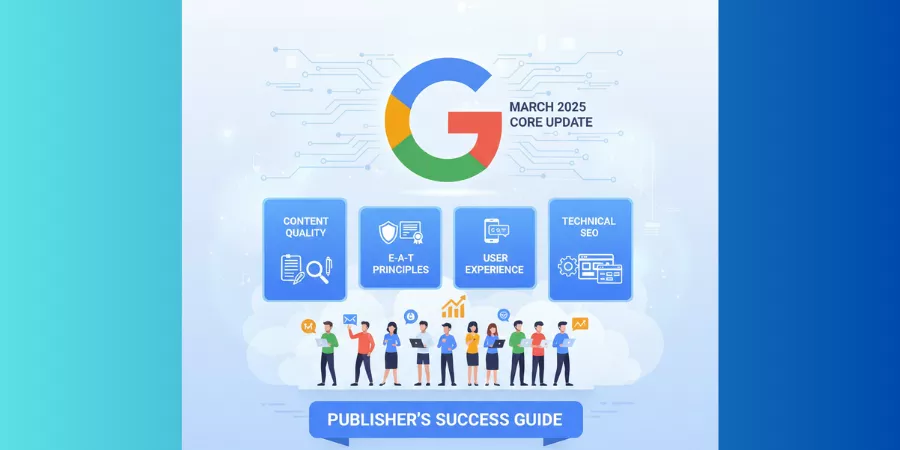
Google’s update focuses on three primary ranking factors:
E-E-A-T Compliance: Experience, Expertise, Authoritativeness, and Trustworthiness signals now carry more weight than ever. Google wants to see clear evidence that real humans with relevant credentials created your content.
AI Content Detection: The algorithm has improved its ability to identify patterns common in AI-generated text, including repetitive sentence structures, lack of unique perspectives, and generic recommendations without supporting data.
Original Research and Data: Content featuring first-hand case studies, original statistics, expert interviews, and unique insights receives preferential treatment over articles that simply repackage existing information.
Impact on Indian Digital Publishers
India’s digital publishing landscape has embraced AI writing tools enthusiastically over the past two years. Many websites scaled content production dramatically using platforms like ChatGPT, Jasper, and Copy.ai.
This update serves as a reality check for publishers who prioritized quantity over quality. “The era of publishing 50 AI articles per day without editorial oversight is over,” says Mumbai-based digital marketing expert Priya Sharma.
Several prominent Indian news websites and digital magazines have already reported traffic declines ranging from 8% to 35% since the update began. The hardest hit are websites in competitive niches like technology, finance, and health where AI-generated content was most prevalent.
How to Protect Your Rankings During This Update
If your website uses AI writing tools or has experienced ranking drops, implement these strategies immediately:
Add Comprehensive Author Credentials
Every article on your website should feature a detailed author biography that establishes credibility. Include:
- Full name and professional title
- Relevant educational qualifications
- Years of experience in the subject area
- Links to social media profiles (LinkedIn, Twitter)
- Previous published work or portfolio
- Industry certifications or awards
Google’s algorithm actively looks for author information to assess content trustworthiness. Articles without clear authorship signals are at higher risk of ranking penalties.
Incorporate First-Hand Case Studies and Examples
Generic advice and recycled information no longer satisfy Google’s quality standards. Your content must offer something unique that readers cannot find elsewhere.
Replace generic statements with specific examples:
| Generic Content | Improved Content |
|---|---|
| “Social media marketing is important for businesses” | “Our agency increased client Instagram engagement by 47% using carousel posts with data visualization” |
| “SEO helps websites rank higher” | “After implementing schema markup, our e-commerce client saw a 23% increase in click-through rates from Google Shopping results” |
Original case studies, proprietary research, and real-world examples from your own experience make your content genuinely valuable and difficult for competitors to replicate.
Update Existing AI-Generated Content
Don’t abandon articles that are losing rankings. Instead, enhance them with human expertise:
Step 1: Identify underperforming pages in Google Search Console that have lost impressions or clicks since February 3rd.
Step 2: Review each article for AI content patterns like repetitive phrasing, lack of specific examples, or generic recommendations.
Step 3: Add expert quotes from industry professionals, insert India-specific examples, include recent statistics with source citations, and write personal anecdotes demonstrating first-hand experience.
Step 4: Update the publication date and request re-indexing through Google Search Console.
Publishers who update their existing content library typically see recovery within 2-3 weeks as Google re-crawls and reassesses the improved pages.
Implement Author Schema Markup
Technical SEO plays a crucial role in helping Google understand your content’s authorship and expertise signals.
Add structured data markup to your articles using Schema.org’s Person and Author properties. This code helps Google identify:
- Who wrote the content
- Their professional credentials
- Their affiliation with your publication
- Links to their social profiles and previous work
WordPress users can implement author schema using plugins like Yoast SEO or Rank Math. Custom website developers should add JSON-LD structured data to article templates.
Monitor Your Analytics Closely
The March 2025 Core Update will continue rolling out through mid-March, meaning ranking fluctuations are normal during this period.
Track these key metrics daily:
- Organic traffic trends in Google Analytics
- Keyword position changes in ranking tracking tools
- Click-through rates from Google Search Console
- Page impressions and average position data
- Bounce rate and time-on-page metrics
Don’t panic if you see temporary ranking drops. Core updates often show volatility before stabilizing. However, sustained traffic loss over 2-3 weeks indicates you need to take action.
What Content Passes Google’s Quality Standards?
Google has provided clear guidance about what constitutes high-quality content that deserves top rankings:
People-First Content: Articles should be created primarily to help readers, not to manipulate search rankings. Ask yourself: “Would this content be valuable if search engines didn’t exist?”
Demonstrated Expertise: Content should clearly show that it was created by someone with deep knowledge of the topic, whether through professional experience, academic credentials, or personal passion.
Transparent Sourcing: All claims, statistics, and factual statements should include clear citations to authoritative sources. Avoid making unsubstantiated claims or presenting opinions as facts.
Unique Perspective: Your content should offer insights, analysis, or information that isn’t readily available elsewhere. Adding your unique voice and experience makes content stand out.
Long-Term Strategy for Algorithm-Proof Publishing
Rather than chasing each algorithm update, build a sustainable content strategy that naturally aligns with Google’s quality guidelines:
Build Your Editorial Team’s Expertise
Invest in writers, editors, and subject matter experts who bring genuine knowledge to your publication. Highlight their credentials prominently on author pages and in article bylines.
Consider hiring:
- Industry professionals who can write about their field
- Journalists with investigation and research skills
- Academics or researchers who can analyze data
- Practitioners with hands-on experience to share
Create Original Research Content
Conduct surveys, analyze trends, or compile industry data that your audience cannot find anywhere else. Original research attracts backlinks naturally and establishes your publication as an authority.
Examples of original research content:
- Annual industry surveys with proprietary data
- Analysis of government statistics applied to your niche
- Expert roundups featuring quotes from multiple sources
- Product comparisons with hands-on testing results
Balance AI Tools with Human Oversight
AI writing tools aren’t inherently bad. They can significantly improve productivity when used correctly. The key is maintaining strong editorial oversight.
Best practices for AI-assisted content creation:
- Use AI for first drafts, then extensively edit and personalize
- Add your unique insights, examples, and expertise
- Verify all AI-generated facts against authoritative sources
- Write introductions and conclusions in your own voice
- Include personal anecdotes and case studies
Recovery Timeline and Expectations
If your website was negatively affected by the March 2025 Core Update, recovery is possible but requires sustained effort.
Typical recovery timelines based on content improvement efforts:
Minor Content Issues (5-10% traffic loss): 2-4 weeks with targeted improvements to key pages
Moderate Issues (10-25% traffic loss): 4-8 weeks with comprehensive content audits and author credential additions
Severe Issues (25%+ traffic loss): 8-16 weeks requiring complete content strategy overhaul and site-wide improvements
Google must re-crawl and reassess your improved content before rankings recover. Publishing fresh, high-quality content consistently signals to Google that your site is actively improving.
Official Statement from Google
In the official announcement, Google emphasized that this update aims to “surface content created by people, for people” and reduce the visibility of content that exists solely to manipulate search rankings.
The company also noted that websites providing helpful, reliable information written by knowledgeable authors will benefit from this change. Google encourages publishers to focus on content quality rather than trying to optimize for specific algorithm factors.
Key Takeaways for Digital Publishers
The March 2025 Core Update represents Google’s commitment to fighting content spam and rewarding authentic expertise. For digital publishers in India’s competitive content landscape, success requires:
- Investing in quality over quantity
- Showcasing genuine expertise through author credentials
- Creating original content with unique insights
- Using AI tools responsibly with human oversight
- Building long-term authority rather than chasing quick rankings
Publishers who adapt their content strategy to prioritize human expertise and original insights will not only survive this update but emerge stronger in the competitive digital publishing landscape.