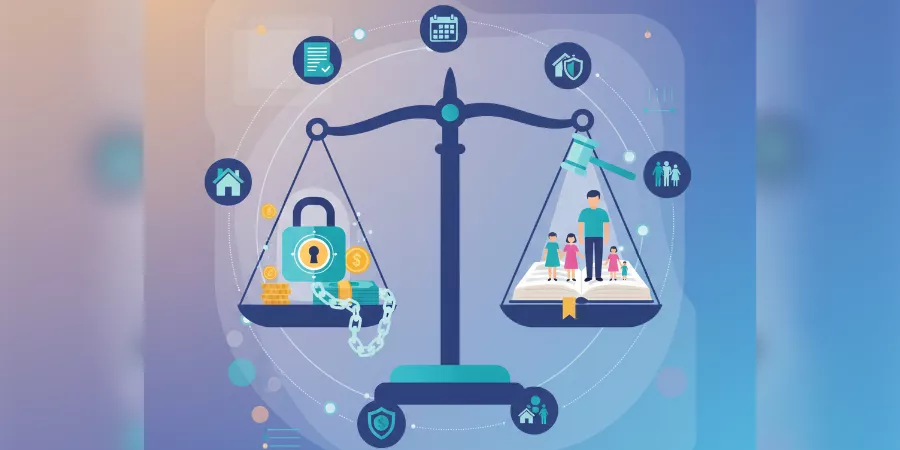
Economic abuse is a hidden form of family violence that often goes unrecognised despite its devastating impact. This insidious type of abuse involves controlling someone’s access to money and resources, limiting their financial independence, and using money as a tool of power and control. If you’re experiencing financial control in a relationship, Stewart Family Law can help you understand your legal options within Australia’s family law system.
Key Takeaways
- Economic abuse is recognised as a form of family violence in Australian law, with specific legal remedies available through the family court system
- Family law can provide remedies including property settlements that account for economic abuse, spousal maintenance, and protective orders
- Financial evidence such as bank records, credit history, and transaction logs are critical in proving economic abuse claims
- While family law offers important pathways for addressing economic abuse, significant challenges remain in proving these cases and achieving long-term economic recovery
What is Economic Abuse?
Definition and Common Patterns
Economic abuse involves behaviours that control a person’s ability to acquire, use, and maintain economic resources. This can include controlling access to money, preventing someone from working, forcing them to take on debt, or exploiting their finances.
Common patterns include:
- Restricting access to bank accounts and credit cards
- Forcing partners to account for every penny spent
- Sabotaging employment opportunities
- Using joint resources without consultation
- Refusing to contribute to household expenses
- Putting bills and debts solely in the partner’s name
How Economic Abuse Relates to Other Forms of Family Violence
Economic abuse rarely occurs in isolation. It typically accompanies other forms of family violence such as physical, emotional, or sexual abuse. The financial control creates dependency, making it harder for victims to leave abusive relationships and establish independence.
Examples from Everyday Situations
Sarah’s partner insisted all her income be deposited into his account, giving her a small ‘allowance’ while he controlled all major financial decisions. When she wanted to leave, she had no access to funds or financial history to establish rental accommodation.
Michael’s ex-wife racked up substantial debt in his name through coercion, damaging his credit rating and leaving him financially devastated after their relationship ended.
Legal Framework in Australia
Commonwealth Law Affecting Family Disputes
The Family Law Act 1975 provides the primary framework for addressing economic abuse in family relationships. While not explicitly mentioning economic abuse, Section 4AB defines family violence broadly enough to include financial abuse patterns.
Family courts have jurisdiction to make orders about property division, maintenance, and children’s matters that can address the impacts of economic abuse.
State and Territory Family Violence Orders
Each state and territory has legislation covering intervention orders or apprehended violence orders that can include economic abuse provisions. These orders can prohibit certain financial behaviours and provide immediate protection.
“Economic abuse creates long-lasting financial trauma that extends well beyond the end of a relationship. Our goal is to help clients not just escape the abuse, but rebuild their financial independence through appropriate legal remedies.” – Stewart Family Law
Interaction Between Family Law and Criminal Law
While economic abuse is primarily addressed through civil family law, some severe cases involving fraud, coercion, or theft may also constitute criminal offences. The family and criminal jurisdictions can operate simultaneously but with different burdens of proof and remedies.
Remedies Available Under Family Law
Property Settlement Pathways
Family courts can adjust property settlements to account for economic abuse. Section 75(2) and 79(4) of the Family Law Act allow consideration of:
– The financial contributions of each party (including recognising when one party’s contributions were minimised through control)
– Non-financial contributions that may have been greater due to restricted financial access
– Future needs, including the impact of economic abuse on earning capacity
Spousal Maintenance Options
Where economic abuse has limited a person’s ability to support themselves, the court can order spousal maintenance. This financial support can be crucial for victims rebuilding their lives, particularly when the abuse involved preventing work or education opportunities.
Parenting Orders and Financial Arrangements
Economic abuse often affects children’s financial support. Family courts can make specific orders about child support, educational expenses, and other costs to ensure children’s needs are met despite financial control tactics.
How Courts Assess Economic Abuse Evidence
Types of Financial Evidence
Proving economic abuse typically requires substantial documentation, including:
– Bank statements showing unusual transfers or restricted access
– Credit reports showing unknown debts or applications
– Text messages or emails containing financial threats or control
– Employment records showing interference with work
– Property titles or mortgage documents showing manipulation of assets
Witness Statements and Expert Reports
Courts may consider evidence from financial counsellors, accountants, or psychologists who can provide professional assessments of economic abuse patterns and impacts. Friends and family who witnessed the abuse can also provide corroborating statements.
Practical Steps for People Experiencing Economic Abuse
Immediate Safety Planning
Financial safety planning might include:
– Opening a separate bank account (preferably at a different institution)
– Securing important financial documents like tax returns and property deeds
– Checking and monitoring credit reports
– Changing PINs and passwords on financial accounts
– Setting aside emergency funds when possible
Gathering Financial Evidence
Document everything related to financial abuse, including:
– Taking screenshots of online banking showing unusual transactions
– Keeping copies of bills showing accounts opened without consent
– Recording incidents of work interference or financial control
– Maintaining a diary of financial abuse incidents with dates and details
Challenges in Family Law Responses
Barriers to Proving Economic Abuse
Economic abuse can be challenging to prove because:
– Financial control often happens privately
– Many financial arrangements in relationships appear consensual on paper
– Victims may lack access to financial records
– The line between financial management and abuse can seem blurry
Timing and Cost Barriers
Family law proceedings can be expensive and slow—precisely the barriers that economic abuse victims face. Court fees, legal representation costs, and financial disclosure requirements can create additional hurdles for those already financially disadvantaged.
Resources and Support in Australia
Legal Support Services
– Legal Aid commissions in each state and territory
– Women’s Legal Services Australia
– Community legal centres specialising in family violence
– Family Violence Prevention Legal Services for Aboriginal and Torres Strait Islander people
Financial Support Services
– National Debt Helpline (1800 007 007)
– Financial Counselling Australia
– No Interest Loan Schemes (NILS)
– Centrelink crisis payments and income support
Conclusion
Economic abuse leaves deep scars that extend far beyond the financial realm, affecting confidence, independence, and long-term security. While family law provides important avenues for addressing this form of abuse, significant challenges remain in recognition, evidence gathering, and achieving meaningful remedies. For those experiencing economic abuse, combining legal action with specialist support services offers the best pathway forward. Stewart Family Law specialises in helping clients navigate these complex situations with sensitivity and expertise, working toward outcomes that support financial recovery and independence.