
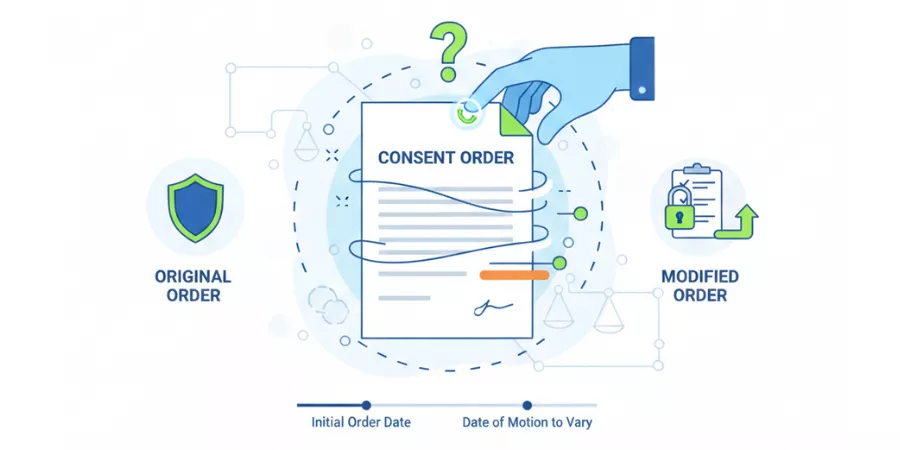
When relationships end, many couples establish legally binding arrangements through court orders. But what happens when circumstances change after these orders are finalised? If you’re wondering about applying for consent orders in Melbourne or modifying existing ones, you’ll need to understand when and how these orders can be altered.
Key Takeaways
- Consent orders can be changed, but only through specific legal processes
- Property orders are more difficult to change than parenting orders
- You must demonstrate substantial changes in circumstances or serious issues with the original order
- Agreement between parties makes changing orders much simpler
- Seeking professional legal advice early is highly recommended
What is a Consent Order?
A consent order is a legally binding court order that formalises an agreement between parties, typically following separation or divorce. Unlike informal agreements, consent orders carry the full weight of court orders and can be enforced if either party fails to comply.
People choose consent orders because they provide certainty and finality, while being less costly and confrontational than contested court hearings. These orders differ from binding financial agreements (BFAs) as they require court approval and assessment that the arrangements are just and equitable.
Types of Consent Orders in Australia
Australian family law allows for several types of consent orders:
Property and Financial Settlement Orders: These divide assets, liabilities, superannuation, and address transfers of property between separated parties.
Parenting Orders: These cover where children will live, time spent with each parent, decision-making responsibility, communication arrangements, and other child-related matters.
Spousal Maintenance: These orders establish ongoing financial support from one party to another after separation.
Can a Consent Order Be Changed?
Yes, consent orders can be changed, but not simply because one party has changed their mind. There are two main avenues for modification:
- File a new consent order by mutual agreement
- Apply to the court to vary or set aside the existing order
The first option is considerably more straightforward if both parties agree to the changes. The second requires meeting specific legal thresholds and can involve significant legal proceedings.
“The court places a high value on the finality of consent orders, requiring substantial reasons to justify changing what was previously agreed upon. This reflects the importance of certainty in family law matters.” – Testart Family Lawyers
Legal Grounds for Changing Consent Orders
The legal grounds for varying or setting aside consent orders depend on the type of order:
For Parenting Orders: The court will consider material changes in circumstances that impact the child’s best interests. Examples include:
- Significant changes in a child’s needs or circumstances
- Relocation of a parent
- Safety concerns or family violence issues
- Changes in a parent’s work arrangements or capacity to care for children
- The wishes of older children (depending on age and maturity)
For Property Orders: These are considerably harder to change and generally require proving:
– Non-disclosure of assets during the original proceedings
– Fraud, mistake, or duress when entering the original order
– Exceptional circumstances that would cause serious injustice if the order remained unchanged
– Impracticability of the order due to circumstances that have arisen since it was made
Step-by-Step Process to Change a Consent Order
If you need to change a consent order, follow these steps:
Step 1: Try to reach agreement with the other party. If successful, prepare a new consent order.
Step 2: If agreement isn’t possible, prepare an application to the Federal Circuit and Family Court of Australia to vary or set aside the existing order.
Step 3: Gather evidence supporting your application, such as financial records, professional reports, or documentation of changed circumstances.
Step 4: File the appropriate court forms, pay the filing fee, and serve documents on the other party.
Step 5: Attend court events as required, which may include mediation, conciliation conferences, and hearings.
Time Limits and Practical Considerations
While there’s no universal short deadline for applying to vary consent orders, delay can weaken your case. For property matters, courts are less inclined to revisit settlements the longer they’ve been in place.
Timelines vary significantly depending on whether changes are by agreement or contested:
– Agreed changes: Typically 1-3 months for court approval
– Contested applications: Can take 12-18 months or longer to reach final hearing
Costs and Likely Outcomes
The costs of changing consent orders vary dramatically:
– Agreed variations with simple circumstances: Approximately $2,000-$5,000 plus filing fees
– Contested applications: Can exceed $20,000-$50,000 if proceeding to final hearing
Factors affecting costs include complexity of issues, level of dispute, need for expert reports, and whether hearings are required.
Alternatives to Court Applications
Before heading to court, consider these alternatives:
Negotiation: Direct discussion or lawyer-assisted negotiation can be effective, especially for minor adjustments.
Mediation: A neutral third party can help facilitate agreement on changes.
Family Dispute Resolution: For parenting matters, this is often required before court proceedings.
Binding Financial Agreements: In some cases, these can be used to modify financial arrangements without returning to court.
Practical Checklist Before Applying
Before proceeding with an application to change consent orders:
– Obtain a copy of the current order
– Gather evidence of changed circumstances or grounds for variation
– Seek legal advice about prospects of success
– Consider costs versus benefits of proceeding
– Attempt resolution through negotiation or mediation
– Prepare financial documents if relevant
Where to Get Help
If you’re considering changing consent orders, assistance is available from:
– Family law specialists
– Legal Aid services in your state or territory
– Community legal centres
– Federal Circuit and Family Court of Australia information services
– Family Relationship Centres for dispute resolution
Conclusion
Changing consent orders is possible but requires navigating specific legal pathways and meeting established thresholds. The process is most straightforward when both parties agree to modifications, particularly for parenting orders where children’s needs have changed. For property orders, the bar is significantly higher, reflecting the court’s emphasis on finality in financial settlements.
For tailored advice about your specific situation, consult Testart Family Lawyers who can help you understand your options and the most appropriate path forward based on your unique circumstances.