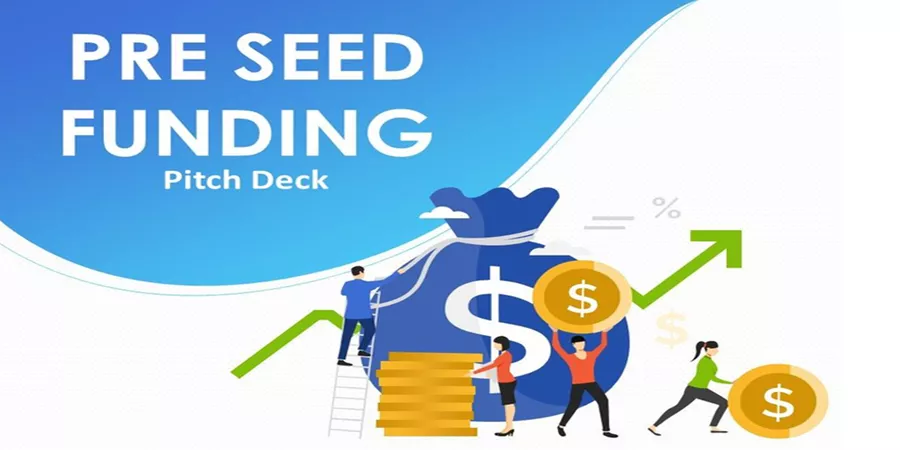
When a founder has an idea but no established company, turning it into a functional business requires more than just ambition. Pre-seed funding is the first step that allows startups to move from concept to prototype, establishing the foundation for future growth.
What is Pre-Seed Funding?
pre seed funding is the initial financial support a startup receives, often even before a formal company is created. This funding is used to develop a minimum viable product (MVP), refine the business idea, perform early market research, and cover basic operational expenses. Unlike later funding rounds, pre-seed investments often come from personal savings, friends and family, angel investors, or micro-VCs who are willing to take a high risk. Because the company usually has little to no revenue and may not yet have a team, valuations at this stage are relatively modest. Pre-seed funding is generally smaller and less formal compared to seed or Series A rounds.
Typical Size, Investors & Use of Funds
How Much Money?
Pre-seed rounds typically raise between US $50,000 and US $500,000. Some rounds, especially those led by micro-VCs or specialized pre-seed funds, may go up to $1 million or slightly higher. The amount varies depending on industry, location, and startup needs.
Who Provides It?
Sources of pre-seed funding commonly include founders using personal savings, friends and family who invest based on trust rather than formal evaluation, angel investors who provide capital in exchange for early equity, micro-VCs or pre-seed funds focused on early-stage startups, and accelerators or incubators that offer resources, mentorship, and sometimes funding.
What the Money is Used For?
Pre-seed capital is generally used for developing a prototype or minimum viable product, conducting market research to validate the idea and identify customers, building a core team or hiring essential co-founders, covering legal, administrative, and operational costs, and acquiring early users or customers to generate initial feedback for future rounds.
Pros and Cons of Pre-Seed Funding
Why Pre-Seed Funding Matters?
It validates the idea and generates early traction, signaling seriousness to future investors. It offers flexibility and allows founders to retain control over company direction. It provides momentum to build an MVP, hire a small team, and begin customer discovery. It can also result in lower equity dilution if managed carefully.
The Challenges and Tradeoffs
High risk and uncertainty exist because there may be no product, customers, or fully formed team. Some investors may consider the startup too early-stage. Low valuations can require founders to give up significant equity. Fundraising can be time-consuming and may divert attention from product development. Limited local investor networks may make it harder to secure funding in certain regions.
How Platforms Like Angels Partners Help?
Platforms such as Angels Partners help founders by providing access to a database of thousands of investors, including angels, micro-VCs, and family offices worldwide. Startups can filter by deal size, industry, location, and investor history, then reach out via verified contacts or warm introductions. Using such platforms allows founders to efficiently identify investors aligned with their startup’s stage and sector, reducing the time and effort required to source pre-seed funding.
Pre-Seed in Today’s Startup Landscape
With the growth of micro-VCs, incubators, and angel networks, pre-seed funding has become more structured. While it was once limited to founders’ personal resources or friends and family, early-stage investments now often involve formal processes, mentorship, and due diligence. Despite the formalization, pre-seed funding remains risky. Success depends on the clarity of the idea, the strength of the founding team, and early validation, even without paying customers. Founders who navigate this stage effectively can use pre-seed funding as a launchpad to develop their product, attract more investors, and grow into larger funding rounds.